Daily reading
After Pentecost
Semidouble · Movable from Easter · Temporal
September 16, 2029
From Dom Guéranger’s The Liturgical Year.

|
The Seventeenth Sunday after Pentecost
The Gospel, which is now assigned to the Mass of the seventeenth Sunday, has given it the name of the Sunday of the love of God, dating, that is, from the time when the Gospel of the cure of the dropsy and of the invitation to the wedding-feast was anticipated by eight days. Previously even to that change, and from the very first, there used to be read, on this seventeenth Sunday, another passage from the new Testament, which is no longer found in this series of Sundays: it was the Gospel which mentions the difficulty regarding the resurrection of the dead, which the Sadducees proposed to our Lord.1
Mass
The judgments of God are always just, whether it be, in His justice, humbling the proud, or, in His mercy, exalting the humble. This day last week we saw this sovereign disposer of all things, allotting to each his place at the divine banquet. Let us recall to mind the behaviour of the guests, and the respective treatment shown to the humble and the proud. Adoring these judgments of our Lord, let us sing our Introit; and, as far as regards ourselves, let us throw ourselves entirely upon His mercy.
Introit
The most hateful of all the obstacles which divine love has to encounter upon earth is the jealousy of satan, who endeavours, by an impious usurpation, to rob God of the possession of our souls—souls, that is, which were created by and for Him alone. Let us unite with holy Church in praying, in the Collect, for the supernatural assistance we require for avoiding the foul contact of the hideous serpent.
Collect
The other Collects, as on page 120.
Epistle
Cap. iv.Fratres, Obsecro vos ego vinctus in Domino, ut digne ambuletis vocatione, qua vocati estis, cum omni humilitate, et mansuetudine, cum patientia, supportantes invicem in charitate, solliciti servare unitatem spiritus in vinculo pacis. Unum corpus, et unus Spiritus, sicut vocati estis in una spe vocationis vestræ. Unus Dominus, una fides, unum baptisma. Unus Deus et Pater omnium, qui est super omnes, et per omnia, et in omnibus nobis. Qui est benedictus in sæcula sæculorum. Amen.
Ch. iv.Brethren: I, a prisoner in the Lord, beseech you that you walk worthy of the vocation in which you are called, with all humility and mildness, with patience, supporting one another in charity. Careful to keep the unity of the Spirit in the bond of peace. One body and one spirit; as you are called in one hope of your calling. One Lord, one faith, one baptism, one God, and Father of all, who is above all, and through all, and in us all, who is blessed for ever and ever. Amen.
The Church, by thus giving these words from St. Paul’s Epistle to the Ephesians, again takes up the subject so dear to her, viz., the dignity of her children. She beseeches them to correspond, in a becoming manner, to their high vocation. This vocation, this call, which God gives us is, as we have been so often told, the call, or invitation, made to the human family to come to the sacred nuptials of divine union; it is the vocation given to us to reign in heaven with the Word, who has made Himself our Spouse, and our Head.2 The Gospel read to us last week was formerly the one appointed for this present Sunday, and was thus brought into close connexion with our Epistle. These words of St. Paul to the Ephesians are an admirable commentary on that Gospel, and it, in turn, throws light on the apostle’s words about the vocation. ‘When thou art invited to a wedding (cum vocatus fueris) sit down in the lowest place!’ These were our Lord’s words to us last Sunday; and now we have the apostle saying to us : Walk worthy of the vocation in which you are called, yes, walk in that vocation with all humility!
Let us now attentively hearken to our apostle, telling us what we must do, in order to prove ourselves worthy of the high honour offered to us by the Son of God. We must practise, among other virtues, these three—humility, mildness, and patience. These are the means for gaining the end that is so generously proposed to us. And what is this end? It is the unity of that immense body, which the Son of God makes His own, by the mystic nuptials He vouchsafes to celebrate with our human nature. This Man-God asks one condition from those whom He calls, whom He invites, to become, through the Church, His bride, bone of His bones and flesh of His flesh.3 This one condition is, that they maintain such harmony among them, that it will make one body and one spirit of them all, in the bond of peace. ‘Bond most glorious!’ cries out St. John Chrysostom—‘bond most admirable, which unites us all with one another, and then, thus united, unites us with God.’4 The strength of this bond is the strength of the holy Spirit Himself, who is all holiness and love; for it is that holy Spirit who forms these spiritual and divine ties; He it is who, with the countless multitude of the baptized, does the work which the soul does in the human body— that is, gives it life, and unites all the members into oneness of person. It is by the Holy Ghost that young and old, poor and rich, men and women, distinct as all these are in other respects, are made one, fused, so to say, in the fire which eternally burns in the blessed Trinity. But, in order that the flame of infinite love may thus draw into its embrace our regenerated humanity, we must get rid of selfish rivalries, and grudges, and dissensions, which, so long as they exist among us, prove us to be carnal,5 and, therefore, to be unfit material either for the divine flame to touch, or for the union which that flame produces. According to the beautiful comparison of St. John
Chrysostom,6 when the fire lays hold of various species of wood which have been thrown into it, if it find the fuel properly dry, it makes one burning pile of all the several woods; but, if they are damp and wet, it cannot act on them separately, nor reduce the whole to one common blaze. So is it in the spiritual order; the unhealthy humidity of the passions neutralizes the action of the sanctifying Spirit; and union, which is both the means and the end of love, becomes an impossibility.
Let us, therefore, bind ourselves to our brethren by that blessed link of charity, which, if it fetters at all, fetters only our bad tempers; but, in all other respects, it dilates our hearts, by the very fact of its giving free scope to the Holy Ghost to lead them safely to the realization of that one hope of our common vocation and calling, which is to unite us to God by love. Of course, charity, even with the saints, is, so long as they are on this earth, a laborious virtue; because, even with the best, grace seldom restores to a perfect equilibrium the faculties of man, which were put out of order by original sin. From this it follows that the weaknesses of human nature will sometimes show themselves, either by excess or by deficiency; and when these weaknesses do appear, not only the saint himself is humbled by their getting the better of him, but, as he is well aware, those who live with him have to practise kindness and patience towards him. God permits all this, in order to increase the merit of us all, and make us long more and more for heaven. For it is there alone that we shall find ourselves, not only totally, but without any effort, in perfect harmony with our fellow-men; and this because of the perfect peaceful submissiveness of our entire being under the absolute sway of the thrice holy God, who will then be all in all.7 In that happy land God Himself will wipe away the tears of His elect, for their miseries will all be gone; and their miseries will be gone because their whole being will be renovated, because united with Him, who is its infinite source.8 The eternal Son of God, having then conquered in each member of His mystical body the hostile powers and death itself,9 will appear, in the fullness of the mystery of His Incarnation, as the true Head of humanity, sanctified, restored,10 and developed in Him. He will rejoice at seeing how, by the workings of the sanctifying Spirit, there has been wrought the destined degree of perfection in each of the several parts of that marvellous body,11 which He vouchsafed to aggregate to Himself by the bond of love; and all this in order that He might Himself eternally celebrate, in concert with all creation, the glory of the ever adorable Trinity. How will the sweetest music of earth be then surpassed! How will our most perfect choirs seem to us then to have been almost like the noise of children singing out of tune, compared with the concord and harmony of that eternal song! Let us make ourselves ready for that heavenly concert. Let us put our voices in order, by now attuning our hearts to that plenitude of love, which, alas! is not often enjoyed here below, but which we should ever be trying to realize, by patiently supporting the faults of our brethren and ourselves, as the Epistle so earnestly impresses upon us.
In the ecstasy of her delight at hearing these few sounds of heaven’s music brought to her by such a singer as her apostle, our mother the Church seems to feel herself carried away far beyond time, and boldly joins a short song of her own to that of Jesus and His apostle; for by way of a conclusion to the text of our Epistle, she adds an ardent expression of praise, which is not in the original; and thus she forms a kind of doxology to the inspired words of her apostolic cantor.
We now know the priceless gifts brought to our earth by the Man-God.12 Thanks to the prodigies of power and love achieved by the divine Word and the sanctifying Spirit, the soul of the just man is a little heaven on earth. Let us sing in our Gradual and Alleluia the happiness of the Christian people, chosen by God for His own inheritance.
Gradual
Gospel
Cap. xxii.In illo tempore : Accesserunt ad Jesum Pharisæi, et interrogavit eum unus ex eis legis doctor, tentans eum : Magister, quod est mandatum magnum in lege? Ait illi Jesus : Diliges Dominum Deum tuum ex toto corde tuo, et in tota anima tua, et in tota mente tua. Hoc est maximum, et primum mandatum. Secundum autem simile est huic : Diliges proximum tuum sicut teipsum. In his duobus mandatis universa lex pendet, et prophetæ. Congregatia autem Pharisæis, interrogavit eos Jesus, dicens : Quid vobis videtur de Christo? cujus filius est? Dicunt ei : David. Ait illis: Quomodo ergo David in spiritu vocat eum Dominum, dicens : Dixit Dominus Domino meo : Sede a dextris meis, donec ponam inimicos tuos scabellum pedum tuorum? Si ergo David vocat eum Dominum, quomodo filius ejus est? Et nemo poterat ei responded verbum; neque ausus fuit quisquam ex illa die eum amplius interrogare.
Ch. xxii.At that time : The Pharisees came to Jesus: and one of them, a doctor of the law, asked him, tempting him: Master, which is the great commandment in the law? Jesus said to him : Thou shalt love the Lord thy God with thy whole heart, and with thy whole soul, and with thy whole mind. This is the greatest and the first commandment. And the second is like to this: Thou shalt love thy neighbour as thyself. On these two commandments dependeth the whole law and the prophets. And the Pharisees being gathered together, Jesus asked them saying: What think ye of Christ? whose son is he? They say to him: David’s. He saith to them : How then doth David in spirit call him Lord, saying : The Lord said to my Lord, Sit on my right hand, until I make thy enemies thy footstool? If David then called him Lord, how is he his son? And no man was able to answer him a word; neither durst any man from that day forth ask him any more questions.
The Man-God allowed temptation to approach His sacred Person in the desert;13 He disdained not to sustain the attacks, which the devil’s spiteful cunning has, from the world’s beginning, been inventing, as the surest means of working man’s perdition. Our Jesus permitted the demon thus to tempt Him, in order that He might show His faithful servants how they are to repel the assaults of the wicked spirit. To-day, our adorable Master, who would be a model to His children in all their trials,14 is represented to us as having to contend, not with satan’s perfidy, but with the hypocrisy of His bitterest enemies, the pharisees. They seek to ensnare Him in His speech,15 just as the representatives of the world, which He has condemned,16 will do to His Church, and that in all ages, right to the end of time. But as her divine Spouse triumphed, so will she; for He will enable her to continue His work upon earth, and amidst the same temptations and the same snares. She is ever to obtain the victory, by maintaining a most inviolable fidelity to God’s law and truth. The tools of satan, who are the heretics and the princes of the world, chafing at the restraint put by Christianity on their ambition and lust, will always be studying how best to outwit the guardian of the divine oracles, by their captious propositions or questions. When necessity requires her to speak, she is quite ready; for, as bride of that divine Word, who is His Father’s eternal and substantial utterance, what can she be but a voice, either to announce Him on earth, or to sing Him in heaven? That word of hers, endowed as it is with the power and penetration of God Himself, will not only never be conquered by surprise, but, like a two-edged sword, it will generally go much deeper than the crafty questioners of the Church anticipated; it will not only refute their sophistry, it will also expose the hypocrisy and wickedness of their intentions.17 By their sacrilegious attempts, they will have gained nothing but disgrace and shame, and the mortification of having occasioned a fresh lustre to truth by the new light in which it has been put, and of having procured a clearer knowledge of dogma or morals for the devoted children of the Church.
It was thus with the pharisees of to-day’s Gospel. As the homily upon it tells us, they wanted to see if Jesus, who had declared Himself to be God, would not, consequently, make some addition to the commandment of divine love; and if He did they would be justified in condemning Him as having tried to change the letter of the law in its greatest commandment.18 Our Lord disappointed them. He met their question by giving it a longer answer than they had asked for. Having first recited the text of the great commandment as given in the Scripture, he continued the quotation, and, by so doing, showed them that He was not ignorant of the intention which had induced them to question Him. He reminded them of the second commandment, like unto the first, the commandment of love of our neighbour, which condemned their intended crime of deicide. Thus were they convicted of loving neither their neighbour, nor God Himself, for the first commandment cannot be observed if the second, which flows from and completes it, be broken.
But our Lord does not stop there; He obliges them to acknowledge, at least implicitly, the Divinity of the Messiah. He puts a question, in His turn, to them, and they answer it by saying, as they were obliged to do, that the Christ was to be of the family of David; but if He be his Son, how comes it that David calls Him his Lord, just as he calls God Himself, as we have it in Psalm cix., where he celebrates the glories of the Messiah? The only possible explanation is, that the Messiah, who in due time, and as Man, was to be born of David’s house, was God, and Son of God, even before time existed, according to the same psalm: ‘From my womb, before the day-star, I begot thee.’19 This answer would have condemned the pharisees, so they refused to give it; but their silence was an avowal; and, before very long, the eternal Father’s vengeance upon these vile enemies of His Son will fulfil the prophecy of making them His footstool in blood and shame: that time is to be the terrible day when the justice of God will fall upon the deicide city.
Let us Christians, out of contempt for satan, who stirred up the expiring Synagogue thus to lay snares for the Son of God, turn these efforts of hatred into an instruction which will warm up our love. The Jews, by rejecting Christ Jesus, sinned against both of the commandments which constitute charity, and embody the whole law; and we, on the contrary, by loving that same Jesus, fulfil the whole law.
Jesus is the brightness of eternal glory,20 one, by nature, with the Father and the Holy Ghost; He is the God whom the first commandment bids us love, and it is in Him also that the second has its truest and adequate application. For not only is He as truly Man as He is truly God, but He is the Man par excellence,21 the perfect Man, on whose type, and for whom, all other men were formed;22 He is the model and the brother of all of them;23 He is at the same time the leader who governs them as their King,24 and offers them to God as their High Priest;25 He is the Head who communicates to all the members of the human family beauty, and life, and movement, and light; He is the Redeemer of that human family since it has fallen, and on that account He is twice over the source of all right, and the ultimate and highest motive, even when not the direct object, of every love that deserves to be called love here below. Nothing counts with God, excepting so far as it has reference to Jesus. As St. Augustine says,26 God loves men only inasmuch as they either are, or may one day become, members of His Son; it is His Son that He loves in them; thus He loves, with one same love though not equally, His Word, and the Flesh of His Word, and the members of His Incarnate Word. Now, charity is love—love such as it is in God, communicated to us creatures by the Holy Ghost. Therefore, what we should love, by charity, both in ourselves, and in others, is the divine Word, either as being, or, according to another expression of the same St. Augustine, ‘that He may be,’ in others and in ourselves.27
Let us take care, also, as a consequence of this same truth, not to exclude any human being from our love, excepting the damned, who are absolutely and eternally cut off from the body of the Man-God. Who can boast that he has the charity of Christ if he do not embrace His unity? The question is St. Augustine’s again.28 Who can love Christ, without loving, with Him, the Church, which is His body? without loving all His members? What we do—be it to the least, or be it to the worthiest, be it of evil, or of good—it is to Him we do it, for He tells us so.29 Then, let us love our neighbour as ourselves, because of Christ, who is in each of us, and who gives to us all union and increase in charity.30
That same apostle who says, 'The end of the law is charity,’31 says also: ‘The end of the law is Christ;’32 and we now see the harmony existing between these two distinct propositions. We understand, also, the connexion there is between the word of the Gospel: On these two commandments dependeth the whole law and the prophets, and that other saying of our Lord: Search the Scriptures, for the same are they that give testimony of Me.33 The fullness of the law, which is the rule of men’s conduct, is in charity,34 of which Christ is the end; just as the object of the revealed Scriptures is no other than the Man-God, who embodies in His own adorable unity, for us His followers, all moral teaching, and all dogma. He is our faith and our love, ‘the end of all our resolutions,’ says St. Augustine; 'for all our efforts tend but to this—to perfect ourselves in Him; and this is our perfection —to reach Him: having reached Him, seek no farther, for He is your End.’35 The holy Doctor gives us, when we have reached this point, the best instruction as to how we are to live in the divine union: 'Let us cling to One, let us enjoy One, let us all be one in Him; hcereamus Uni, fruamur Uno, permaneamus unum'36
The beautiful anthem for to-day’s Offertory, separated, as we now have it, from the verses which formerly accompanied it, does not suggest why, in the earliest ages, it was assigned to this Sunday. We subjoin these verses to the anthem, which has been retained. The second concludes with the announcement of the arrival of the prince of the heavenly hosts, who is coming to the aid of God’s people. This gives the desired explanation; and it becomes all the clearer, when we remember that this Sunday begins the week of the great archangel in the antiphonary published, from the most ancient manuscripts, by the blessed Thomasi; and that the following Sunday is there designated as the first Sunday after Saint Michael (post Sancti Angeli).
Offertory
Forgiveness of our past sins, and preservation from future ones, these are the effects produced by the holy sacrifice. Let us pray for them, in the Secret, together with the Church.
Secret
The other Secrets, as on page 130.
It is while assisting at these great mysteries that the Christian soul, in the enthusiasm of her love, presents to her God her promises and her engagements. Let her, then, give herself unreservedly to God, who overwhelms her with His favours; but, while thus giving free vent to the holy emotions which she so justly feels, let her not forget, that He who hides Himself, out of consideration for our weakness, under the eucharistic veil, is the Most High, who is terrible to the kings of the earth, and an avenger of infidelity to what is vowed.
Communion
It is the very holiness of God that in this divine Sacrament comes for the purpose of curing our vices, and fortifying our faltering steps on the road which leads to eternity. In the prayer of the Postcommunion, let us yield our souls to His almighty influence.
Postcommunion
The other Postcommunions, as on page 131.
Vespers
The psalms, capitulum, hymn, and versicle, as above, pages 71-81.
Antiphon of the Magnificat
- St. Matt. xxii. 23-33. ↩︎
- Eph. ii. 5. ↩︎
- Eph. v. 30. ↩︎
- St. Chrys., in Ep. ad Eph., Hom. ix. 3. ↩︎
- 1 Cor. iii. 3. ↩︎
- St. Chrys., ubi supra. ↩︎
- 1 Cor. xv. 28. ↩︎
- Apoc. xxi. 4, 5 ↩︎
- 1 Cor. xv. 24-28. ↩︎
- Eph. i. 10. ↩︎
- Ibid. iv. 13-16. ↩︎
- Eph. iv. 8. ↩︎
- St. Matt. iv. 1-11. ↩︎
- Heb. ii. 17, 18; iv. 15. ↩︎
- St. Matt. xxii. 15. ↩︎
- St. John xvi. 8-11. ↩︎
- Heb. iv. 12. ↩︎
- St. Chrys., Hom, lxxvii. in Matt. ↩︎
- Ps. cix. 3. ↩︎
- Heb. i. 3. ↩︎
- St. John xix. 5. ↩︎
- Rom. viii. 29. ↩︎
- Heb. ii. 17. ↩︎
- St. John xviii. 37. ↩︎
- Heb. x. 14. ↩︎
- S. Aug., in Joan. Tract cx. ↩︎
- Serm. cclv., in dieb pasch. ↩︎
- Epist. lxi. ↩︎
- St. Matt. xxv. 40-45. ↩︎
- Eph. iv. 15, 16. ↩︎
- 1 Tim. i 5 ↩︎
- Rom. x. 4. ↩︎
- St. John v. 39. ↩︎
- Rom. xiii. 10. ↩︎
- St. Aug., in Ps. Ivi. ↩︎
- De Trinit., L. iv. 11. ↩︎
September 16: St. Cornelius, Pope and Martyr, and St. Cyprian, Bishop and Martyr
|
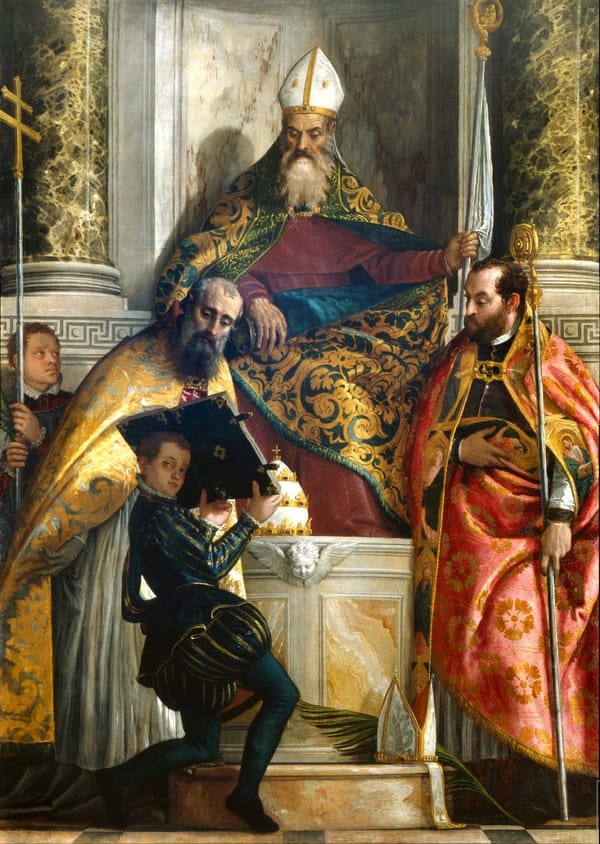
There is a peculiar beauty in the meeting of these two saints upon the sacred cycle. Cyprian, in a famous dispute,1 was once opposed to the apostolic See: eternal Wisdom now offers him to the homage of the world, in company with one of the most illustrious successors of St. Peter.
Cornelius was, by birth, of the highest nobility; witness his tomb, lately discovered in the family crypt, surrounded by the most honorable names in the patrician ranks. The elevation of a descendant of the Scipios to the sovereign pontificate linked the past grandeurs of Rome to her future greatness. Decius, who ‘would more easily have suffered a competitor in his empire than a bishop in Rome,’2 had just issued the edict for the seventh general persecution. But the Cæsar bestowed upon the world’s capital by a village of Pannonia, could not stay the destinies of the eternal city. Beside this bloodthirsty emperor, and others like him, whose fathers were known in the city only as slaves or conquered enemies, the true Roman, the descendant of the Cornelii, might be recognized by his native simplicity , by the calmness of his strength of soul, by the intrepid firmness belonging to his race, wherewith he first triumphed over the usurper, who was soon to surrender to the Goths on the borders of the Danube.3 And yet, O holy Pontiff, thou art even greater by the humility which Cyprian, thy illustrious friend, admired in thee, and by that ‘purity of thy virginal soul,' through which, according to him, thou didst become the elect of God and of His Christ.4
At thy side, how great is Cyprian himself! What a path of light is traced across the heavens of holy Church by this convert of the priest Cæcilius! In the generosity of his soul, when once conquered to Christ, he relinquished honours and riches, his family inheritance, and the glory acquired in the field of eloquence. All marvelled to see in him, as his historian says, the harvest gathered before the seed was sown.5 By a justifiable exception, he became a pontiff while yet a neophyte. During the ten years of his episcopate, all men, not only in Carthage and Africa, but in the whole world, had their eyes fixed upon him; the pagans crying: Cyprian to the lions! the Christians awaiting but his word of command in order to obey. Those ten years represent one of the most troubled periods of history. In the empire, anarchy was rife; the frontiers were the scene of repeated invasions; pestilence was raging everywhere: in the Church, a long peace, which had lulled men’s souls to sleep, was followed by the persecutions of Decius, Gallus, and Valerian. The first of these, suddenly bursting like a thunderstorm, caused the fall of many; which evil, in its turn, led to schisms, on account of the too great indulgence of some, and the excessive rigour of others, towards the lapsed.
Who, then, was to teach repentance to the fallen,6 the truth to the heretics, unity to the schismatics,7 and to the sons of God prayer and peace?8 Who was to bring back the virgins to the rules of a holy life?9 Who was to turn back against the Gentiles their blasphemous sophisms?10 Under the sword of death, who would speak of future happiness, and bring consolation to souls?11 Who would teach them mercy,12 patience,13 and the secret of changing the venom of envy into the sweetness of salvation?14 Who would assist the martyrs to rise to the height of their divine vocation? Who would uphold the confessors under torture, in prison, in exile? Who would preserve the survivors of martyrdom from the dangers of their regained liberty?15
Cyprian, ever ready, seemed in his incomparable calmness to defy the powers of earth and of hell. Never had a flock a surer hand to defend it under a sudden attack, and to put to flight the wild boar of the forest. And how proud the shepherd was of the dignity of that Christian family, which God had entrusted to his guidance and protection! Love for the Church was, so to say, the distinguishing feature of the bishop of Carthage. In his immortal letters to his ‘most brave and most happy brethren,’ confessors of Christ, and the honour of the Church, he exclaims: ‘Oh! truly blessed is our mother the Church, whom the divine condescension has so honoured, who is made illustrious in our days by the glorious blood of the triumphant martyrs; formerly white by the good works of our brethren, she is now adorned with purple from the veins of her heroes; among her flowers, neither roses nor lilies are wanting.’16
Unfortunately this very love, this legitimate, though falsely applied, jealousy for the noble bride of our Saviour, led Cyprian to err on the serious question of the validity of heretical baptism. ‘The only one,’ he said, ‘alone possesses the keys, the power of the Spouse; we are defending her honour, when we repudiate the polluted water of the heretics.’17 He was forgetting that although, through our Lord’s merciful liberality, the most indispensable of the Sacraments does not lose its virtue when administered by a stranger, or even by an enemy of the Church, nevertheless it derives its fecundity, even then, from and through the bride; being valid only through union with what she herself does. How true it is, that neither holiness nor learning confers upon man that gift of infallibility, which was promised by our Lord to none but the successor of St. Peter. It was, perhaps, as a demonstration of this truth, that God suffered this passing cloud to darken so lofty an intellect as Cyprian’s. The danger could not be serious, or the error lasting, in one whose ruling thought is expressed in these words: ‘He that keeps not the unity of the Church, does he think to keep the faith? He that abandons the See of Peter whereon the Church is founded, can he flatter himself that he is still in the Church?’18
Great in his life, Cyprian was still greater in death. Valerian had given orders for the extermination of the principal clergy; and in Rome, Sixtus II, followed by Laurence, had led the way to martyrdom. Galerius Maximus, proconsul of Africa, was then holding his assizes at Utica, and commanded Thascius Cyprian to be brought before him. But the bishop would not allow ‘the honour of his Church to be mutilated,’ by dying at a distance from his episcopal city.19 He therefore waited till the proconsul had returned to Carthage, and then delivered himself up by making a public entrance into the town.
In the house which served for a few hours as his prison, Cyprian, calm and unmoved, gathered his friends and family for the last time round his table. The Christians hastened from all parts to spend the night with their pastor and father. Thus, while he yet lived, they kept the first vigil of his future feast. When, in the morning, he was led before the proconsul, they offered him an arm-chair draped like a bishop’s seat. It was indeed the beginning of an episcopal function, the pontiff’s own peculiar office being to give his life for the Church, in union with the eternal High-Priest. The interrogatory was short, for there was no hope of shaking his constancy; and the judge pronounced sentence that Thascius Cyprian must die by the sword. On the way to the place of execution, the soldiers formed a guard of honour to the bishop, who advanced calmly, surrounded by his clergy as on days of solemnity. Deep emotion stirred the immense crowd of friends and enemies who had assembled to assist at the sacrifice. The hour had come. The pontiff prayed prostrate upon the ground; then rising, he ordered twenty-five gold pieces to be given to the executioner, and, taking off his tunic, handed it to the deacons. He himself tied the bandage over his eyes; a priest, assisted by a subdeacon, bound his hands; while the people spread linen cloths around him to receive his blood. Not until the bishop himself had given the word of command, did the trembling executioner lower his sword. In the evening, the faithful came with torches and with hymns to bury Cyprian. It was September 14, in the year 258.
Let us read first the lines consecrated by the holy liturgy to the Bishop of Rome.
The Church borrows from St. Jerome her eulogy on St. Cyprian.
Holy Pontiffs, united now in glory as you once were by friendship and in martyrdom, preserve within us the fruit of your example and doctrine. Your life teaches us to despise honours and fortune for Christ’s sake, and to give to the Church all our devotedness, of which the world is unworthy. May this be understood by those countless descendants of noble races, who are led astray by a misguided society. May they learn from you gloriously to confound the impious conspiracy that seeks to exterminate them in shameful oblivion and enforced idleness. If their fathers deserved well of mankind, they themselves may now enter upon a higher career of usefulness, where decadence is unknown, and the fruit once produced is everlasting. Remind the lowly as well as the great in the city of God, that peace and war alike have flowers to crown the soldier of Christ: the white wreath of good works is offered to those who cannot aspire to the rosy diadem of martyrdom.20
Watch, O Cyprian over thy Church of Carthage, now at length renewing her youth. And do thou, O Cornelius, restore to Rome her glorious past. Put down the foreigner from her throne; for the mistress of the world must obey no ruler but the Vicar of the King of kings. May her speedy deliverance be the signal to her people for a complete renovation, which cannot now be far distant, unless the end of the world be approaching.
- On the question of the validity of Baptism conferred by heretics. ↩︎
- Cyprian. Epist. x. ad Antonianum, ix. ↩︎
- Cyprian. Epist. x. ad Antonianum, viii. ix. ↩︎
- Ibid. viii. ↩︎
- Pontius Diac. De vita et pass. Cypr. ii. ↩︎
- Cypr. De lapsis. ↩︎
- De unitate Ecclesiæ. ↩︎
- De oratione Dominica ↩︎
- De habitu virginie. ↩︎
- Lib. ad Demetrianum and De idolorum vanitate. ↩︎
- De mortalitate. ↩︎
- De opera et eleemosynis. ↩︎
- De bono patientaæ. ↩︎
- De zelo et livore. ↩︎
- De exhortatione martyrii and Epistolæ ad confessores. ↩︎
- Epist. viii. Ad martyres et confessores. ↩︎
- Epist. ad Jubaianum, i. xi. ↩︎
- De unitate Ecelesiæ, iv. ↩︎
- Epist. ultima, lxxxiii. Ad clerum et plebem. ↩︎
- Cypr. Epist. viii. Ad martyres et confessores. ↩︎
September 16 (the Same Day): Sts. Euphemia, Lucy, and Geminian, Martyrs
The fourth Æcumenical Council was held at Chalcedon in the church of St. Euphemia; beside the tomb of this holy virgin, the impious Eutyches was condemned, and the twofold nature of the God-Man was vindicated. The‘great martyr’ seems to have shown a predilection for the study of sacred doctrine: the faculty of theology in Paris chose her for its special patroness, and the ancient Sorbonne treasured with singular veneration a notable portion of her blessed relics. Let us recommend ourselves to her prayers, and to those of the holy widow Lucy and the noble Geminian, whom the Church associates with her.
Prayer
| Previous September 15 (the Same Day): St. Nicomedes, Martyr | Next September 16: St. Cornelius, Pope and Martyr, and St. Cyprian, Bishop and Martyr |