Daily reading
December 18 · Sanctoral
December 18, 2029
From Dom Guéranger’s The Liturgical Year.
December 18: Second Antiphon
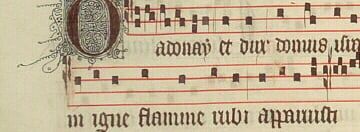
O sovereign Lord! O Adonai! come and redeem us, not by Thy power, but by Thy humility. Heretofore, Thou didst show Thyself to Moses Thy servant in the midst of a mysterious flame; Thou didst give Thy law to Thy people amidst thunder and lightning; now, on the contrary, Thou co mest not to terrify, but to save us. Thy chaste Mother having heard the emperor’s edict, which obliges her and Joseph her spouse to repair to Bethlehem, prepares everything needed for Thy divine Birth. She prepares for Thee, O Sun of justice! the humble swathing-bands, wherewith to cover Thy nakedness, and protect Thee, the Creator of the world, from the cold of that midnight hour of Thy Nativity! Thus it is that Thou wiliest to deliver us from the slavery of our pride, and show man that Thy divine arm is never stronger than when he thinks it powerless and still. Everything is prepared, then, dear Jesus! Thy swathing-bands are ready for Thy infant limbs! Come to Bethlehem, and redeem us from the hands of our enemies.
December 18 (the Same Day): The Expectation of the Blessed Virgin Mary
This feast, which is now kept not only throughout the whole of Spain but in many other parts of the Catholic world, owes its origin to the bishops of the tenth Council of Toledo, in 656. These prelates thought that there was an incongruity in the ancient practice of celebrating the feast of the Annunciation on the twenty-fifth of March, inasmuch as this joyful solemnity frequently occurs at the time when the Church is intent upon the Passion of our Lord, so that it is sometimes obliged to be transferred into Easter time, with which it is out of harmony for another reason; they therefore decreed that, henceforth, in the Church of Spain there should be kept, eight days before Christmas, a solemn feast with an octave, in honour of the Annunciation, and as a preparation for the great solemnity of our Lord’s Nativity. In course of time, however, the Church of Spain saw the necessity of returning to the practice of the Church of Rome, and of those of the whole world, which solemnize the twenty-fifth of March as the day of our Lady’s Annunciation and the Incarnation of the Son of God. But such had been, for ages, the devotion of the people for the feast of the eighteenth of December, that it was considered requisite to maintain some vestige of it. They discontinued, therefore, to celebrate the Annunciation on this day; but the faithful were requested to consider, with devotion, what must have been the sentiments of the holy Mother of God during the days immediately preceding her giving Him birth. A new feast was instituted, under the name of 'the Expectation of the blessed Virgin’s delivery.’
This feast, which sometimes goes under the name of Our Lady of O, or the feast of O, on account of the great antiphons which are sung during these days, and, in a special manner, of that which begins O Virgo virginum (which is still used in the Vespers of the Expectation, together with the O Adonai, the antiphon of the Advent Office), is kept with great devotion in Spain. A High Mass is sung at a very early hour each morning during the octave, at which all who are with child, whether rich or poor, consider it a duty to assist, that they may thus honour our Lady’s Maternity, and beg her blessing upon themselves. It is not to be wondered at that the holy See has approved of this pious practice being introduced into almost every other country. We find that the Church of Milan, long before Rome conceded this feast to the various dioceses of Christendom, celebrated the Office of our Lady’s Annunciation on the sixth and last Sunday of Advent, and called the whole week following the Hebdomada de Exceptato (for thus the popular expression had corrupted the word Expectato). But these details belong strictly to the archaeology of liturgy, and enter not into the plan of our present work; let us, then, return to the feast of our Lady’s Expectation, which the Church has established and sanctioned as a new means of exciting the attention of the faithful during these last days of Advent.
Most just indeed it is, O holy Mother of God, that we should unite in that ardent desire thou hadst to see Him, who had been concealed for nine months in thy chaste womb; to know the features of this Son of the heavenly Father, who is also thine; to come to that blissful hour of His birth, which will give glory to God in the highest, and, on earth, peace to men of good-will. Yes, dear Mother, the time is fast approaching, though not fast enough to satisfy thy desires and ours. Make us redouble our attention to the great mystery; complete our preparation by thy powerful prayers for us, that when the solemn hour has come, our Jesus may find no obstacle to His entrance into our hearts.
The Great Antiphon to Our Lady
Tuesday of the Third Week of Advent
Cap. xxx.Exspectat Dominus ut misereatur vestri, et ideo exaltabitur parcens vobis; quia Deus judicii Dominus, beati omnes qui exspectant eum. Populus enim Sion habitabit in Jerusalem: plorans nequaquam plorabis: miserans miserebitur tui: ad vocem clamoris tui statim ut audierit, respondebit tibi. Et dabit vobis Dominus panem arctum, et aquam brevem: et non faciet avolare a te ultra doctorem tuum, et erunt oculi tui videntes præceptorem tuum. Et dabitur pluvia semini tuo, ubicumque seminaveris in terra: et panis frugum terrae erit uberrimus et pinguis. Pascetur in possessione tua in die illo agnus spatiose, et tauri tui, et pulli asinorum, qui operantur terram, commixtum migma comedent sicut in area ventilatum est. Et erunt super omnem montem excelsum, et super omnem collem elevatum rivi currentium aquarum in die interfectionis multorum, cum ceciderint turres. Et erit lux lunæ sicut lux solis, et lux solis erit septempliciter sicut lux septem dierum, in die qua alligaverit Dominus vulnus populi sui, et percussuram plagæ ejus sanaverit. Ecce nomen Domini venit de longinquo, ardens furor ejus, et gravis ad portandum: labia ejus repleta sunt indignatione, et lingua ejus quasi ignis devorans. Spiritus ejus velut torrens inundans usque ad medium colli, ad perdendas Gentes in nihilum, et frenum erroris quod erat in maxillis populorum.
Ch. xxx.The Lord waiteth that he may have mercy on you, and therefore shall he be exalted sparing you: because the Lord is the God of judgement, blessed are all they that wait for him. For the people of Sion shall dwell in Jerusalem: weeping thou shalt not weep: he will surely have pity on thee: at the voice of thy cry, as soon as he shall hear, he will answer thee. And the Lord will give you spare bread and short water: and will not cause thy teacher to flee away from thee any more, and thy eyes shall see thy teacher. And rain shall be given to thy seed, wheresoever thou shalt sow in the land: and the bread of the corn of the land shall be most plentiful and fat. The lamb in that day shall feed at large in thy possession, and thy oxen, and the ass-colts, that till the ground, shall eat mingled provender as it was winnowed in the floor. And there shall be upon every high mountain, and upon every elevated hill, rivers of running waters in the day of the slaughter of many, when the towers shall fall. And the light of the moon shall be as the light of the sun, and the light of the sun shall be sevenfold as the light of seven days, in the day when the Lord shall bind up the wound of his people, and shall heal the stroke of their wound. Behold the name of the Lord cometh from afar, his wrath burneth, and is heavy to bear: his lips are filled with indignation, and his tongue as a devouring fire. His breath as a torrent overflowing even to the midst of the neck, to destroy the nations unto nothing, and the bridle of error that was in the jaws of the people.
And are we then to weep no more, O Jesus? Happy we! How could we be sad now that Thou hast heard our prayers, and our eyes shall behold Thee, our Master, and our Teacher? If Thou yet delayest some days longer, it is only that we may have more time to receive what Thou hast made it Thy glory to give—mercy and the pardon of our sins. Oh, the happiness of Thy kingdom! Oh, the richness of our lands, that is, of our souls, when Thy dew shall have fallen upon them! Oh, the sweetness of our Bread, which is to be Thyself, O living Bread come down from heaven! Oh, the brightness of the light which Thou wilt give us, even on the very day when Thou wilt have bound up our wounds! Blessed day, come quickly! And thou, dear night, when Mary is to give her divine Babe to us, when wilt thou come? So great is our hope in this Thy merciful coming, that we listen with less dread to the awful words of Thy prophet, who, with a rapidity swift as Thine own word, passes over the long ages between the two events, and speaks to us of the approach of the terrible day, when Thou wilt come suddenly in Thy burning wrath, with Thy lips filed with indignation, and Thy tongue as a devouring fire. Our present feeling is hope, for we are looking forward to that coming, in which Thou art the beautiful Prince of peace and love, and we cannot but hope. When that last day comes, have mercy on us! but on this day of Thine amiable visit, permit us to say to Thee the words of one of Thy servants: ‘Yes, dear Jesus, come; come to us! but in swathing-bands, not with Thy hand raised to punish us: in humility, not in Thy greatness: in the crib, not in the clouds of heaven: in the arms of Thy Mother, not on the throne of Thy Majesty: on the colt of the ass, not on the Cherubim: to us, and not against us: to save us, and not to judge: to visit us in Thy peace, not to condemn us in Thy anger. If Thou comest unto us thus, O Jesus! it is not from Thee, but to Thee, that we will flee.’ (The venerable Peter of Celles, First sermon of Advent.)
Hymn Taken from the Anthology of the Greeks
(December 20)
Prayer from the Gallican Missal
(InAdventu Domini, Immolatio)
| Previous Monday of the Third Week of Advent | Next December 18 (the Same Day): The Expectation of the Blessed Virgin Mary |