Daily reading
December 20 · Sanctoral
December 20, 2029
From Dom Guéranger’s The Liturgical Year.
December 20: The Fourth Antiphon
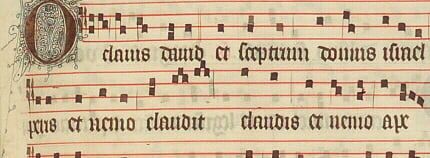
O Jesus, Son of David! heir to his throne and his power! Thou art now passing over, in Thy way to Bethlehem, the land that once was the kingdom of Thy ancestor, but now is tributary to the Gentiles. Scarce an inch of this ground which has not witnessed the miracles of the justice and mercy of Jehovah, Thy Father, to the people of the old Covenant, which is so soon to end. Before long, when Thou hast come from beneath the virginal cloud which now hides Thee, Thou wilt pass along this same road doing good,1 healing all manner of sickness and every infirmity,2 and yet having not where to lay Thy head.3 Now, at least, Thy Mother’s womb affords Thee the sweetest rest, and Thou receivest from her the profoundest adoration and the tenderest love. But, dear Jesus, it is Thine own blessed will that Thou leave this loved abode. Thou hast, O eternal Light, to shine in the midst of this world’s darkness, this prison where the captive, whom Thou hast come to deliver, sits in the shadow of death. Open his prison-gates by Thy all-powerful key. And who is this captive, but the human race, the slave of error and vice? Who is this captive, but the heart of man, which is thrall to the very passions it blushes to obey? Oh! come and set at liberty the world Thou hast enriched by Thy grace, and the creatures whom Thou hast made to be Thine own brethren.
Antiphon to the Angel Gabriel
Thursday of the Third Week of Advent
Cap. xxxiii.Domine, miserere nostri: te enim exspectavimus: esto brachium nostrum in mane, et salus nostra in tempore tribulationis. A voce angeli fugerunt populi, et ab exaltatione tua dispersæ sunt Gentes. Et congregabuntur spolia vestra sicut colligitur bruchus, velut cum fossæ plenæ fuerint de eo. Magnifìcatus est Dominus, quoniam habitavit in excelso: implevit Sion judicio et justitia. Et erit fides in temporibus tuis: divitiæ salutis sapientia et scientia: timor Domini ipse est thesaurus ejus. Conterriti sunt in Sion peccatores: possedit tremor hypocritas. Quis poterit habitare de vobis cum igne devorante? quis habitabit ex vobis cum ardoribus sempiternis? Qui ambulat in justitiis, et loquitur veritatem, qui projicit avaritiam ex calumnia, et excutit manus suas ab omni munere, qui obturat aures suas ne audiat sanguinem, et claudit oculos suos ne videat malum. Iste in excelsis habitabit, munimenta saxorum sublimitas ejus: panis ei datus est, aquæ ejus fideles sunt. Regem in decore suo videbunt oculi ejus: cernent terram de longe.
Ch. xxxiii.O Lord, have mercy on us: for we have waited for thee: be thou our arm in the morning, and our salvation in the time of trouble. At the voice of the angel the people fled, and at the lifting up thyself the nations are scattered. And your spoils shall be gathered together as the locusts are gathered, as when the ditches are full of them. The Lord is magnified, for he hath dwelt on high: he hath filled Sion with judgement and justice. And there shall be faith in thy times, riches of salvation, wisdom and knowledge: the fear of the Lord is his treasure. The sinners in Sion are afraid: trembling hath seized upon the hypocrites. Which of you can dwell with devouring fire? which of you shall dwell with everlasting burning? He that walketh in justices, and speaketh truth, that casteth away avarice by oppression, and shaketh his hands from all bribes, that stoppeth his ears lest he hear blood, and shutteth his eyes that he may see no evil. He shall dwell on high, the fortifications of rocks shall be his highness: bread is given him, his waters are sure. His eyes shall see the king in his beauty; they shall see the land far off.
Happy he whose eyes shall thus contemplate the new-born King in the sweet majesty of His love and His humility! He shall be so taken with this His beauty, that the earth, with all its magnificence, shall appear as nothing in his eyes. The only thing he will care to look upon, will be the Child laid in a manger, and wrapped in swaddling clothes. But, that we may have this happiness of closely contemplating the divine King who is coming to us, that we may merit to enter His court, we must do as the prophet bids us: we must walk in justice, and speak truth. Let us listen to the pious Rabanus Maurus, who expresses this, with much unction, in his first sermon on preparation for the feast of Christmas: ‘If at all times it behoves us to be adorned with the comeliness of good works, we should be so, with an especial care, on the day of our Saviour’s birth. Consider within yourselves, my brethren, what you would do, were a king, or prince, to invite you to come to celebrate his birthday. Your garments would be as new, as elegant, even as magnificent, as you could procure them, for you would think it an insult to him who invited you, were you to appear before him with anything upon you that was tom, or poor, or unclean. Show a like solicitude on the occasion of the coming feast: and let your souls, beautified with the several ornaments of virtue, go forth to their King. He loves the pearls of simplicity, and the flowers of chaste sobriety: wear them therefore. Let your consciences be composed in a holy calm, now that the solemn feast of Jesus’ Nativity is so close upon us. Assist at it lovely in your chastity, gorgeous in your charity, beauteous by your almsdeeds, brilliant with justice and humility, and, above all, radiant in the love of God. If the Lord Jesus shall see you thus when you keep His feast, believe me, He will do more than visit your souls; He will treat you with such familiarity, that He will choose them for His favourite abode, and there He will dwell for ever, as it is written: Behold! I will come, and I will dwell with them and they shall be my people, and I will be their God.’ Christians, you have no time to lose: quickly prepare yourselves for this great visit. Let sinners be converted and become just: let the just become more just; let the holy become more holy, for He that is coming is the Lord our God, and none else.
Prose for the Time of Advent
(Composed in the eleventh century, and taken from the ancient Roman-French missals)
Per quem condita sunt sæcula;
Cœlum quod plurima luce coruscat, et diversa sidera;
Sol mundi schema, noctium decus luna, cunctaque splendentia;
Mare, solum, alta, plana, et profunda flumina;
Aeris ampla spatia: quæ discurrunt aves, venti atque pluvia.
Haec simul cuncta tibi soli Deo Patri militant.
Nunc et in ævum, sine fine per sæcula:
Laus eorum tua gloria:
Qui pro salute nostra Prolem unicam,
Pati in terra misisti sine culpa, sed ob nostra delicta.
Te, sancta Trinitas, precamur, ut corpora nostra et corda regas et protegas, et dones peccatorum veniam. Amen.
By whom all ages were made;
The firmament, which shines with much light, and the countless stars;
The sun, the ornament of the world; the moon, which is the night’s beauty; and all shining things;
The sea, the land, the hills, the plains, and the deep rivers;
The wide space of the air, through which float birds, and winds, and rain;
All these obey thee alone, O God, as their Maker and King.
Now and evermore, for endless ages:
Their praise is thy glory;
Who for our salvation didst send thine only-begotten Son,
In whom could be no sin, to suffer on earth for our sins.
We beseech thee, O holy Trinity, to govern and protect our souls and bodies, and grant us forgiveness of cur sins. Amen.
Prayer from the Ambrosian Missal
(Second Sunday of Advent, Præfatio)
| Previous Wednesday in Ember Week of Advent | Next Thursday of the Third Week of Advent |