Daily reading
Advent
Double of the II Class · December 21 · Sanctoral
December 21, 2029
From Dom Guéranger’s The Liturgical Year.
A Double of the II Class leads the weekday.Rubric
December 21: Saint Thomas, Apostle
The Church announces to us, to-day, in her Office of Lauds, these solemn words:
This is the last feast the Church keeps before the great one of the Nativity of her Lord and Spouse. She interrupts the greater ferias in order to pay her tribute of honour to Thomas, the apostle of Christ, whose glorious martyrdom has consecrated this twenty-first day of December, and has procured for the Christian people a powerful patron, who will introduce them to the divine Babe of Bethlehem. To none of the apostles could this day have been so fittingly assigned as to St. Thomas. It was St. Thomas whom we needed; St. Thomas, whose festal patronage would aid us to believe and hope in that God whom we see not, and who comes to us in silence and humility in order to try our faith. St. Thomas was once guilty of doubting, when he ought to have believed, and learnt the necessity of faith only by the sad experience of incredulity: he comes then most appropriately to defend us, by the power of his example and prayers, against the temptations which proud human reason might excite within us. Let us pray to him with confidence. In that heaven of light and vision, where his repentance and love have placed him, he will intercede for us, and gain for us that docility of mind and heart, which will enable us to see and recognize Him, who is the Expected of nations, and who, though the King of the world, will give no other signs of His majesty, than the swaddling-clothes and tears of a Babe. But let us first read the acts of our holy apostle. The Church has deemed it prudent to give us them in an exceedingly abridged form, which contains only the most reliable facts, gathered from authentic sources; and thus she excludes all those details, which have no historic authority.
The Great Antiphon of St. Thomas
Prayer
The following prayer is from the Matins of the Gothic, or Mozarabic, breviary:
The Greek Church celebrates, with her usual solemnity, the feast of St. Thomas; but she keeps it on the sixth of October. We extract the following stanzas from her hymns.
Hymn of St. Thomas
(Taken from the Menæa of the Greeks)
O glorious apostle, Thomas! who didst lead to Christ so many unbelieving nations, hear now the prayers of the faithful, who beseech thee to lead them to that same Jesus, who, in five days, will have shown Himself to His Church. That we may merit to appear in His divine presence, we need, before all other graces, the light which leads to Him. That light is faith; then, pray that we may have faith. Heretofore, our Saviour had compassion on thy weakness, and deigned to remove from thee the doubt of Hishaving risen from the grave; pray to Him for us, that He will mercifully come to our assistance, and make Himself felt by our heart. We ask not, O holy apostle! to see Him with the eyes of our body, but with those of our faith; for He said to thee, when He showed Himself to thee: ‘Blessed are they who have not seen, and have believed!’ Of this happy number we desire to be. We beseech thee, therefore, pray that we may obtain the faith of the heart and will, that so, when we behold the divine Infant wrapped in swaddling-clothes and laid in a manger, we may cry out: ‘My Lord! and my God!’ Pray, O holy apostle, for the nations thou didst evangelize, but which have fallen back again into the shades of death. May the day soon come, when the Sun of justice will once more shine upon them. Bless the efforts of those apostolic men, who have devoted their labours and their very lives to the work of the missions; pray that the days of darkness may be shortened, and that the countries, which were watered by thy blood, may at length see that kingdom of God established amongst them, which thou didst preach to them, and for which we also are in waiting.
December 21 (the Same Day): Fifth Antiphon
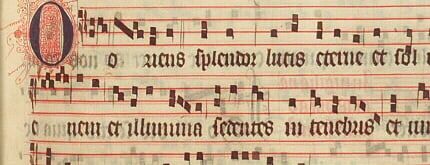
O Jesus, divine Sun! Thou art coming to snatch us from eternal night: blessed for ever be Thy infinite goodness! But Thou puttest our faith to the test, before showing Thyself in all Thy brightness. Thou hidest Thy rays, until the time decreed by Thy heavenly Father comes, in which all Thy beauty will break upon the world. Thou art traversing Judea; Thou art near Jerusalem; the journey of Mary and Joseph is nigh its term. Crowds of men pass or meet Thee on the road, each one hurrying to his native town, there to be enrolled, as the edict commands. Not one of all these suspects that Thou, O divine Orient! art so near him. They see Thy Mother Mary, and they see nothing in her above the rest of women; or if they are impressed by the majesty and incomparable modesty of this august Queen, it is but a vague feeling of surprise at there being such dignity in one so poor as she is; and they soon forget her again. If the Mother is thus an object of indifference to them, it is not to be expected that they will give even so much as a thought to her Child, that is net yet born. And yet this Child is Thyself, O Sun of justice! Oh! increase our faith, but increase, too, our love. If these men loved Thee, O Redeemer of mankind, Thou wouldst give them the grace to feel Thy presence. Their eyes, indeed, would not yet see Thee, but their hearts, at least, would burn within them, they would long for Thy coming, and would hasten it by their prayers and sighs. Dearest Jesus! who thus traversest the world Thou hast created, and who forcest not the homage of Thy creatures, we wish to keep near Thee during the rest of this Thy journey: we kiss the footsteps of her that carries Thee in her womb; we will not leave Thee, until we arrive together with Thee at Bethlehem, that house of bread, where, at last, our eyes will see Thee, O splendour of eternal light, our Lord and our God!
Prayer for the Time of Advent
(The Mozarabic breviary, Monday of the fifth week. Oratio)
Friday in Ember Week of Advent
The Church does not read anything from the prophet Isaias to-day; she merely gives, in the Office of Matins, a sentence of that chapter of St. Luke’s Gospel, which relates the mystery of our Lady’s Visitation: and to this she subjoins a fragment of St. Ambrose’s homily upon that passage. The considerations and affections with which this important event of our Lady’s life ought to inspire the faithful, will be given further on in the proper of the saints.
The Station for to-day is in the church of the Holy Apostles, which many suppose to have been first built by Constantine. The glorious bodies of the two holy apostles Philip and James the Less, lie buried under the altar, awaiting the second coming of Him who chose them as His co-operators in the work of the first, and who will give them, on the last day, to sit upon thrones near His own, judging the twelve tribes of Israel.*
That we may better conform to the intentions of our holy mother the Church, who offers to our contemplation the Visitation of the blessed Virgin, let us recite the following hymn, composed in honour of this mystery during the ages of faith.
A Prose in Honour of the Blessed Virgin
(Taken from the ancient Roman-French missals)
Virginis humilitas.
Ave, omni nodo carons,
Humilis virginitas.
Nec gravaris Filio:
Gaude quae sic oneraris
Onere gratissimo.
Virgula fructifera.
Salve, clausa templi porta,
Soli Deo pervia.
Rore madens Pneumatis.
Plaude, pellis Salomonis,
Pulchrior præ cæteris.
Circumlustrans maria.
Vale consignata cella,
Rubus in vi flammea.
Solem gignis stellula.
Euge, quod sis præelecta,
Scala cœli fulgida.
Luce novi sideris;
Pange, arca trina ferens
Charismata miseris.
Jesum Christum anima;
Eia! tecum ut laudemus
Ora, dulcis Maria.
of the divine Word!
Hail, most humble
and most spotless Virgin!
of a Son who supports thee!
Rejoice, thy burden is a burden
most sweet to bear!
Fruit-bearing branch!
Hail gate of the temple,
closed to all but God!
full of the dew of the holy Spirit!
Be glad, thou tent of Solomon,
of all the first in beauty!
lighting up the sea!
Hail, thou sealed-up sanctuary,
thou burning bush!
shouldst be clad with the Sun, and then bring forth the Sun!
What bliss is thine, that thou shouldst be elected
the bright ladder reaching up to heaven!
thou aurora rising in the light of the new Star!
Sing, thou ark of the covenant,
bearing unto us sinners thy three treasures.
and oh! sweet Mary,
pray that, with thee,
we too may magnify him.
Prayer from the Gallican Sacramentary
(In Adventu Domini, Collect)
* St. Matt. xix. 28. ↩︎
| Previous Thursday of the Third Week of Advent | Next December 21 (the Same Day): Fifth Antiphon |