
This day

March 27, 2019

St Johannes Damascenus
St Johannes Damascenus, Francesco Bartolozzi (1728–1815), 1762. Credits

Lent

March 27, 2019

A Double leads the weekday.Rubric

March 27: St. John Damascene, Confessor and Doctor of the Church

From Dom Guéranger’s The Liturgical Year.

The faithful have not forgotten that on the first Sunday of Lent the Greeks keep one of their greatest solemnities, that of Orthodoxy. History proves that the Church of Constantinople, the new Rome, did not share the indefectibility of that of the old Rome, for it passed through a cycle of heresies on the dogma of the Incarnation. It rejected successively the consubstantiality of the Word, the unity of Person in Jesus Christ, and the integrity of His two natures. It seemed as though there were nothing left for heretical emperors and patriarchs to deny. Yet there was one more error to proclaim before the measure of false teaching was filled up.

Christ enthroned in heaven could not be belittled, but His images might be proscribed on earth. Heresy was powerless to touch the King even in these pictorial representations, but schism could at least shake off the yoke of His Vicar, and this last denial rolled the stone to the door of a tomb which the Crescent was one day to seal.

The heresy of the Iconoclasts or Image-breakers represents the last phase of Oriental error with regard to the Incarnation of the Son of God.

Wednesday of the Third Week of Lent

From Dom Guéranger’s The Liturgical Year.

The Station, at Rome, is in the church oi Saint Xystus on the Appian Road. It now goes under the name of Saint Xystus the Old, in order to distinguish it from another church that is dedicated to the same holy Pope and Martyr.

Grant, O Lord, we beseech thee, that being taught by this wholesome fast, we may abstain from all pernicious vice, and by that means, more easily obtain thy mercy. Through Christ our Lord. Amen.

Lectio libri Exodi.
Cap. xx.
Hæc dicit Dominus Deus: Honora patrem tuum, et matrem tuam, ut sis longævus super terram, quam Dominus Deus tuus dabit tibi. Non occides. Non moechaberis. Non furtum facies. Non loqueris contra proximum tuum falsum testimonium. Non concupisces domum proximi tui, nec desiderable uxorem ejus, non servum, non ancillam, non bovem, non asinum, nec omnia quæ illius, sunt. Cunctus autem populus videbat veces, et lampades, et sonitum buccmæ, montem que fumantem et perterriti, ao pa vore concussi steterunt procul, dicentes Moysi: Loquere tu nobis, et audiemus: non loquatur nobis Dominus, ne forte moriamur. Et ait Moyses ad populum: Nolite timere: ut enim probaret vos venit Deus; et ut terror illius esset in vobis, et non peccaretis.

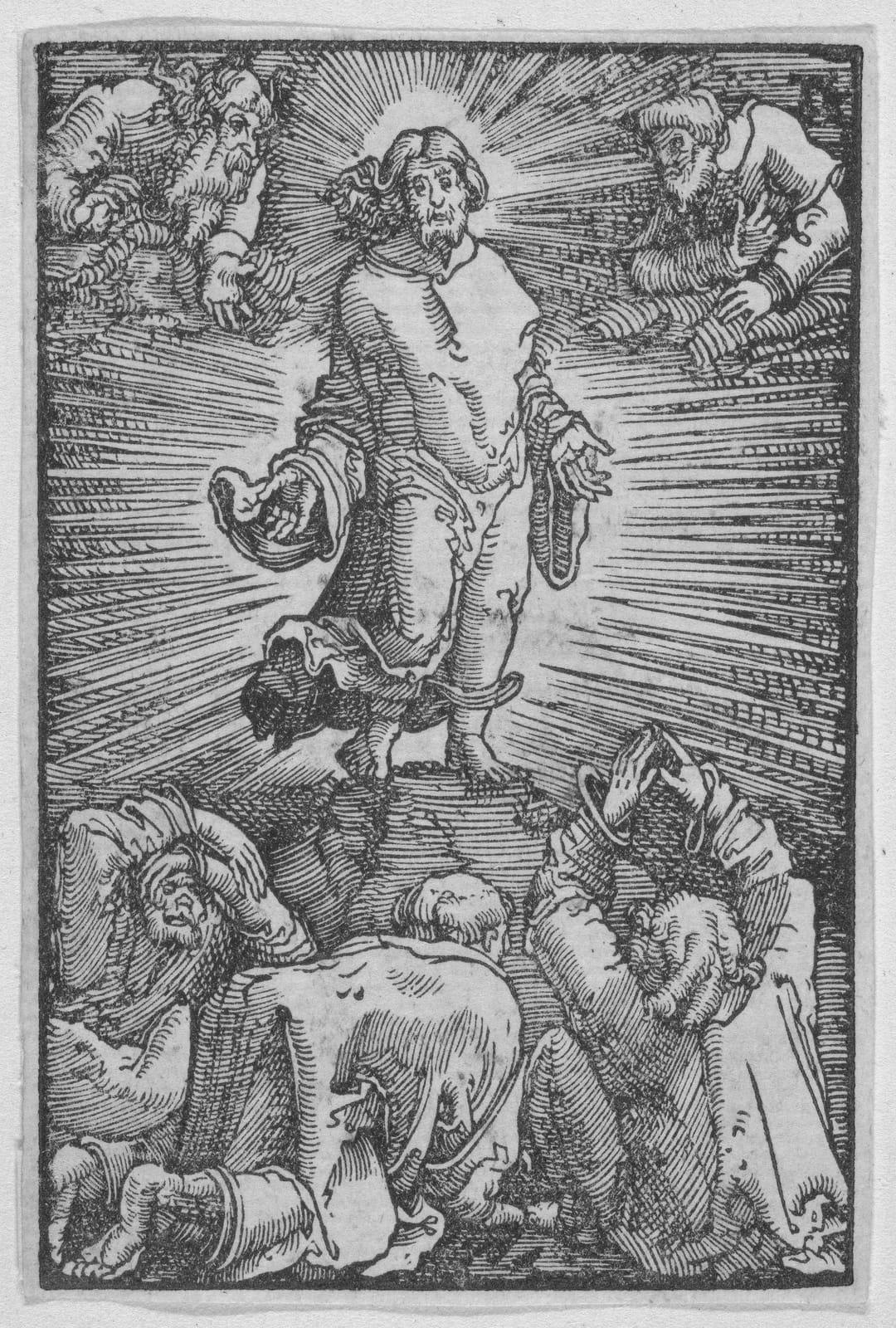
The Transfiguration of Christ with Moses and Elias
Albrecht Altdorfer (1480–1538), The Transfiguration of Christ, from The Fall and Salvation of Mankind Through the Life and Passion of Christ, ca. 1513. Credits

Email view of this day