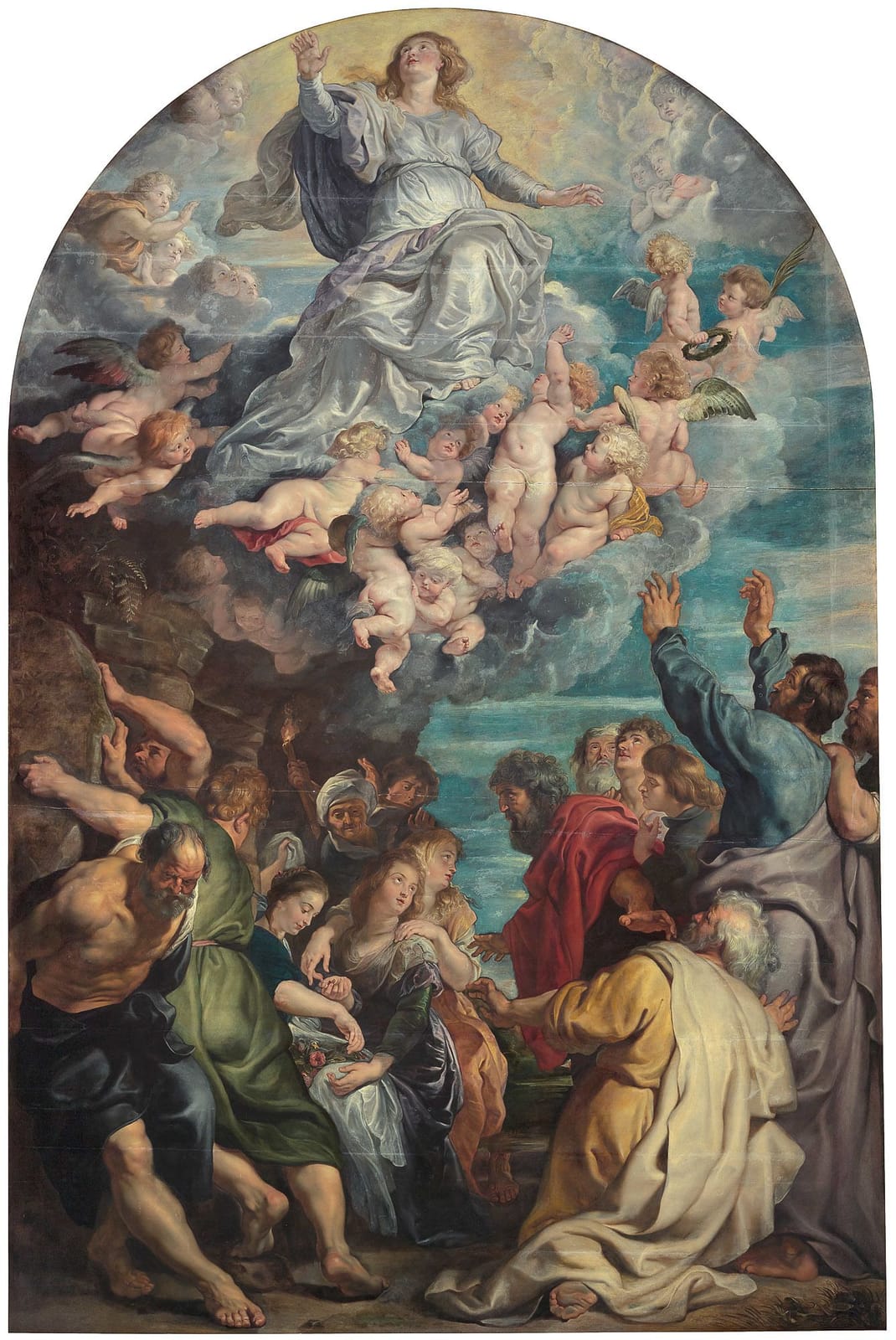
This day

August 19, 2020

After Pentecost

August 19, 2020

August 19: Fifth Day within the Octave of the Assumption

From Dom Guéranger’s The Liturgical Year.

‘IT is a great thing for a saint to have as much grace as would suffice for many; but if he had sufficient for all men in the world, that would be fulness of measure: and this is the case with Jesus Christ and the Blessed Virgin.’ So speaks the prince of theologians with regard to her whom Suarez salutes as the 'universal cause, intimately united to the Lord her Son.'

A higher authority than that of the School has confirmed this teaching of the Angelic Doctor; in his encyclical Magnœ Dei Matris, the Sovereign Pontiff Leo XIII has deigned to make his own the words we have just quoted; and he adds: 'When, therefore, we hail Mary as full of grace, we awaken the recollection of her sublime dignity and of the redemption of the human race, wrought by God through her intermediary; moreover we call to mind the divine and eternal relationship whereby she is associated to Christ in His joys and His sorrows, His humiliations and His triumphs, in ruling and aiding men with a view to their eternal welfare.’

St. Bernardine of Siena compares our Lady to the fountain mentioned in Genesis, which sprang from the earth and watered its whole surface.

This week's Sunday: The Eleventh Sunday after Pentecost

From Dom Guéranger’s The Liturgical Year.

With the Greeks, this Sunday—their eleventh of Saint Matthew—is called the Parable of the King, who calls his servants to account. In the western Church, it has gone under the name of Sunday of the deaf and dumb, ever since the Gospel of the pharisee and the publican has been assigned to the tenth. To-day's Mass, as we now have it, still gives evidence as to what was its ancient arrangement. Our commentary on to-day's liturgy will show us this very plainly.

In the years when Easter falls nearest to March 21 the Books of Kings are continued as lessons of Matins up to, but never beyond, this Sunday. The sickness of the good king Ezechias, and the miraculous cure he obtained by his prayers and tears, are then the subject of the first lessons of the night-Office.

The learned and pious Abbot Rupert, writing on this Sunday's Mass previous to the change made in the order of the Gospel lessons, thus explains the Church's reason for selecting the following Introit: ‘The publican in the Gospel accuses himself, saying: “I am not worthy to lift up mine eyes to heaven.”

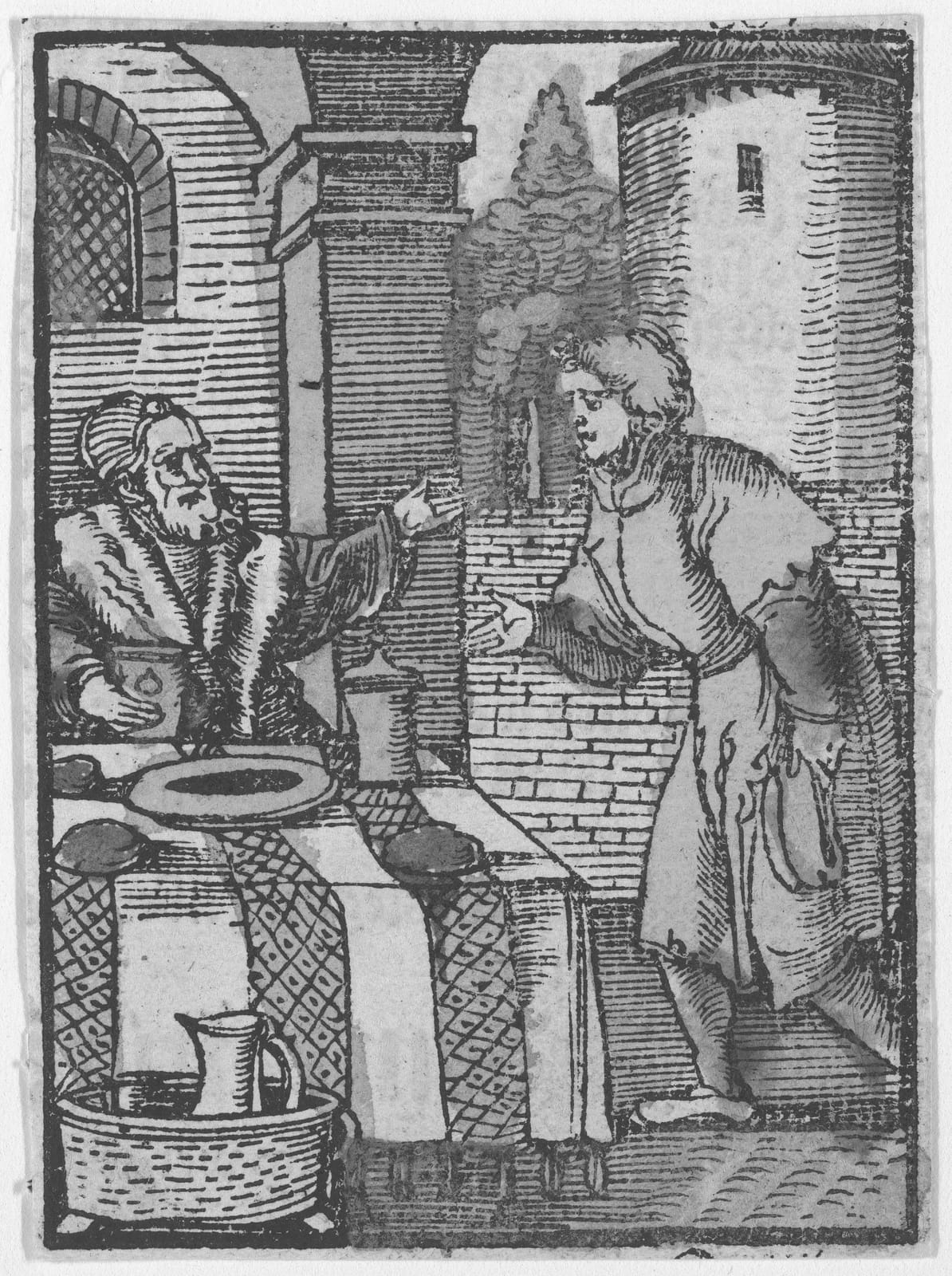
The parable of the banquet whose invited guests stayed away
Hans Schäufelein (1480–1540), The Parable of the Banquet without Guests, from Das Plenarium, 1517. Credits

Email view of this day