This day

August 20, 2020

St Bernard of Clairvaux
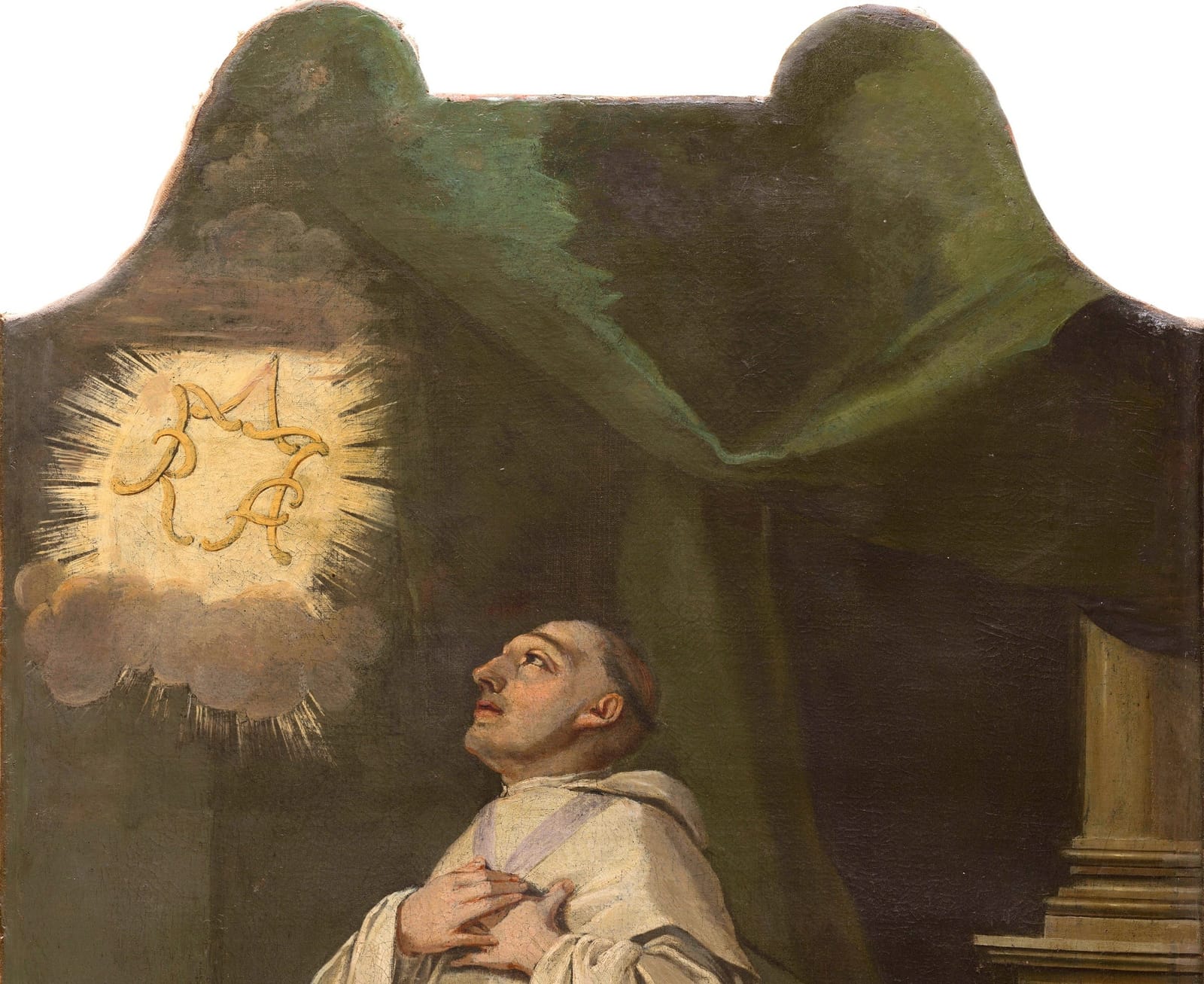
Święty Bernard z Clairvaux, Franciszek Ignacy Molitor (1741–1794). Credits

After Pentecost

August 20, 2020

August 20: St. Bernard, Abbot and Doctor of the Church

From Dom Guéranger’s The Liturgical Year.

THE valley of wormwood has lost its bitterness; having become Clairvaux, or the bright valley, its light shines over the world; from every point of the horizon vigilant bees are attracted to it by the honey from the rock which abounds in its solitude. Mary turns her glance upon its wild hills, and with her smile sheds light and grace upon them. Listen to the harmonious voice arising from the desert; it is the voice of Bernard, her chosen one. 'Learn, O man, the counsel of God; admire the intentions of Wisdom, the design of love. Before bedewing the whole earth, he saturated the fleece; being to redeem the human race, he heaped up in Mary the entire ransom. O Adam, say no more: “The woman whom Thou gavest me offered me the forbidden fruit;" say rather: “The woman whom Thou gavest me has fed me with a fruit of blessing.”With what ardour ought we to honour Mary, in whom was set all the fulness of good! If we have any hope, any saving grace, know that it overflows from her who to-day rises replete with love: she is a garden of delights, over which the divine South Wind does not merely pass with a light breath, but sweeping down from the heights, He stirs it unceasingly with a heavenly breeze, so that it may shed abroad its perfumes, which are the gifts of various graces.


This week's Sunday: The Eleventh Sunday after Pentecost

From Dom Guéranger’s The Liturgical Year.

With the Greeks, this Sunday—their eleventh of Saint Matthew—is called the Parable of the King, who calls his servants to account. In the western Church, it has gone under the name of Sunday of the deaf and dumb, ever since the Gospel of the pharisee and the publican has been assigned to the tenth. To-day's Mass, as we now have it, still gives evidence as to what was its ancient arrangement. Our commentary on to-day's liturgy will show us this very plainly.

In the years when Easter falls nearest to March 21 the Books of Kings are continued as lessons of Matins up to, but never beyond, this Sunday. The sickness of the good king Ezechias, and the miraculous cure he obtained by his prayers and tears, are then the subject of the first lessons of the night-Office.

The learned and pious Abbot Rupert, writing on this Sunday's Mass previous to the change made in the order of the Gospel lessons, thus explains the Church's reason for selecting the following Introit: ‘The publican in the Gospel accuses himself, saying: “I am not worthy to lift up mine eyes to heaven.”

Christ warning the disciples against false prophets
Hans Schäufelein (1480–1540), Christ Warning the Disciples of False Prophets, from Das Plenarium, 1517. Credits

Email view of this day