This day

June 21, 2021

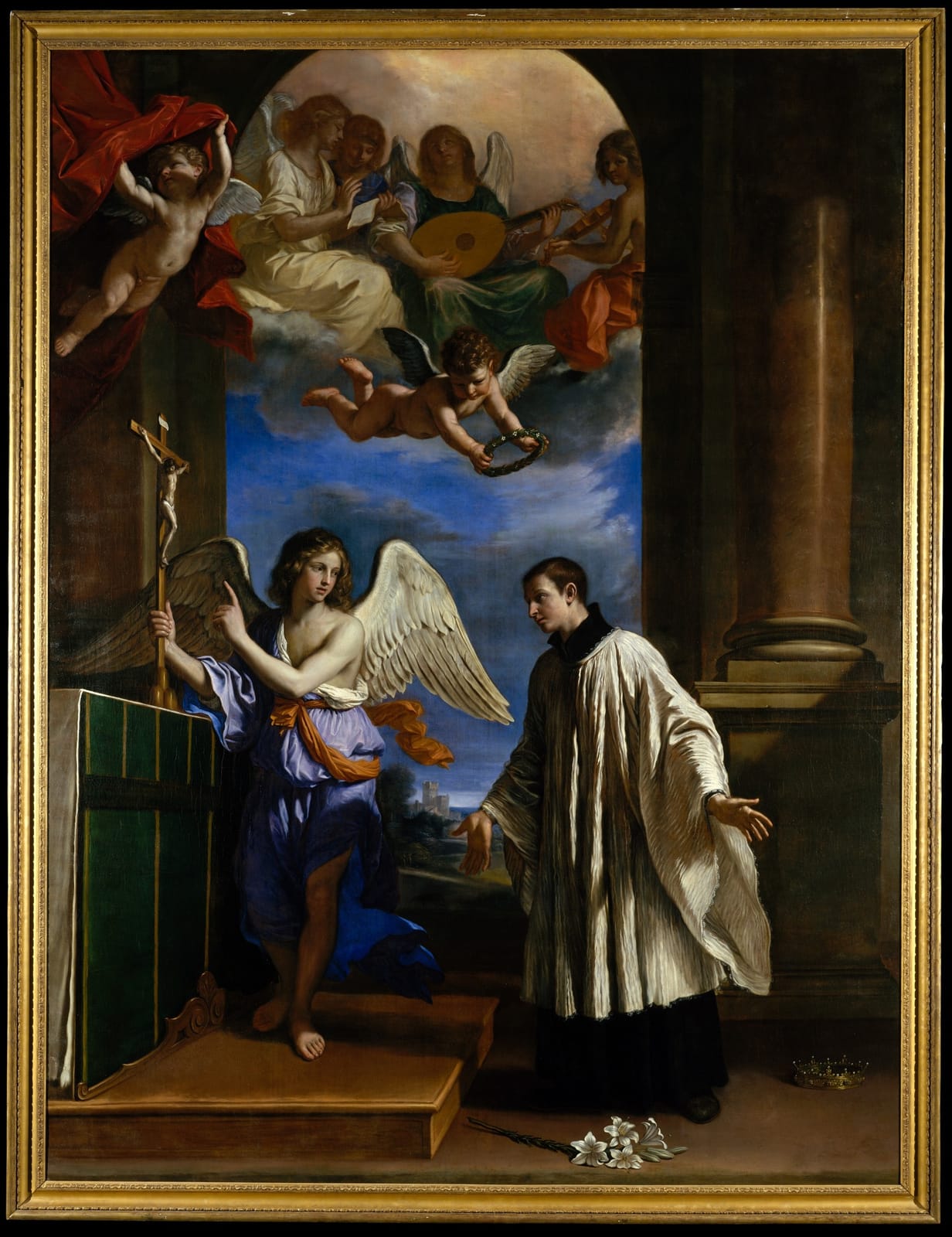
St Aloysius Gonzaga in surplice receiving vocation; crown and lilies at feet
The Vocation of Saint Aloysius (Luigi) Gonzaga, (MET DT1956). Credits

After Pentecost

June 21, 2021

June 21: St. Aloysius Gonzaga, Confessor

From Dom Guéranger’s The Liturgical Year.

OH! how exceeding great is the glory of Aloysius, son of Ignatius! Never could I have believed it, had not my Jesus shown it to me. Never could I have believed that such glory was to be seen in heaven!’ Thus cries out St Mary Magdalene de Pazzi, whose memory we were celebrating a month ago: she is speaking in ecstasy. From the heights of Carmel, whence her ken may reach beyond the heavens, she reveals to earth the splendour wherewith the youthful hero of this day shines amidst the celestial phalanxes.

Yet short was the life of Aloysius, and it had offered nothing to the superficial gaze of a vast majority, save the preliminaries, so to say, of a career broken off in its flower before bearing fruit of any kind. Ah! God does not take account of things as men do; of very slight weight are their appreciations in his judgement! Even in the case of saints themselves, the mere fractional number of years, or brilliant deeds, goes far less to the filling up of a lifetime, in his view, than does love.

This week's Sunday: The Fourth Sunday after Pentecost

From Dom Guéranger’s The Liturgical Year.

The fourth Sunday after Pentecost was called, for a long period, in the west, the Sunday of mercy, because, formerly, there was read upon it the passage from St. Luke beginning with the words: ‘Be merciful, as your Father is merciful.’ But, this Gospel having been since assigned to the Mass of the first Sunday after Pentecost, the Gospel of the fifth Sunday was made that of the fourth; the Gospel of the sixth became that of the fifth; and so on, up to the twenty-third. The change we speak of was, however, not introduced into many Churches till a very late period; and it was not universally received till the sixteenth century.

Whilst the Gospels were thus brought forward a week, in almost the whole series of these Sundays, the Epistles, Prayers, and the other sung portions of the ancient Masses were, with a few exceptions, left as originally drawn up. The connexion which the liturgists of the eleventh, twelfth, and thirteenth centuries had fancied they found between the Gospel and the rest of the liturgy for these Sundays was broken.

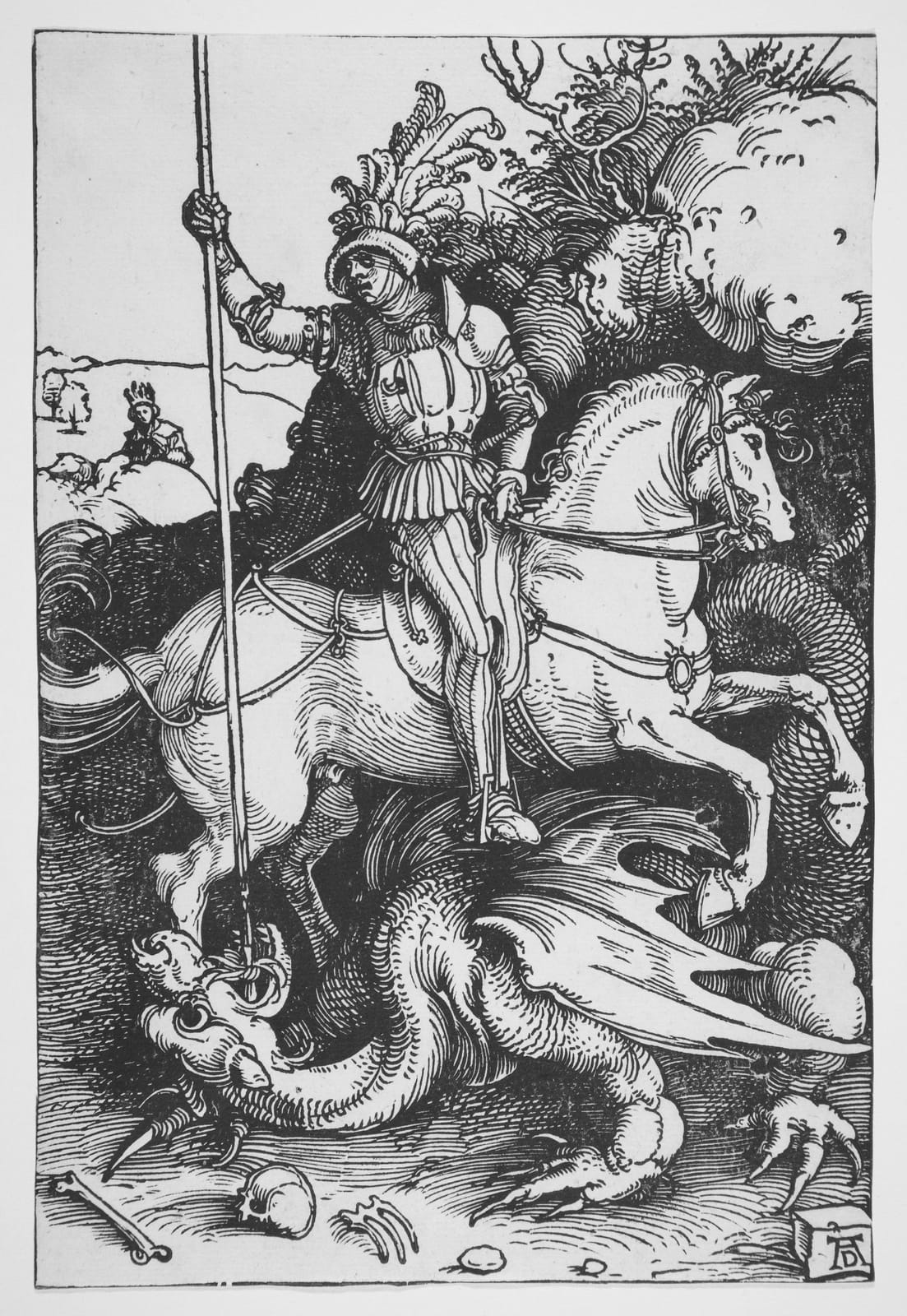
Saint George slaying the dragon
Albrecht Dürer (1471–1528), Saint George Slaying the Dragon, ca. 1504. Credits

Email view of this day