
This day

July 4, 2022

After Pentecost

July 4, 2022

July 4: The Sixth Day within the Octave of the Holy Apostles Peter and Paul

From Dom Guéranger’s The Liturgical Year.

PETER and Paul still hear the prayer of their devout clients throughout the world. Time has wrought no change in their power; and in heaven no more than formerly on earth can the gravity of the general interests of holy Church so absorb them, as that they should neglect the petition of the humblest inhabitant of the glorious city of God, of which they were constituted, and still are, the princes. Putting to sleep the faith of even just men is one of the triumphs of hell at present; hence we must be allowed to insist somewhat on our point, in order to disturb this dangerous slumber, which would end in nothing less than the utter oblivion of the most touching consideration of our Lord's intention, when he confided to mere men the continuance of his work and the representation of his Person visibly here below.

The error whereby the world has been turned away from Peter will be decidedly overcome only when it is brought to see in him, not merely the firmness of the rock in resisting the attacks of hell’s gates, but likewise that tenderness of heart and that paternal solicitude which make him to be indeed the Vicar of Jesus in his love.

This week's Sunday: The Fourth Sunday after Pentecost

From Dom Guéranger’s The Liturgical Year.

The fourth Sunday after Pentecost was called, for a long period, in the west, the Sunday of mercy, because, formerly, there was read upon it the passage from St. Luke beginning with the words: ‘Be merciful, as your Father is merciful.’ But, this Gospel having been since assigned to the Mass of the first Sunday after Pentecost, the Gospel of the fifth Sunday was made that of the fourth; the Gospel of the sixth became that of the fifth; and so on, up to the twenty-third. The change we speak of was, however, not introduced into many Churches till a very late period; and it was not universally received till the sixteenth century.

Whilst the Gospels were thus brought forward a week, in almost the whole series of these Sundays, the Epistles, Prayers, and the other sung portions of the ancient Masses were, with a few exceptions, left as originally drawn up. The connexion which the liturgists of the eleventh, twelfth, and thirteenth centuries had fancied they found between the Gospel and the rest of the liturgy for these Sundays was broken.

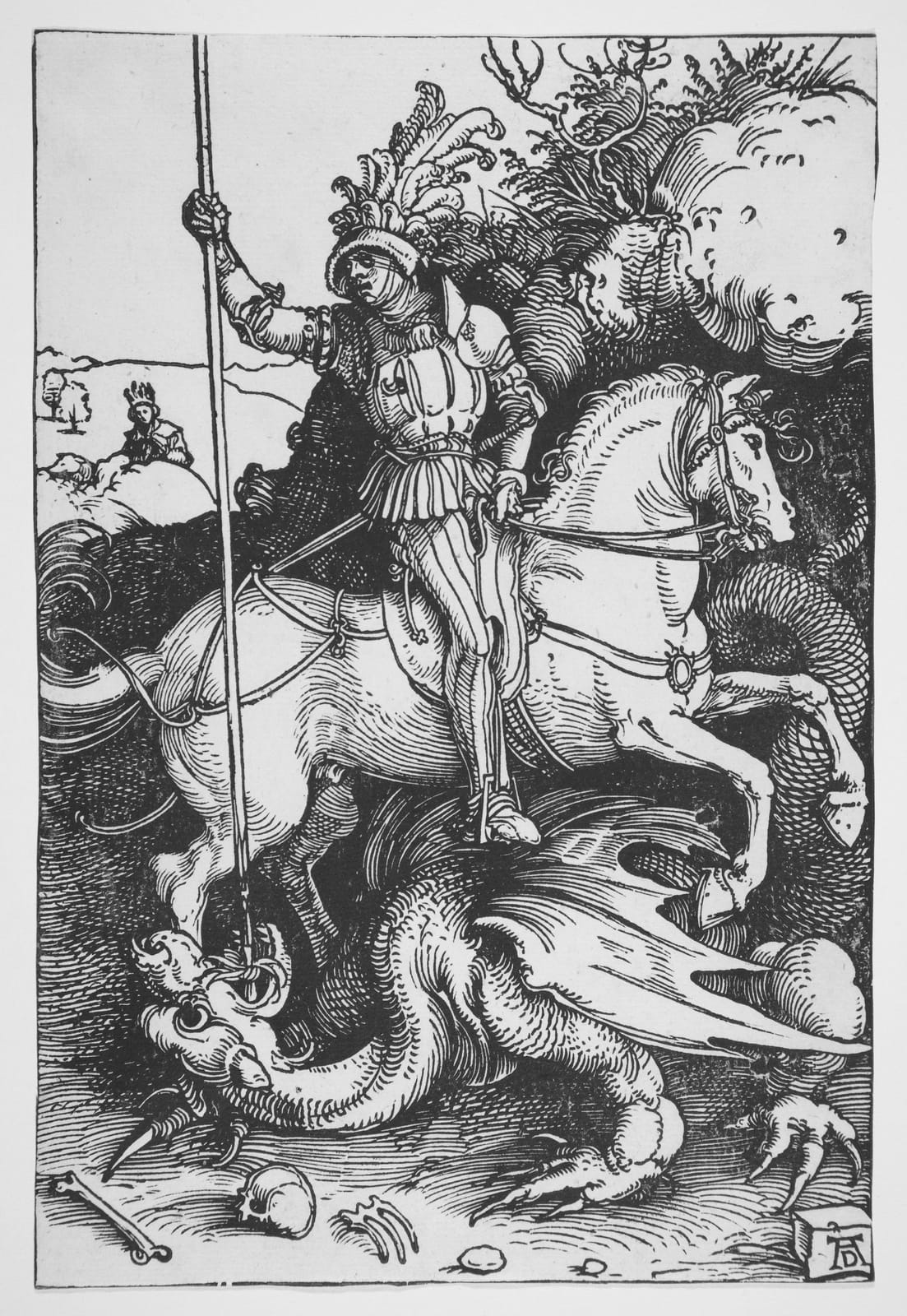
Saint George slaying the dragon
Albrecht Dürer (1471–1528), Saint George Slaying the Dragon, ca. 1504. Credits

Email view of this day