Paschal Time
May 12, 2023
A Semidouble leads the weekday; St. Pancras is commemorated.Rubrics
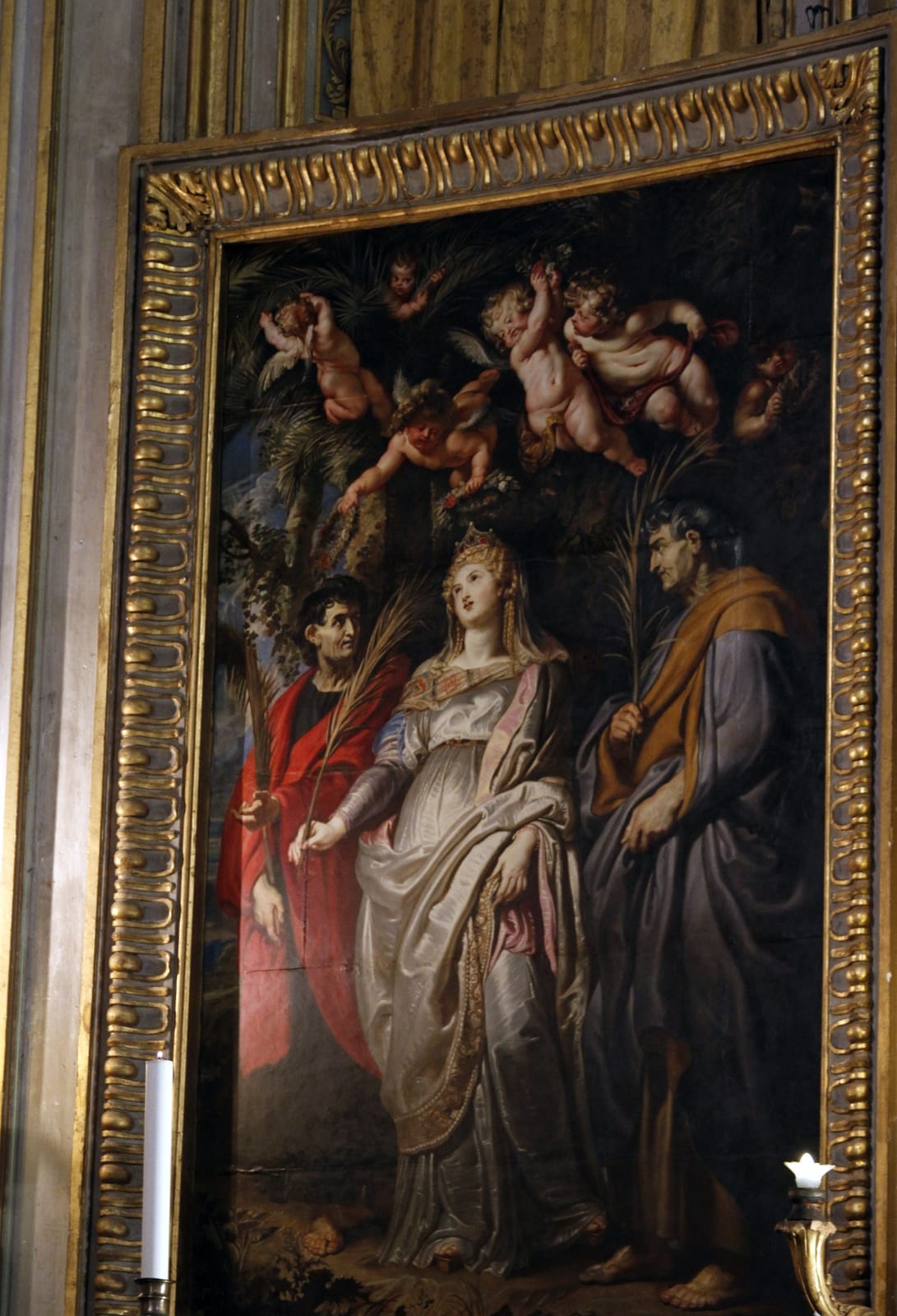
May 12: Sts. Nereus and Achilleus, Martyrs, and St. Flavia Domitilla, Virgin and Martyr
From Dom Guéranger’s The Liturgical Year.
SO far in our Paschal season, the choir of Virgin martyrs has not yet offered to Jesus its crown of roses and lilies. It does so to-day, by presenting to him the noble Flavia Domitilla, the fairest flower of Rome, that was cut down by the sword of martyrdom in the first age of the Christian faith. It was under the persecution of Domitian—during which John the Evangelist was condemned to be burned alive in the cauldron of boiling oil—that Flavia Domitilla was honoured with banishment and death for the sake of our Redeemer, whom she had chosen for her Spouse. She was of the imperial family, being a niece of Flavius Clemens, who adorned the consular dignity by martyrdom. She was one of the Christians belonging to the court of the Emperor Domitian, who show us how rapidly the religion of the poor and humble made its way to the highest classes of Roman life. A few years previous to this, St Paul sent to the Christians of Philippi the greetings of the Christians of Nero's palace. There is still extant, not far from Rome, on the Ardeatine Way, the magnificent subterranean cemetery which Flavia Domitilla ordered to be dug on her prædium, and in which were buried the two martyrs, Nereus and Achilleus, whom the Church honours to-day together with the noble virgin who owes her crown to them.