This day

June 29, 2023

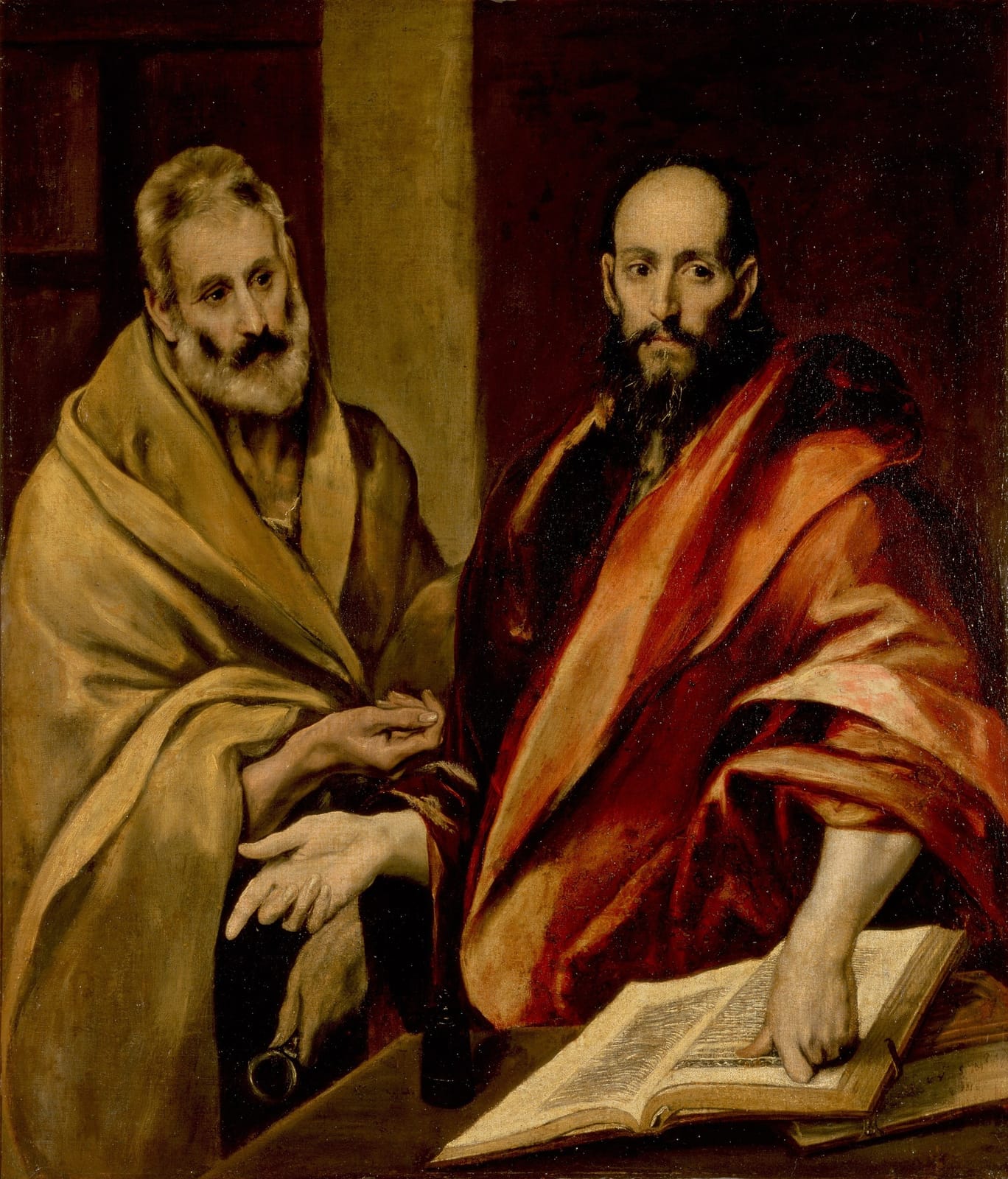
Saints Peter and Paul
Saints Peter and Paul, El Greco (1541–1614), c. 1587–1592. Credits

After Pentecost

June 29, 2023

June 29: Sts. Peter and Paul, Apostles

From Dom Guéranger’s The Liturgical Year.

SIMON, son of John, lovest thou me?' Behold the hour when the answer which the Son of Man exacted of the fisher of Galilee re-echoes from the seven hills and fills the whole earth. Peter no longer dreads the triple interrogation of his Lord. Since that fatal night wherein, after the first cockcrow, the prince of the apostles had denied his Master, tears have not ceased to furrow the cheeks of the Vicar of Christ; at last the day has come when his tears shall be dried! From that gibbet to which, at his own request, the humble disciple has been nailed head downwards, his bounding heart repeats the protestation which, ever since the scene enacted on the brink of Lake Tiberias, has been silently wearing his life away: ‘Yea, Lord; thou knowest that I love thee!'

Sacred day, on which the oblation of the first of Pontiffs assures to the West the rights of supreme priesthood! Day of triumph, in which the effusion of a generous life-blood wins for God the conquest of the Roman soil; in which, upon the cross of his representative, the divine Spouse concludes his eternal alliance with the queen of nations.

This week's Sunday: The Fourth Sunday after Pentecost

From Dom Guéranger’s The Liturgical Year.

The fourth Sunday after Pentecost was called, for a long period, in the west, the Sunday of mercy, because, formerly, there was read upon it the passage from St. Luke beginning with the words: ‘Be merciful, as your Father is merciful.’ But, this Gospel having been since assigned to the Mass of the first Sunday after Pentecost, the Gospel of the fifth Sunday was made that of the fourth; the Gospel of the sixth became that of the fifth; and so on, up to the twenty-third. The change we speak of was, however, not introduced into many Churches till a very late period; and it was not universally received till the sixteenth century.

Whilst the Gospels were thus brought forward a week, in almost the whole series of these Sundays, the Epistles, Prayers, and the other sung portions of the ancient Masses were, with a few exceptions, left as originally drawn up. The connexion which the liturgists of the eleventh, twelfth, and thirteenth centuries had fancied they found between the Gospel and the rest of the liturgy for these Sundays was broken.

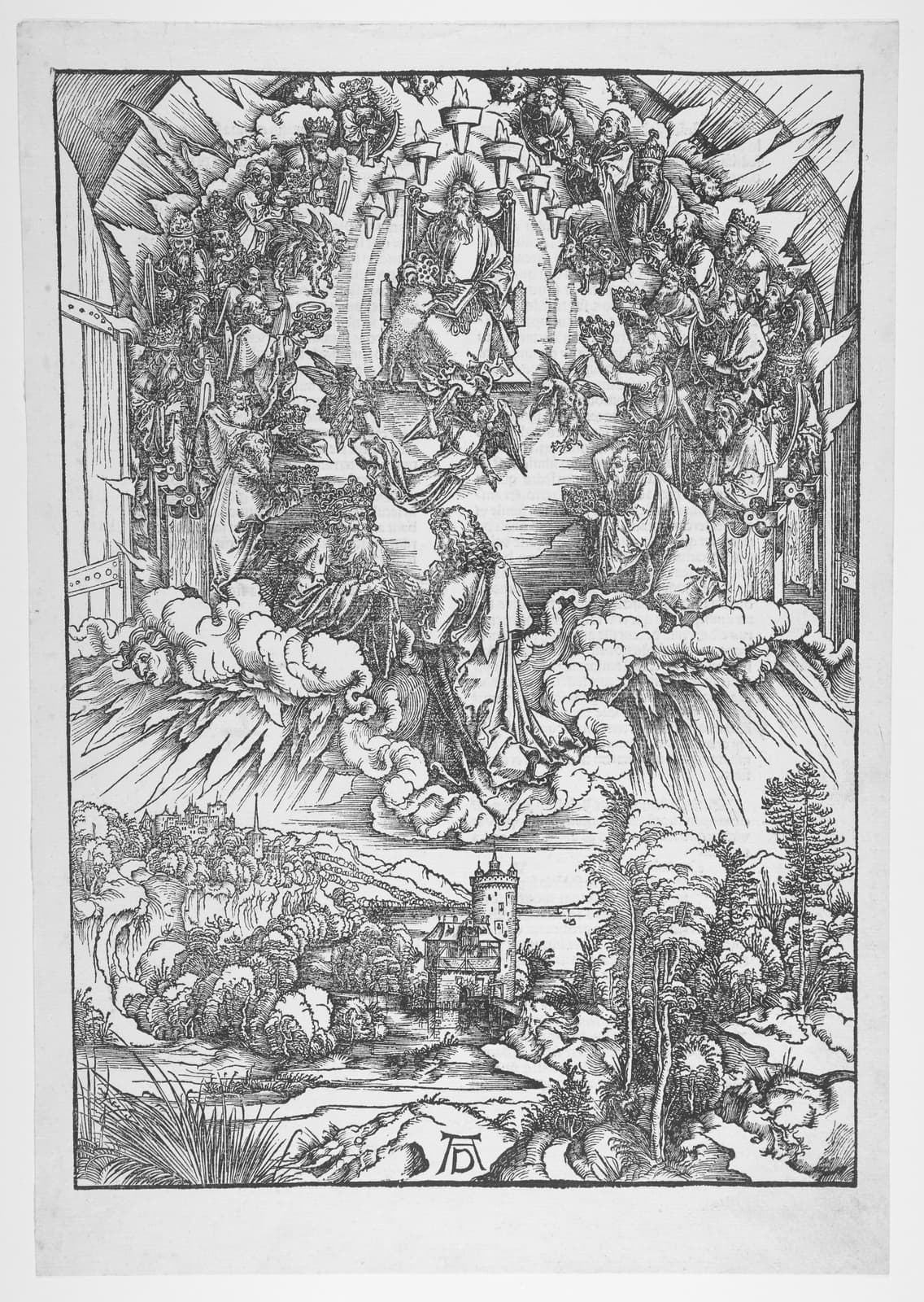
Saint John before God and the elders
Albrecht Dürer (1471–1528), Saint John Before God and the Elders, from The Apocalypse, 1498. Credits

Email view of this day