This day

June 30, 2023

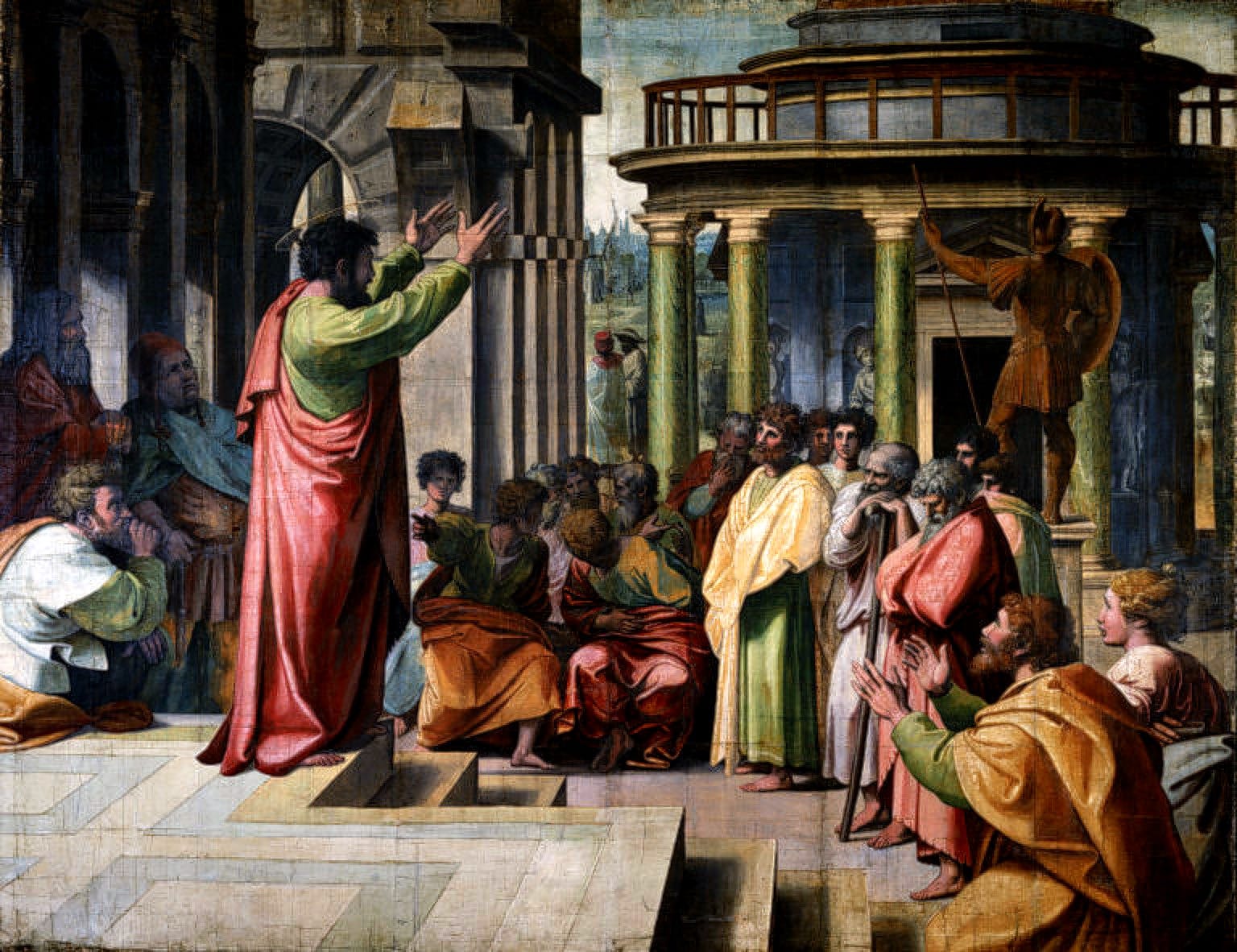
St Paul preaching in Athens, arm raised among listeners
St Paul Preaching in Athens, Raphael (1483–1520). Credits

After Pentecost

June 30, 2023

June 30: The Commemoration of St. Paul

From Dom Guéranger’s The Liturgical Year.

WHEREAS the Greeks on this day are uniting in one solemnity the memory, as they express it, ‘of the illustrious saints, the twelve apostles, worthy of all praise,’ let us follow in spirit the Roman populace, who are gathered around the successor of Peter, and are making the splendid basilica of the Ostian Way re-echo with songs of victory, while he is offering to the Doctor of the Gentiles the grateful homage of the city and of the world.

On the twenty-fifth of January we beheld Stephen leading to Christ’s crib the once ravenous wolf of Benjamin, tamed at last, but who in the morning of his impetuous youth had filled the Church of God with tears and bloodshed. His evening did indeed come when, as Jacob had foreseen, Saul, the persecutor, would outstrip all his predecessors among Christ’s disciples in giving increase to the fold, and in feeding the flock with the choicest food of his heavenly doctrine.

By an unexampled privilege, our Lord, though already seated at the right hand of his Father, vouchsafed not only to call, but personally to instruct this new disciple, so that he might one day be numbered amongst his apostles.

This week's Sunday: The Fourth Sunday after Pentecost

From Dom Guéranger’s The Liturgical Year.

The fourth Sunday after Pentecost was called, for a long period, in the west, the Sunday of mercy, because, formerly, there was read upon it the passage from St. Luke beginning with the words: ‘Be merciful, as your Father is merciful.’ But, this Gospel having been since assigned to the Mass of the first Sunday after Pentecost, the Gospel of the fifth Sunday was made that of the fourth; the Gospel of the sixth became that of the fifth; and so on, up to the twenty-third. The change we speak of was, however, not introduced into many Churches till a very late period; and it was not universally received till the sixteenth century.

Whilst the Gospels were thus brought forward a week, in almost the whole series of these Sundays, the Epistles, Prayers, and the other sung portions of the ancient Masses were, with a few exceptions, left as originally drawn up. The connexion which the liturgists of the eleventh, twelfth, and thirteenth centuries had fancied they found between the Gospel and the rest of the liturgy for these Sundays was broken.

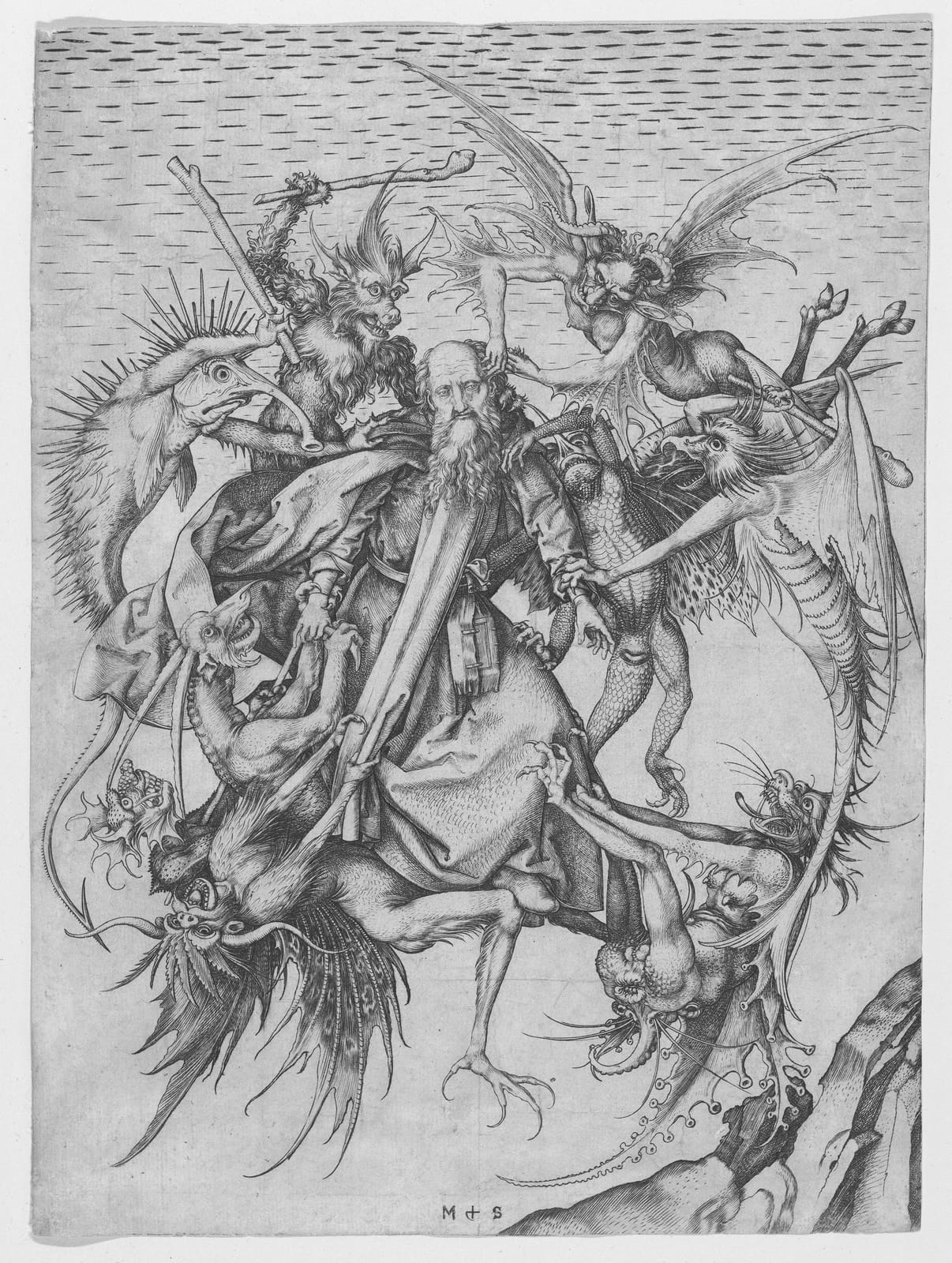
Saint Anthony tormented by demons
Martin Schongauer (ca. 1435/50–1491), Saint Anthony Tormented by Demons, ca. 1470–75. Credits

Email view of this day