This day

October 6, 2023

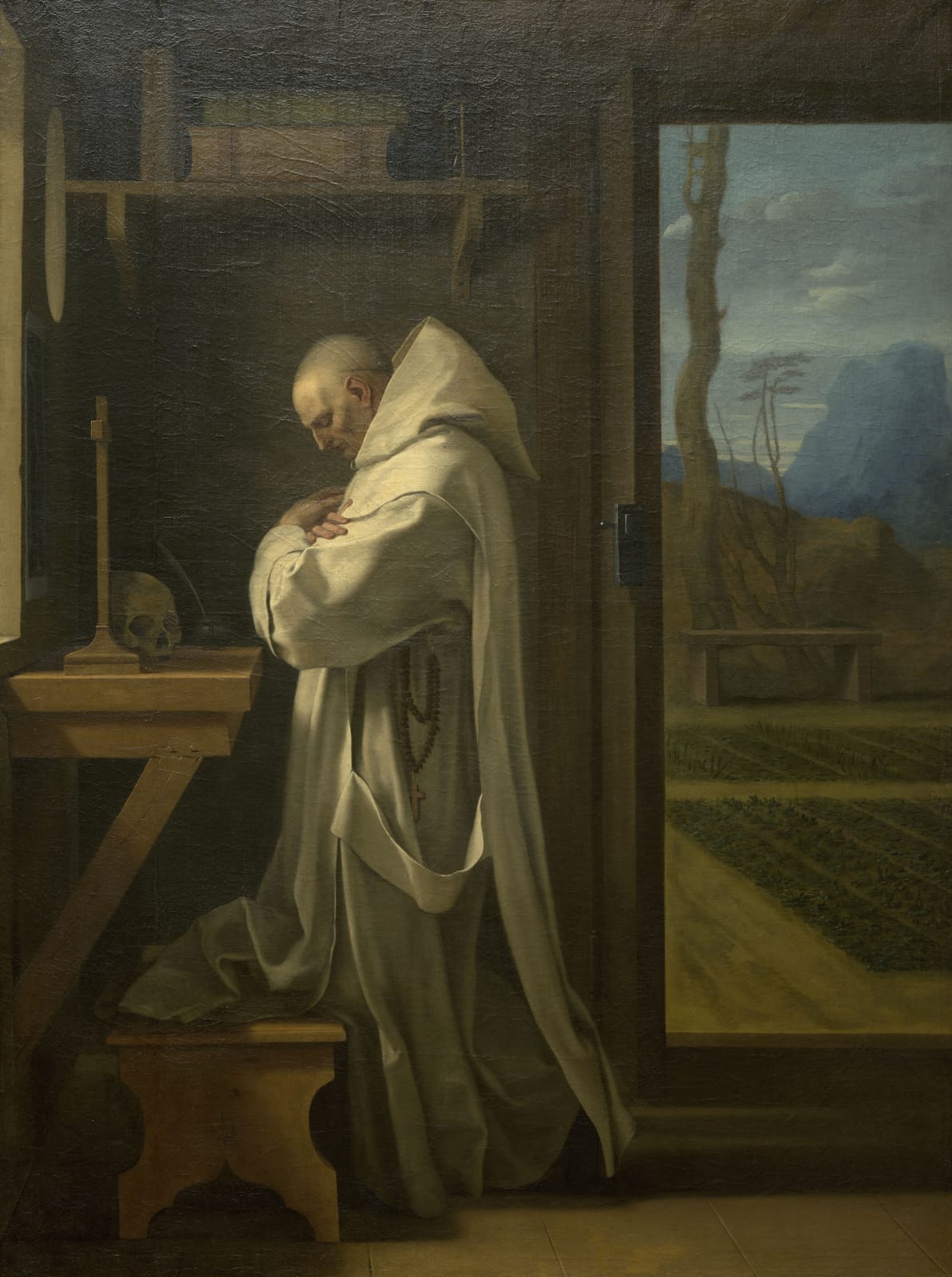
Saint Bruno in Prayer
Saint Bruno in Prayer, Eustache Le Sueur (1616–1655), c. 1650. Credits

After Pentecost

October 6, 2023

October 6: St. Bruno, Confessor

From Dom Guéranger’s The Liturgical Year.

Among the divers religious families, none is held in higher esteem by the Church than the Carthusian; the prescriptions of the corpus juris determine that a person may pass from any other Order into this, without deterioration. And yet it is of all the least given to active works. Is not this a new, and not the least convincing, proof that outward zeal, how praiseworthy soever, is not the only, or the principal thing in God’s sight? The Church, in her fidelity, values all things according to the preferences of her divine Spouse. Now, our Lord esteems His elect not so much by the activity of their works, as by the hidden perfection of their lives; that perfection which is measured by the intensity of the divine life, and of which it is said: ‘Be you therefore perfect, as also your heavenly Father is perfect.’ Again it is said of this divine life: 'You are dead and your life is hid with Christ in God.' The Church, then, considering the solitude and silence of the Carthusian, his abstinence even unto death, his freedom to attend to God through complete disengagement from the senses and from the world—sees therein the guarantee of a perfection which may indeed be met with elsewhere, but here appears to be far more secure.

This week's Sunday: The Eighteenth Sunday after Pentecost

From Dom Guéranger’s The Liturgical Year.

The paralytic carrying his bed is the subject of this day’s Gospel, and gives the eighteenth Sunday after Pentecost its title. This Sunday is inserted in the missal immediately after the Ember-days of autumn. We will not, like the liturgists of the Middle Ages, discuss the question of its having taken the place of the vacant Sunday, which formerly used always to follow the ordination of the sacred ministers, in the manner we have elsewhere described. Manuscript sacramentaries and lectionaries of very ancient date give it the name, which was so much in use, of Dominica vacat. Whatever may be the conclusion arrived at, there is one interesting point for consideration, viz., that in the Mass of this day the order of the lessons taken from St. Paul is broken. The Letter to the Ephesians, which has furnished the Epistles since the sixth Sunday after Pentecost, is to-day interrupted, and in its stead we have some verses from the first Epistle to the Corinthians, wherein the apostle gives thanks to God for the manifold gratuitous gifts granted, in Christ Jesus, to the Church.

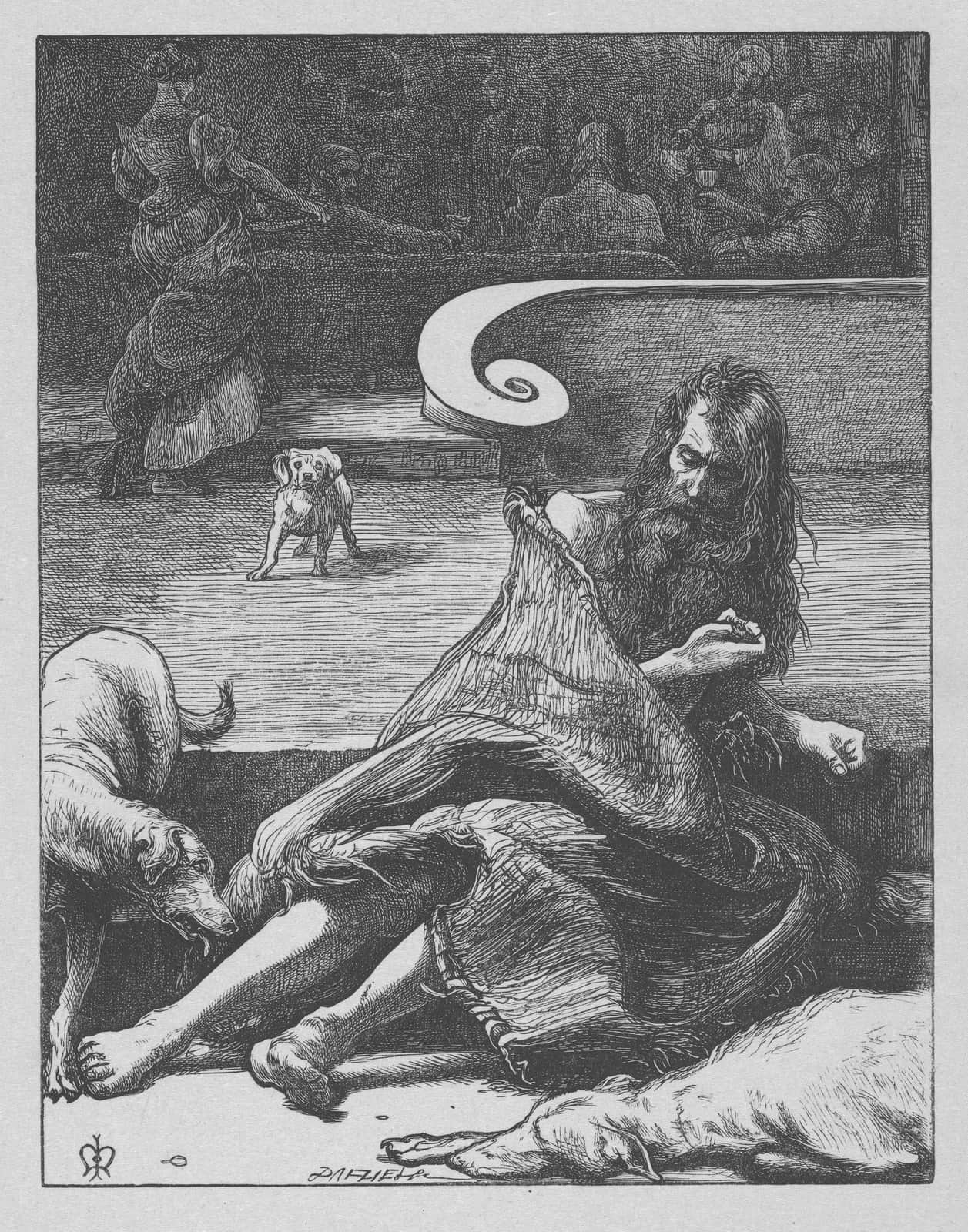
The rich man and Lazarus
Sir John Everett Millais (1829–1896), The Rich Man and Lazarus, from The Parables of Our Lord and Saviour Jesus Christ, 1864. Credits

Email view of this day