This day

March 12, 2024

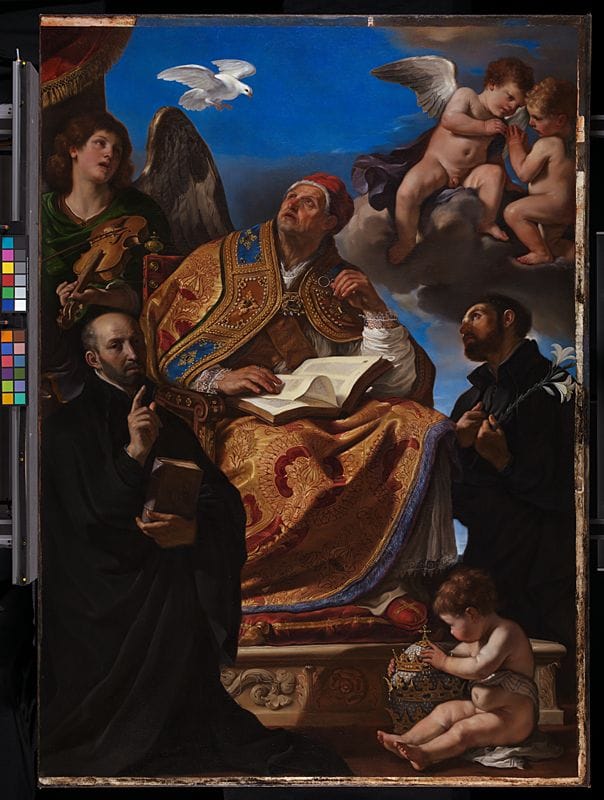
Pope Gregory the Great enthroned with Jesuit saints
Saint Gregory the Great with Saints Ignatius Loyola and Francis Xavier, Guercino (1591–1666), about 1625–1626. Credits

Lent

March 12, 2024

A Double leads the weekday.Rubric

March 12: St. Gregory the Great, Pope and Doctor of the Church

From Dom Guéranger’s The Liturgical Year.

Among all the pastors whom our Lord Jesus Christ has placed, as His vicegerents, over the universal Church, there is not one whose merits and renown have surpassed those of the holy Pope, whose feast we keep to-day. His name is Gregory, which signifies watchfulness; his surname is ‘the Great,’ and he was in possession of that title, when God sent the Seventh Gregory, the glorious Hildebrand, to govern His Church.

In recounting the glories of this illustrious Pontiff, it is but natural we should begin with his zeal for the services of the Church. The Roman liturgy, which owes to him some of its finest hymns, may be considered as his work, at least in this sense, that it is he who collected together and classified the prayers and rites drawn up by his predecessors, and reduced them to the form in which we now have them. He collected also the ancient chants of the Church, and arranged them in accordance with the rules and requirements of the divine Service. Hence it is, that our sacred music, which gives such solemnity to the liturgy, and inspires the soul with respect and devotion during the celebration of the great mysteries of our faith, is known as the Gregorian chant.

Tuesday of the Fourth Week of Lent

From Dom Guéranger’s The Liturgical Year.

The Station is in the church of Saint Laurence in Damaso; so called, because it was built, in the fourth century, in honour of the glorious archdeacon of Rome, by Pope St. Damasus, whose body rests here.

We beseech thee, O Lord, that the holy fast we observe may be to our improvement in holy conversation, and draw down upon us the constant succours of thy mercy. Through Christ our Lord. Amen.

Lectio libri Exodi.
Cap. xxxii.
In diebus illis, locutus est Dominus ad Moysen, dicens: Descende de monte: peccavit populus tuus, quem eduxisti de terra Ægypti. Recesserunt cito de via, quam ostendisti eis: feceruntque sibi vitulum conflatilem, et adoraverunt, atque immolantes ei hostias, dixerunt: Isti sunt dii tui, Israël, qui te eduxerunt de terra Ægypti. Rursumque ait Dominus ad Moysen: Cemo quod populus iste duræ cervicis sit: dimitte me, ut irascatur furor meus contra eos, et deleam eos, faciamque te in gentem magnam. Moyses autem orabat Dominum Deum suum, dicens: Cur, Domine, irascitur furor tuus contra populum tuum, quem eduxisti de terra Ægypti in fortitudine magna, et in manu robusta? Ne, quæso, dicant Ægyptii: Callide eduxit eos, ut interficeret in montibus, et deleret e terra: quiescat ira tua, et esto placabilis super nequitia populi tui.

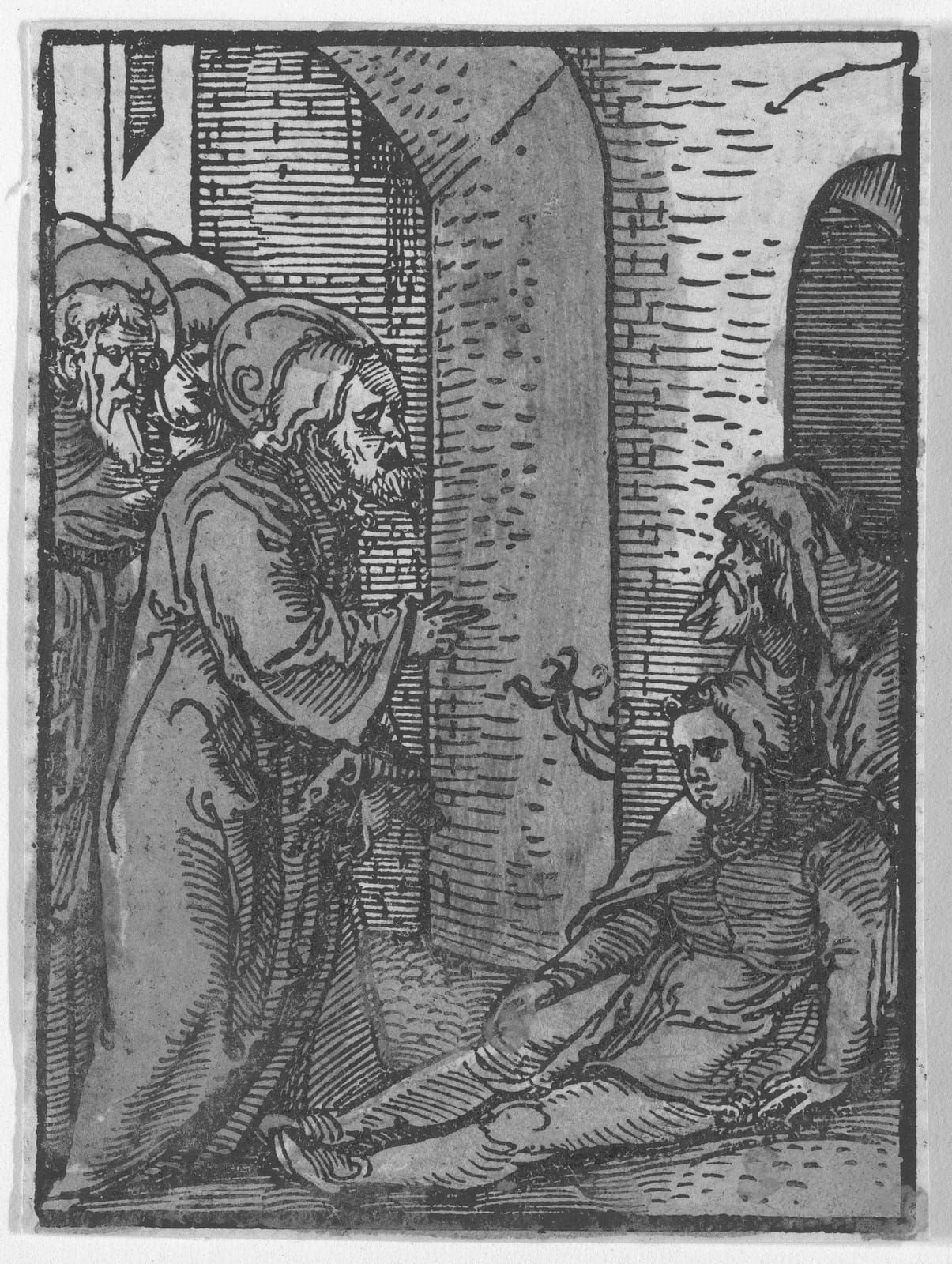
Christ healing a possessed man as a demon flees
Hans Schäufelein (1480–1540), Christ Healing the Possessed, from Das Plenarium, 1517. Credits

Email view of this day