This day

May 17, 2024

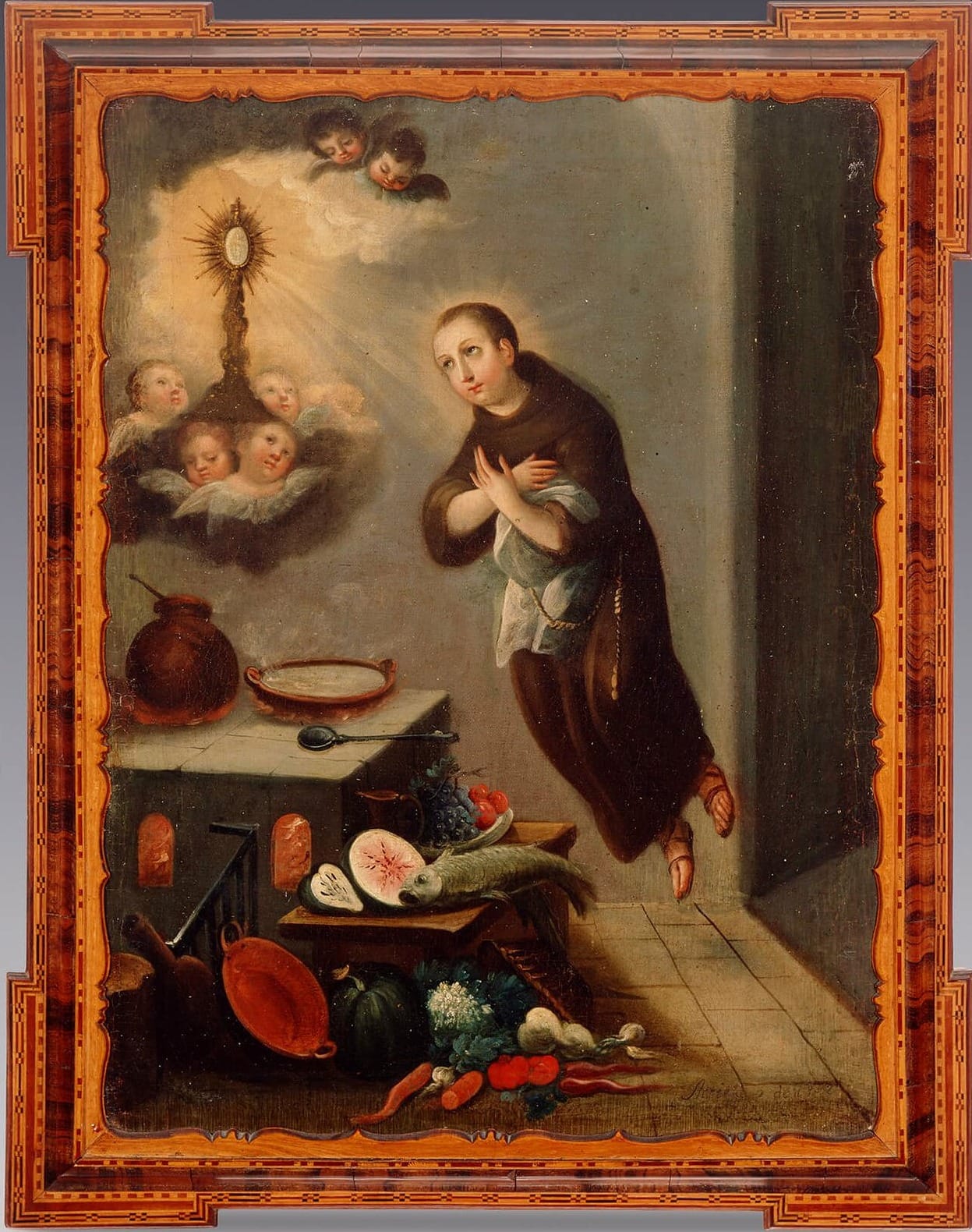
St Paschal Baylon in Franciscan habit
Saint Paschal Baylon, José Agustín Arrieta (1803–1874). Credits

Paschal Time

May 17, 2024

May 17: St. Paschal Baylon, Confessor

From Dom Guéranger’s The Liturgical Year.

THE Seraph of Assisi was sure to depute some of his children to pay their court to his Risen Master. The one he sends to-day is the humblest and most obscure of men; another will follow, three days hence, powerful in word and work, and holding a palm in his hands, as a most devoted preacher of the Gospel. Paschal Baylon was a simple peasant. He was a shepherd-boy; and it was in tending his flock that he found the Lord Jesus. He had a great love for contemplation. Forests and fields spoke to him of their great Creator; and, in order that he might be the more closely united with him, he resolved to seek him in the highest paths of perfection. He was ambitious to imitate the humble, poor and suffering life of the Man-God; the Franciscan Cloister offered him the opportunity of satisfying this desire and he flew to it. On that blessed soil, he grew to be one of heaven's choicest plants, and the whole earth has now heard the name of the humble lay-brother of a little convent in Spain.

Friday after the Octave of the Ascension

From Dom Guéranger’s The Liturgical Year.

O King of glory, Lord of hosts, who didst this day ascend in triumph above all the heavens! leave us not orphans, but send upon us the Spirit of truth, promised by the Father, alleluia.

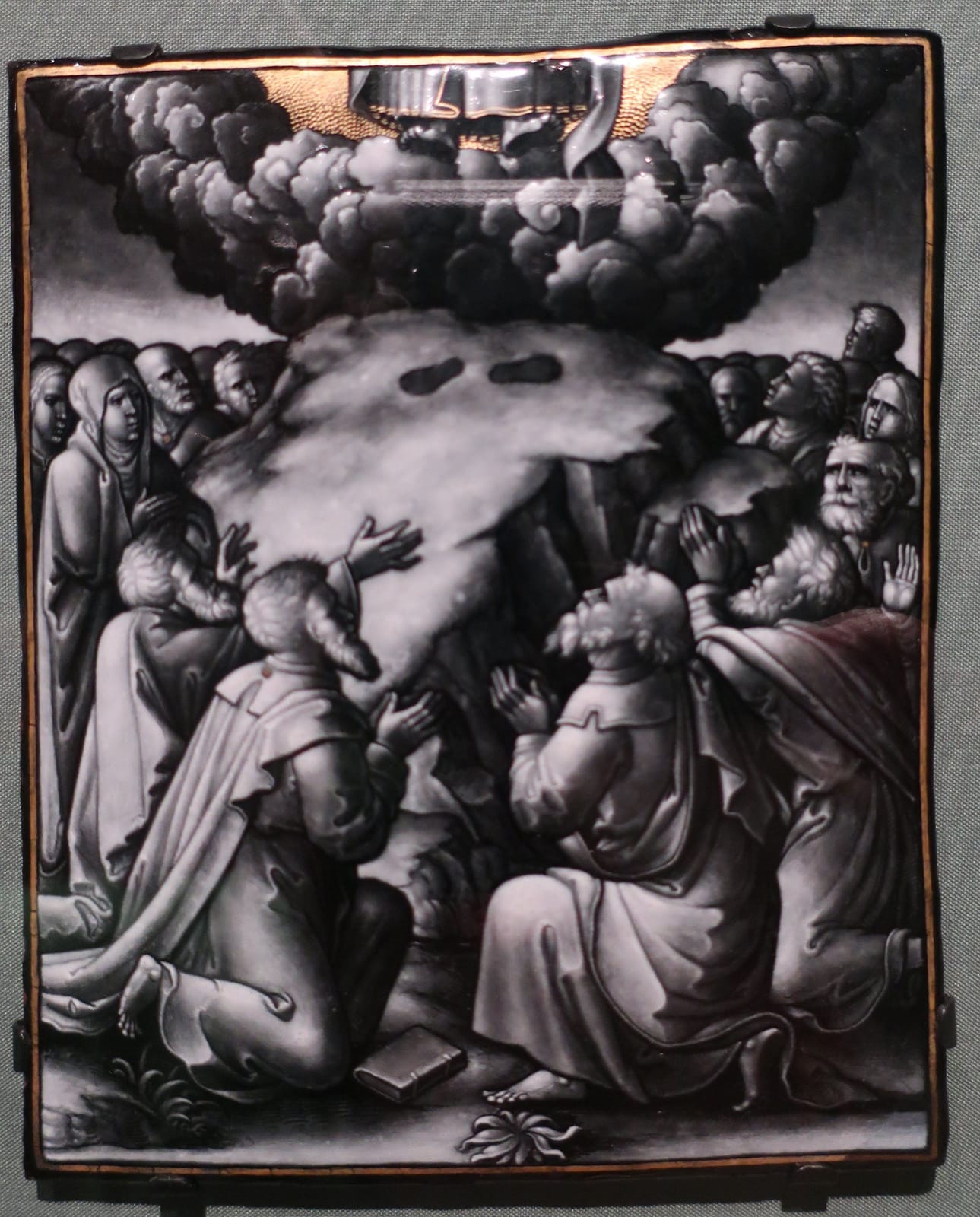
The octave is over; the mystery of the glorious Ascension is completed; and our Jesus is never again to be seen upon this earth, until He comes to judge the living and the dead. We are to see Him only by faith; we are to approach Him only by love. Such is our probation; and if we go well through it, we shall, at last, be permitted to enter within the veil, as a reward for our faith and love.

Let us not complain of our lot; rather let us rejoice in that hope, which, as the apostle says, confoundeth not. And how can we be otherwise than hopeful, when we remember that Jesus has promised to abide with us even to the consummation of the world? He will not appear visibly; but He will be always really with us. How could He abandon His bride the Church?

The apostles kneel around the footprints as Christ’s feet pass into the cloud
Pierre Reymond (c. 1513–after 1584), The Ascension of Christ, c. 1550. Painted enamel. Public domain (Wikimedia Commons PD-Art). Credits

Email view of this day