After Pentecost
September 17, 2024
A Double leads; St. Hildegarde of Bingen is commemorated.Rubric
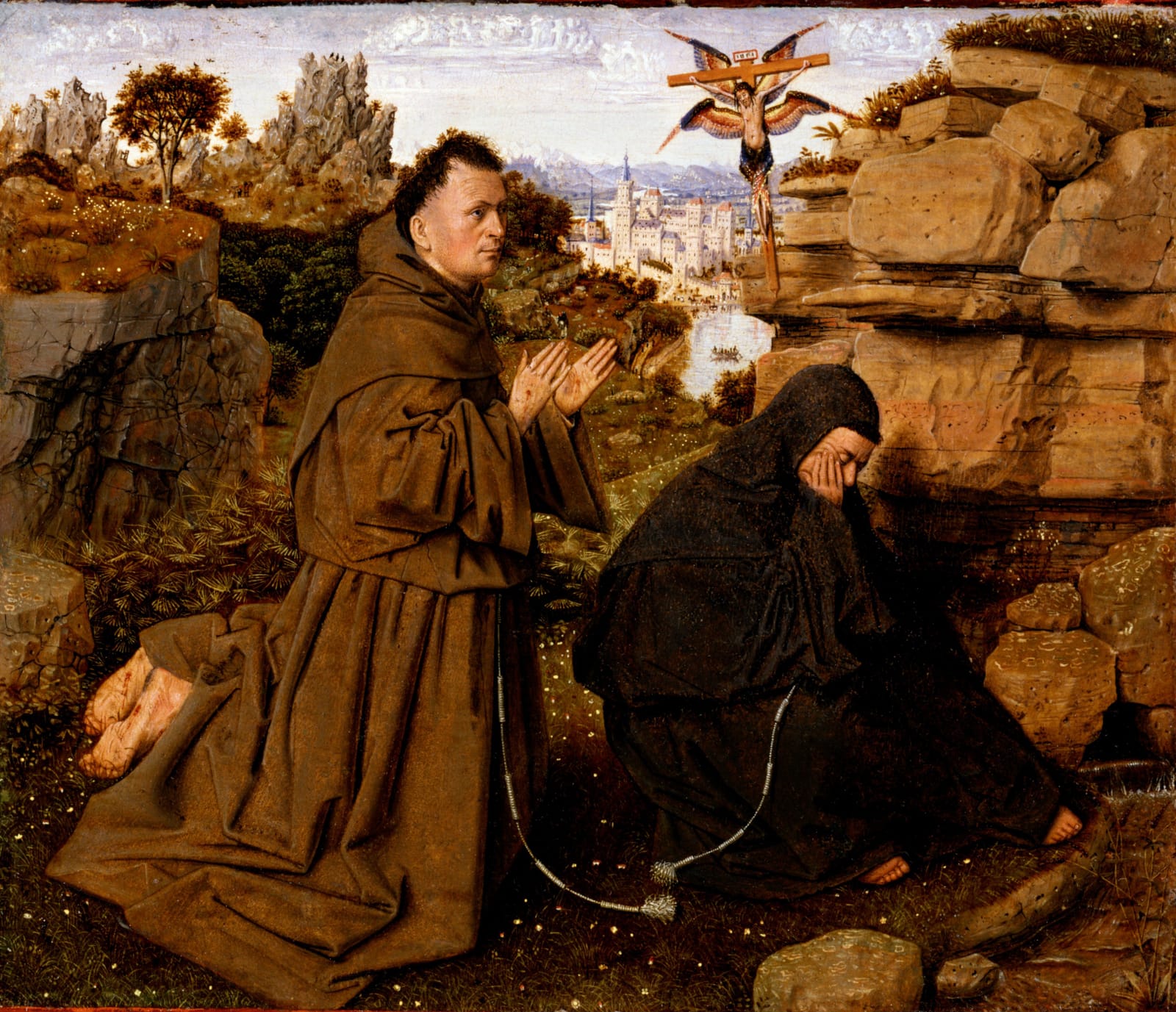
September 17: The Stigmata of St. Francis
From Dom Guéranger’s The Liturgical Year.
The great patriarch of Assisi will soon appear a second time in the holy liturgy, and we shall praise God for the marvels wrought in him by divine grace. The subject of to-day’s feast, while a personal glory to St. Francis, is of greater importance for its mystical signification.
The Man-God still lives in the Church by the continual reproduction of His mysteries in this His bride, making her a faithful copy of Himself. In the thirteenth century, while the charity of the many had grown cold, the divine fire burned with redoubled ardour in the hearts of a chosen few. It was the hour of the Church’s passion; the beginning of that series of social defections, with their train of denials, treasons, and derisions, which ended in the proscription we now witness. The cross had been exalted before the eyes of the world: the bride was now to be nailed thereto with her divine Spouse, after having stood with Him in the pretorium exposed to the insults and blows of the multitude.
Like an artist selecting a precious marble, the holy Spirit chose the flesh of the Assisian seraph as the medium for the expression of His divine thought.