After Pentecost
September 18, 2024
A Double leads the weekday.Rubric
September 18: St. Joseph of Cupertino, Confessor
From Dom Guéranger’s The Liturgical Year.
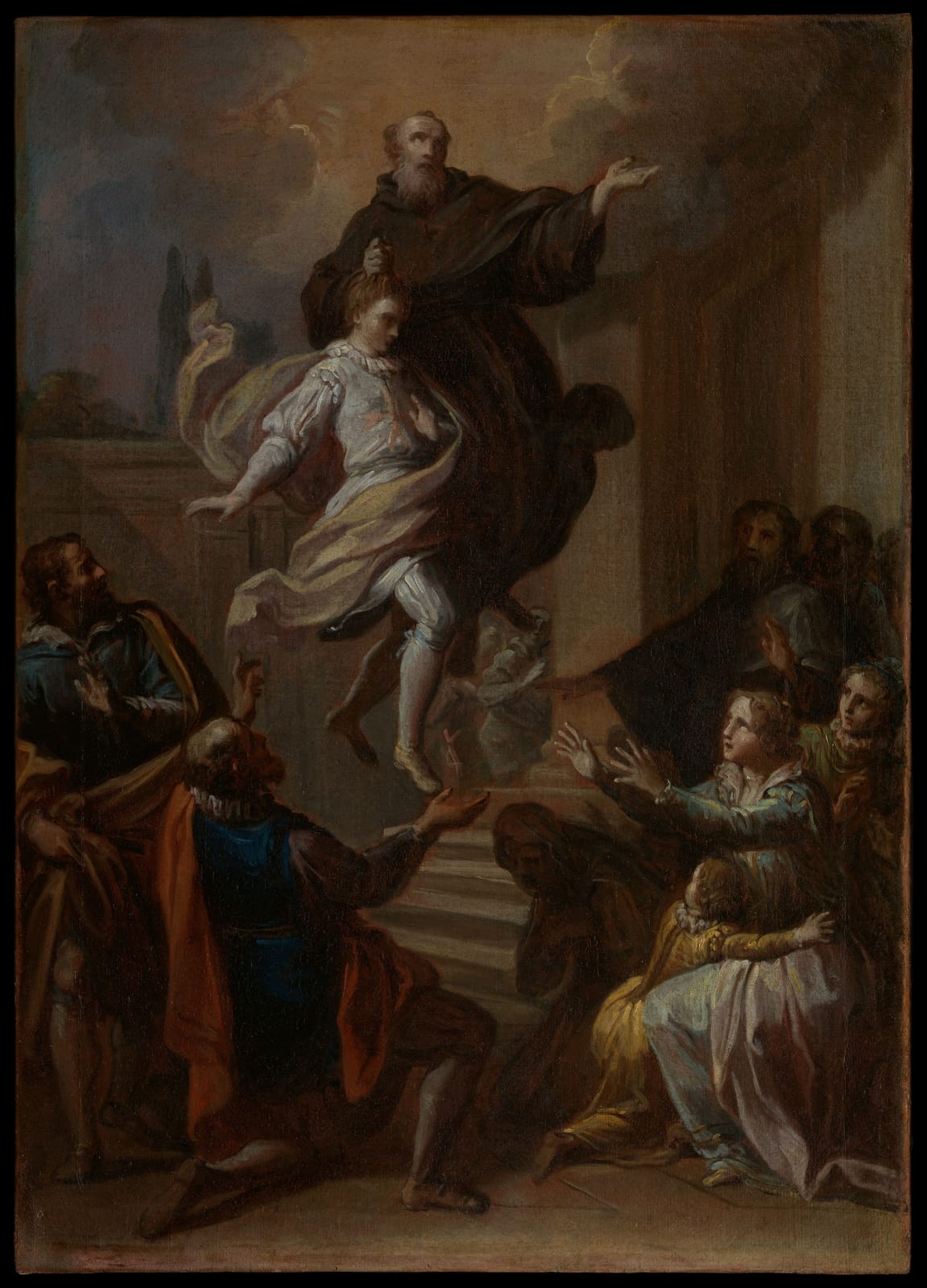
While, in France, the rising spirit of Jansenism was driving God from the hearts of the people, a humble son of St. Francis, in southern Italy, was showing how easily love may span the distance between earth and heaven. ‘And I, if I be lifted up from the earth, will draw all things to Myself,’ said our Lord; and time has proved it to be the most universal of His prophecies. On the feast of the holy cross, we witnessed its truth, even in the domain of social and political claims. We shall experience it in our very bodies on the great day, when we shall be taken up in the clouds to meet Christ, into the air. But Joseph of Cupertino had experience of it without waiting for the resurrection: innumerable witnesses have borne testimony to his life of continual ecstasies, wherein he was frequently seen raised high in the air. And these facts took place in what men are pleased to call the noonday of history.
Josephus a Cupertino, oppido in Salentinis diœcesis Neritonensis, anno reparatæ salutis millesimo sexcentesimo tertio, piis ibidem parentibus ortus, Deique amore præventus, pueritiam atque adolcscentiam summa cum simplicitate morumque innocentia transegit.