This day

May 12, 2025

Paschal Time

May 12, 2025

Monday of the Fourth Week after Easter

From Dom Guéranger’s The Liturgical Year.

℣. In thy resurrection, O Christ, alleluia.
℟. Let heaven and earth rejoice, alleluia.

OUR Risen Jesus is not satisfied with establishing his Church and constituting the hierarchy which is to govern it in his name to the end of time; he also confides in his disciples his divine word, that is, the truths he is come to reveal to mankind, into which truths he has given them an insight during the three years preceding his Passion. The word of God, which is also called revelation, is, together with grace, the most precious gift that heaven could bestow upon us. It is by the word of God that we know the mysteries of his divine essence, the plan according to which he framed the creation, the supernatural end he destined for such of his creatures as he endowed with understanding and free-will, the sublime work of redemption by the Incarnation of the Second Person of the Blessed Trinity—in a word, the means whereby we are to honour and serve him, and attain the end for which we were made.

From the very commencement of the world, God revealed his word to man; later on, he spoke by the prophets; but when the fulness of time came, he sent upon the earth his Only Begotten Son, that he might complete this first revelation.

Chapter 3: The Practice during Paschal Time

From Dom Guéranger’s The Liturgical Year.

THE practice for this holy season mainly consists in the spiritual joy which it should produce in every soul that is risen with Jesus. This joy is a fore-taste of eternal happiness, and the Christian ought to consider it a duty to keep it up within him, by ardently seeking after that life which is in our divine Head, and by carefully shunning sin which causes death. During the last nine weeks we have mourned for our sins and done penance for them; we have followed Jesus to Calvary; but now, our holy Mother the Church is urgent in bidding us rejoice. She herself has laid aside all sorrow; the voice of her weeping is changed into the song of a delighted Spouse.

In order that she might impart this joy to all her children, she has taken their weakness into account. After reminding them of the necessity of expiation, she gave them forty days wherein to do penance; and then, removing the restraint of Lenten mortification, she brings us to Easter as to a land where there is nothing but gladness, light, life, joy, calm, and the sweet hope of immortality.

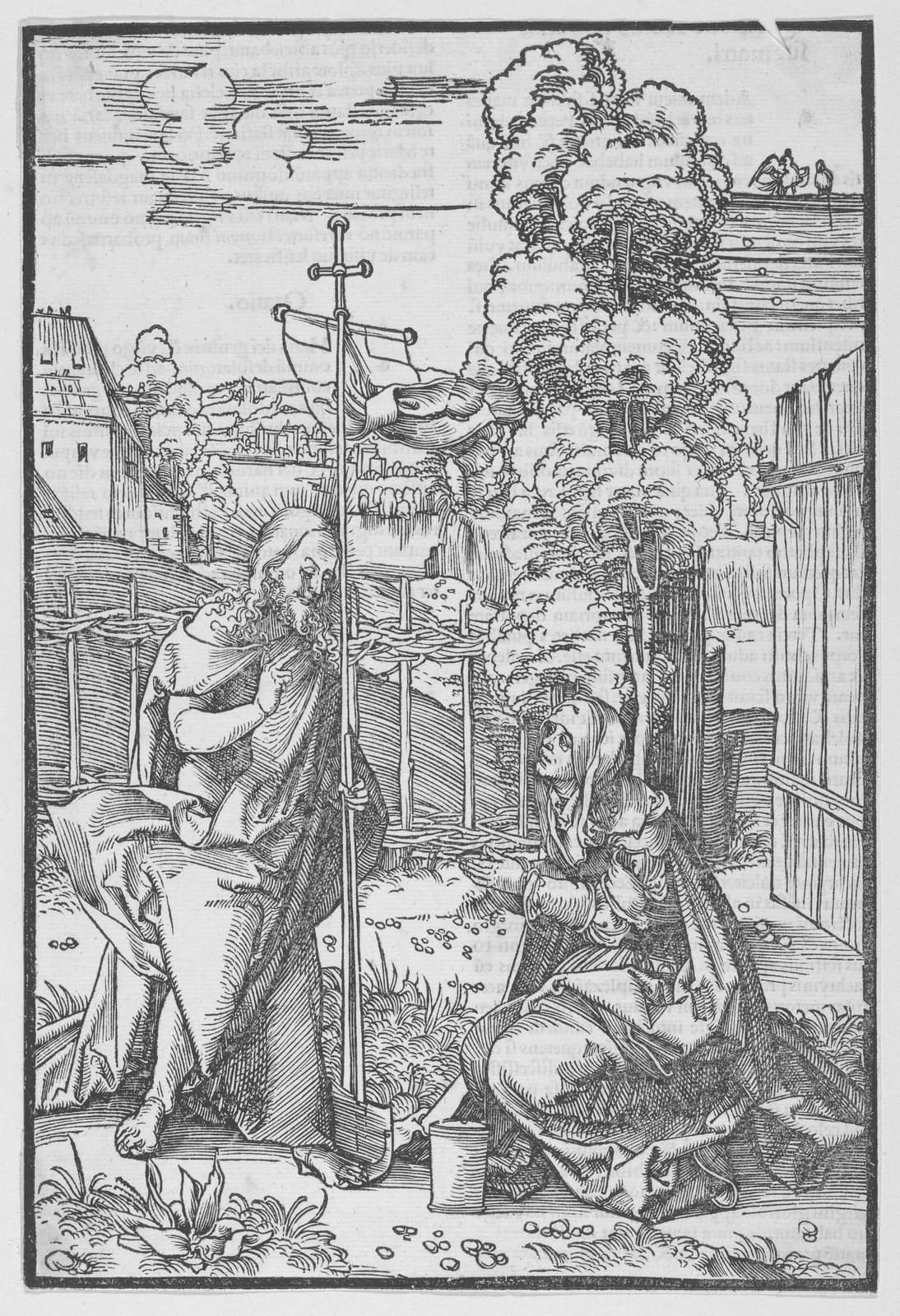
Noli me tangere: the risen Christ appears to Mary Magdalene in the garden
Hans Schäufelein (1480–1540), Christ Appearing to Mary Magdalen (Noli Me Tangere), from Speculum passionis domini nostri Ihesu Christi, 1507. Credits

Email view of this day