This day

May 20, 2025

Paschal Time

May 20, 2025

Tuesday of the Fifth Week after Easter

From Dom Guéranger’s The Liturgical Year.

℣. In thy resurrection, O Christ, alleluia.
℟. Let heaven and earth rejoice, alleluia.

THE third sacrament—the Holy Eucharist—is so intimately connected with our Redeemer's Passion that its institution could not be deferred till the Resurrection had taken place. On Maundy Thursday, we honoured the solemn act whereby our Jesus prepared for the morrow’s sacrifice, by instituting the mystery of his Body and Blood, which are really immolated in the Eucharistic Supper. The Apostles were not only admitted, as all future generations were to be, to partake of the divine Food, which giveth life to the world, but they moreover received power from Jesus, the Priest for ever, to do what he himself had just done. The great Mystery was inaugurated; the new priesthood was instituted: and now that Jesus is risen from the dead, he makes known to his Apostles the whole importance of the gift bestowed upon mankind at the Last Supper; he bids them begin the exercise of the sublime power conferred on them, as soon as the Holy Ghost, by descending upon the earth, shall give to the Church the signal for her using the prerogatives wherewith she has been endowed; and, finally, he teaches how they are to perform this special function of their Priesthood.

Chapter 1: The History of Paschal Time

From Dom Guéranger’s The Liturgical Year.

WE give the name of Paschal Time to the period between Easter Sunday and the Saturday following Whit Sunday. It is the most sacred portion of the liturgical year, and the one towards which the whole cycle converges. We shall easily understand how this is, if we reflect upon the greatness of Easter, which is called the feast of feasts, and the solemnity of solemnities, in the same manner, says St. Gregory, as the most sacred part of the Temple was called the Holy of holies; and the book of sacred scripture, wherein are described the espousals between Christ and the Church, is called the Canticle of Canticles. It is on this day that the mission of the Word Incarnate attains the object towards which it has hitherto been tending: man is raised up from his fall and regains what he had lost by Adam’s sin.

Christmas gave us a Man-God; three days have scarcely passed since we witnessed his infinitely precious Blood shed for our ransom; but now, on the day of Easter, our Jesus is no longer the victim of death: He is a conqueror, who destroys death, the child of sin, and proclaims life, that undying life which he has purchased for us.

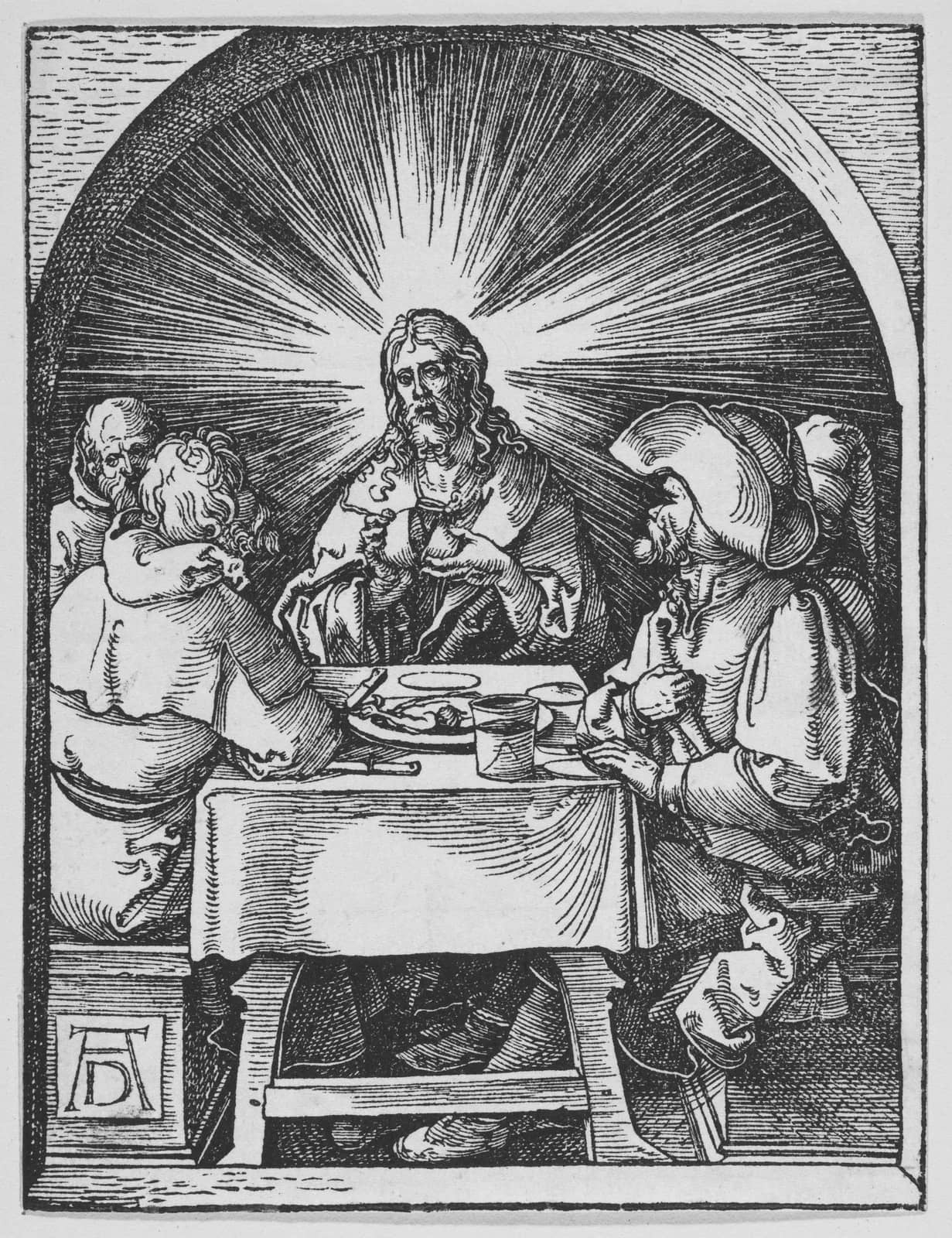
The risen Christ breaking bread with two disciples at Emmaus
Albrecht Dürer (1471–1528), Christ in Emmaus, from The Small Passion, ca. 1510. Credits

Email view of this day