This day

January 26, 2026

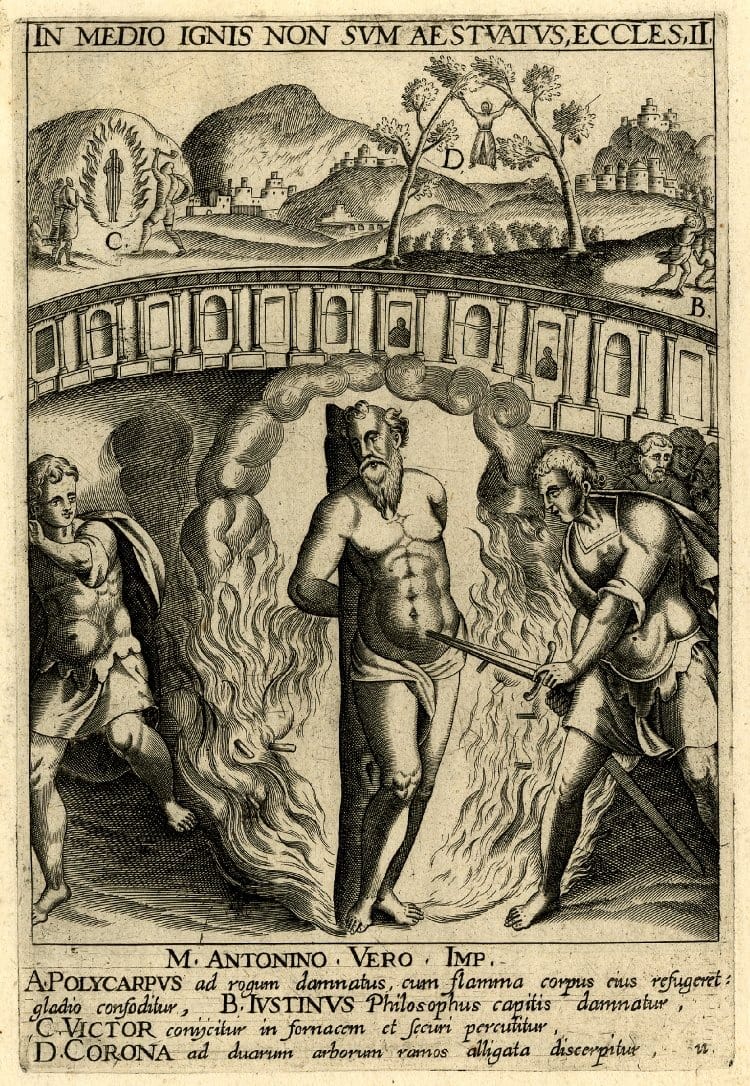
St Polycarp at the stake amid flames, stabbed by a soldier
In medio ignis…, Jan van Haelbeck. Credits

Epiphanytide

January 26, 2026

January 26: St. Polycarp, Bishop and Martyr

From Dom Guéranger’s The Liturgical Year.

AMIDST the sweetness he is enjoying from the contemplation of the Word made Flesh, John, the Beloved Disciple, beholds coming towards him his dear Polycarp, the Angel of the Church of Smyrna, all resplendent with the glory of martyrdom. This venerable Saint has in his soul the fervent love that made him say in the amphitheatre, when asked by the Proconsul to curse his Divine Master: "Six-and-eighty years have I served Him, and he has never done me any wrong; nay, he has laden me with kindness. How could I blaspheme my King, who has saved me?" After having suffered fire and the sword, he was admitted into the presence of this King his Saviour, in reward for the eighty-six years of his faithful service, for the labours he had gone through in order to maintain faith and charity among his flock, and for the cruel death he endured.

He was a disciple of St John the Evangelist, whom he imitated by zealously opposing the heretics, who were then striving to corrupt the faith. In obedience to the command of his holy Master, he refused to hold intercourse with Marcion, the heresiarch, whom he called the first-born of Satan.

This week's Sunday: The Third Sunday after Epiphany

From Dom Guéranger’s The Liturgical Year.

THE variation of Easter Sunday necessitates almost every year a different arrangement of the Sundays after the Epiphany from that in which they stand in the Missal. Septuagesima often comes in January and the Feast of the Purification is occasionally later than Quinquagesima Sunday; hence the office of these four last Sundays may have to be transferred to another season of the liturgical cycle. We were obliged then to provide for these changes and simplify them for the Faithful by adopting our present plan. We have inserted here the third and fourth Sundays as usually falling in Christmastide, while the office of the fifth and sixth Sundays will be found in the volumes of Septuagesima and the second after Pentecost, this latter season being the one in which they are most frequently kept.

The Introit represents the Angels of God adoring him on his entrance into this world, as St Paul explains this passage of the Psalms. The Church celebrates with David the gladness of Sion, and the joy of the daughters of Juda.

Adore God, all ye his Angels: Sion heard and was glad, and the daughters of Juda rejoiced.

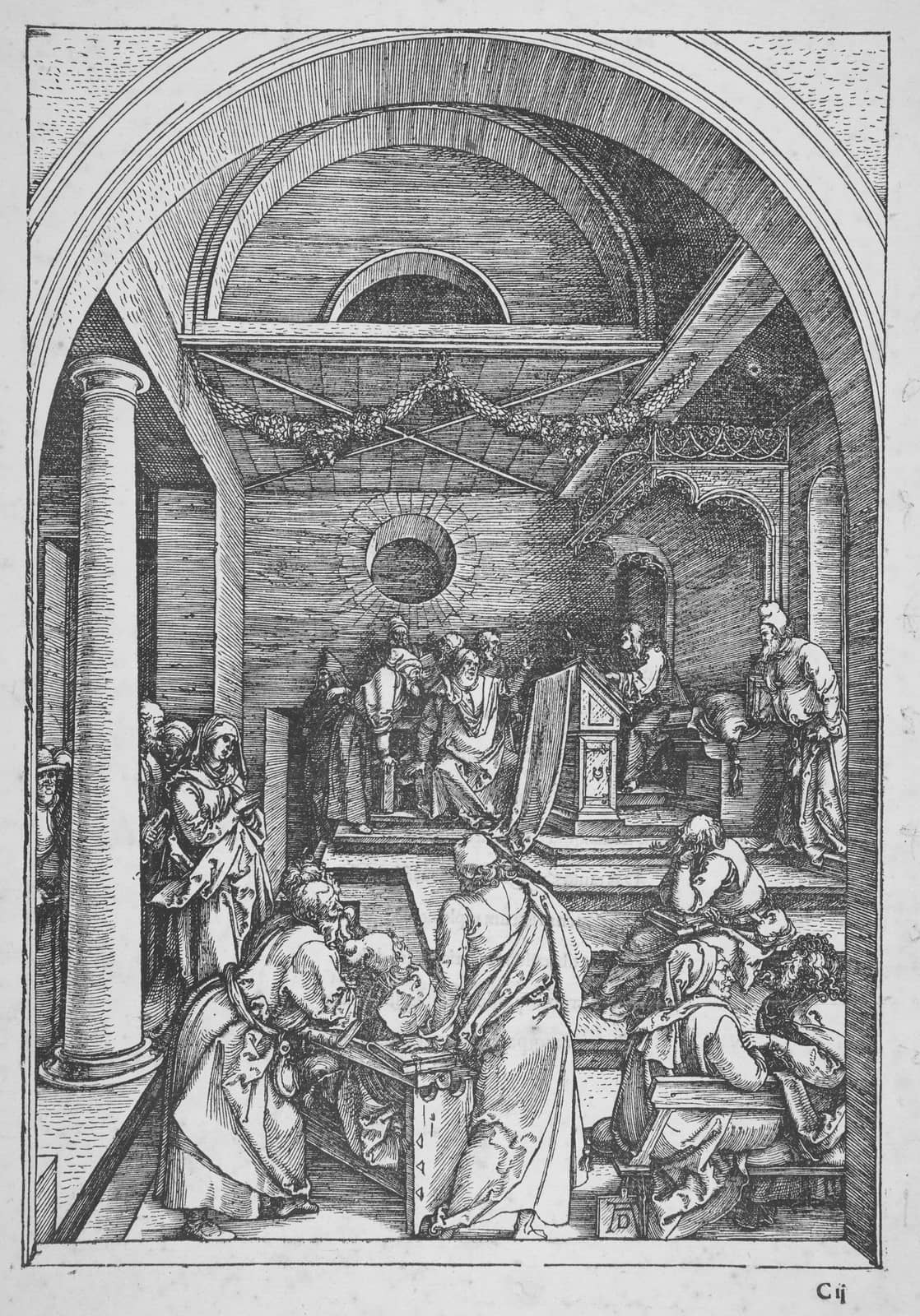
The boy Christ among the doctors in the Temple
Albrecht Dürer (1471–1528), Christ among the Doctors, from The Life of the Virgin, 1511. Credits

Email view of this day