This day

May 3, 2026

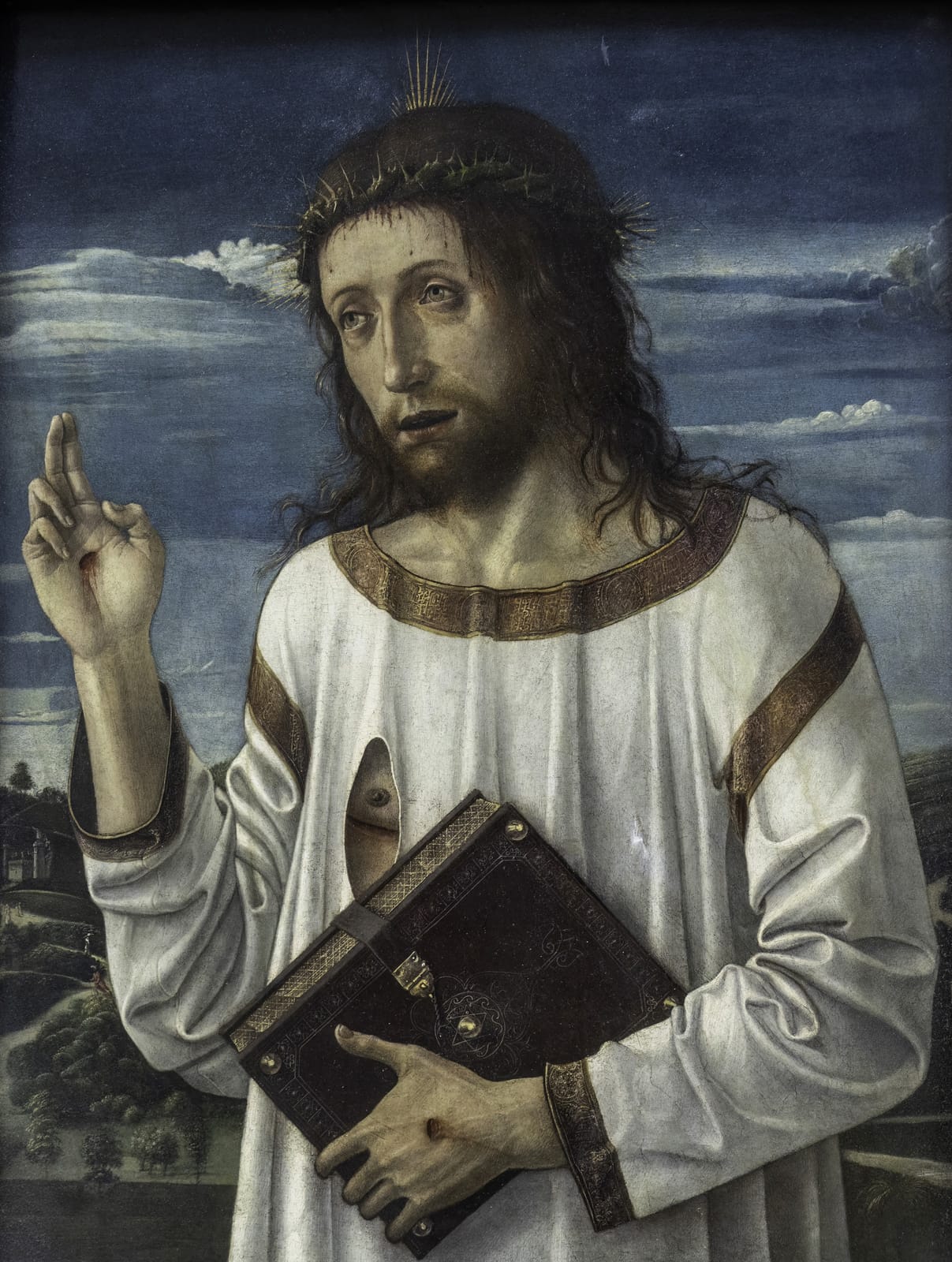
Christ blessing, holding a book, with the wound in his side visible through his tunic
Blessing Christ, Giovanni Bellini (1430–1516), c. 1465–70. Credits

Paschal Time

May 3, 2026

Fourth Sunday after Easter

From Dom Guéranger’s The Liturgical Year.

℣. In thy resurrection, O Christ, alleluia.
℟. Let heaven and earth rejoice, alleluia.

OUR Jesus has organized his Church, and confided to his Apostles the sacred deposit of the truths which are to form the object of our faith. We must now follow him in another work, of equal importance to the world, to which he gives his divine attention during these forty days: it is the institution of the sacraments. It is not enough that we believe; we must, moreover, be made just—that is, we must bear upon us the likeness of God’s holiness; we must receive, we must have incorporated within us that great fruit of the redemption which is called grace; that thus being made living members of our divine Head, we may be made join theirs with him of the kingdom of heaven. Now it is by means of the sacraments that Jesus is to produce in us this wondrous work of our justification; he applies to us the merits of his Incarnation and Sacrifice, but he applies them by certain means, which he himself, in his power and wisdom, has instituted.
Chapter 3: The Practice during Paschal Time

From Dom Guéranger’s The Liturgical Year.

THE practice for this holy season mainly consists in the spiritual joy which it should produce in every soul that is risen with Jesus. This joy is a fore-taste of eternal happiness, and the Christian ought to consider it a duty to keep it up within him, by ardently seeking after that life which is in our divine Head, and by carefully shunning sin which causes death. During the last nine weeks we have mourned for our sins and done penance for them; we have followed Jesus to Calvary; but now, our holy Mother the Church is urgent in bidding us rejoice. She herself has laid aside all sorrow; the voice of her weeping is changed into the song of a delighted Spouse.

In order that she might impart this joy to all her children, she has taken their weakness into account.

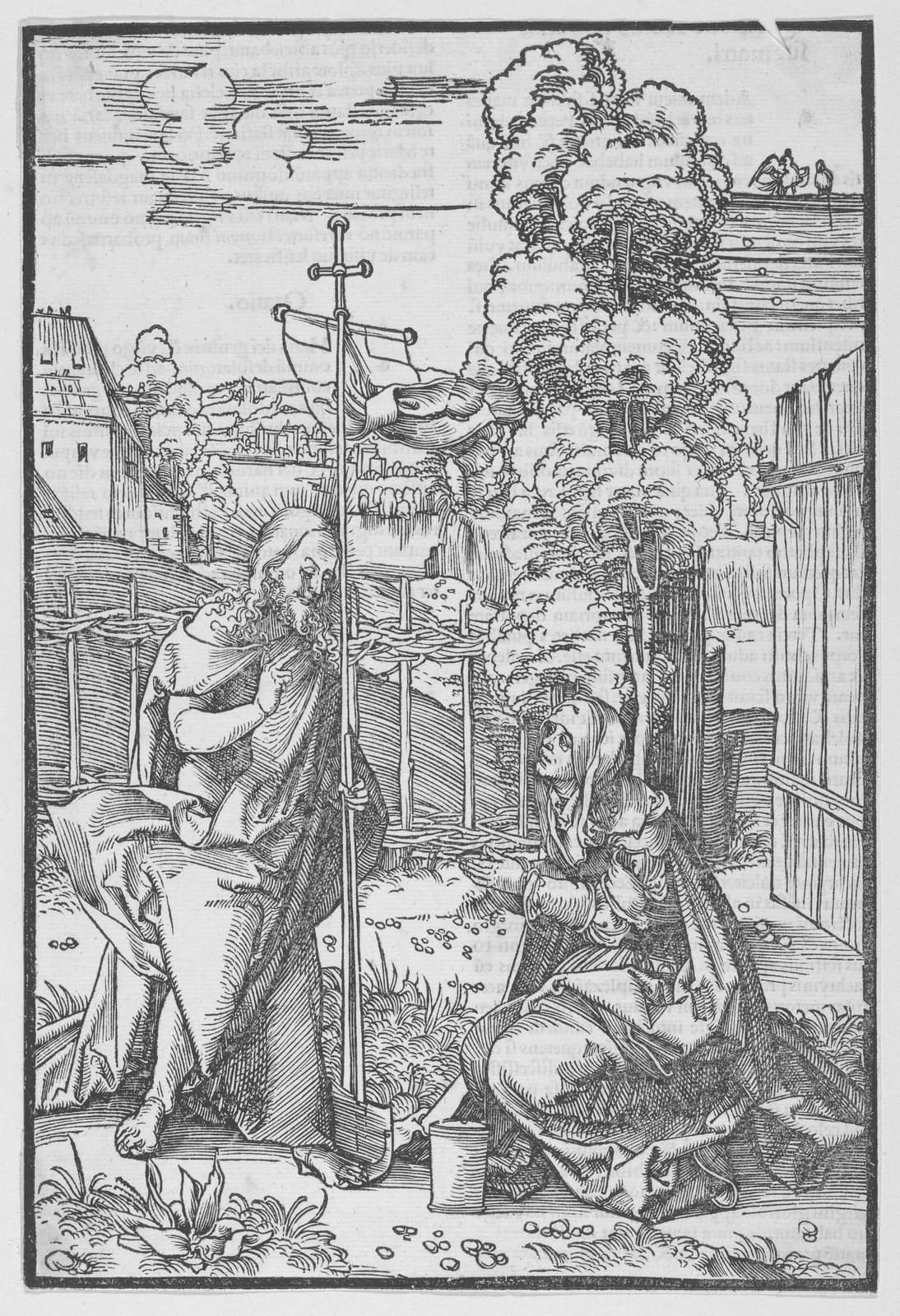
Noli me tangere: the risen Christ appears to Mary Magdalene in the garden
Hans Schäufelein (1480–1540), Christ Appearing to Mary Magdalen (Noli Me Tangere), from Speculum passionis domini nostri Ihesu Christi, 1507. Credits

Email view of this day