This day

May 7, 2026

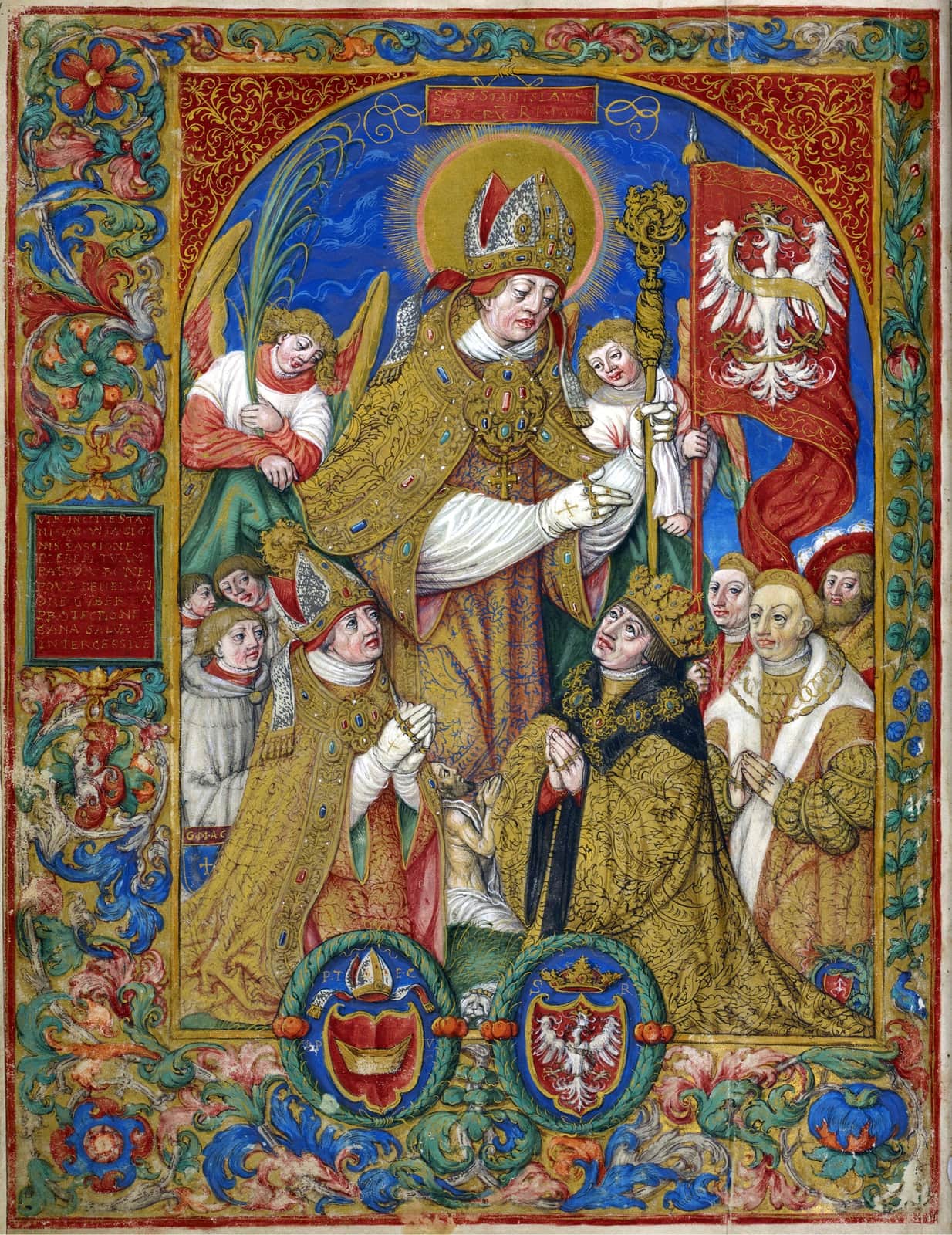
St Stanislaus as bishop with crozier; Piotrowin rising; Polish eagle banner
Św Stanisław, Stanisław Samostrzelnik (1485–1541). Credits

Paschal Time

May 7, 2026

A Double leads the weekday.Rubric

May 7: St. Stanislaus, Bishop and Martyr

From Dom Guéranger’s The Liturgical Year.

THE eleventh century, the century of contest between the priests of the Church and Barbarism, gives to-day another martyr to our Risen Jesus. It is Stanislaus, beloved by noble Poland as one of her chief protectors. He was slain at the altar by a Christian prince whom he had reproved for his crimes. The blood of the courageous Pontiff was mingled with that of our Redeemer in the same sacrifice. What an invincible energy there is in these lambs whom Jesus has sent amidst the wolves! They seem to be straightway changed into lions, as Jesus himself was at his Resurrection. There is not a century that has not had its martyrs: some for the faith, others for the unity of the Church, others for her liberty, others for justice, others for charity, and others, like our great Saint of to-day, for the maintenance of morals. The nineteenth century, too, has had its martyrs; scarcely a year elapses without our hearing of some who have been added to the bright list in the far East. At the commencement of the eighteenth century there was little probability of its providing such an abundant harvest of martyrdom as it did.


Thursday of the Fifth Week after Easter

From Dom Guéranger’s The Liturgical Year.

℣. In thy resurrection, O Christ, alleluia.
℟. Let heaven and earth rejoice, alleluia.

BY the first four sacraments, our Saviour provided for the several spiritual necessities of man during this mortal life. Baptism gives him spiritual birth, Confirmation arms him for the battle, the Eucharist is his food, Penance is his cure. But the last moment of life—that most important and terrible of all, on which depends eternity—does it not seem to require a special sacramental aid? Could it be that our Redeemer, after so lovingly supplying us with a sacrament to meet our other wants, would leave us unprovided when we are dying, that is, when we are passing from this to another life, and are weighed down with bodily and mental sufferings? No: he has provided a sacrament for the dying; the grace of redemption puts on a new form, that it may visit and fortify us in our last struggle.

Even before his Passion, he gave us some idea of the sacrament he intended to institute for the help of the dying.

Christ as the Good Shepherd carrying a sheep on His shoulders
Hans Schäufelein (1480–1540), Christ as Good Shepherd, from Das Plenarium, 1517. Credits

Email view of this day