This day

June 24, 2026

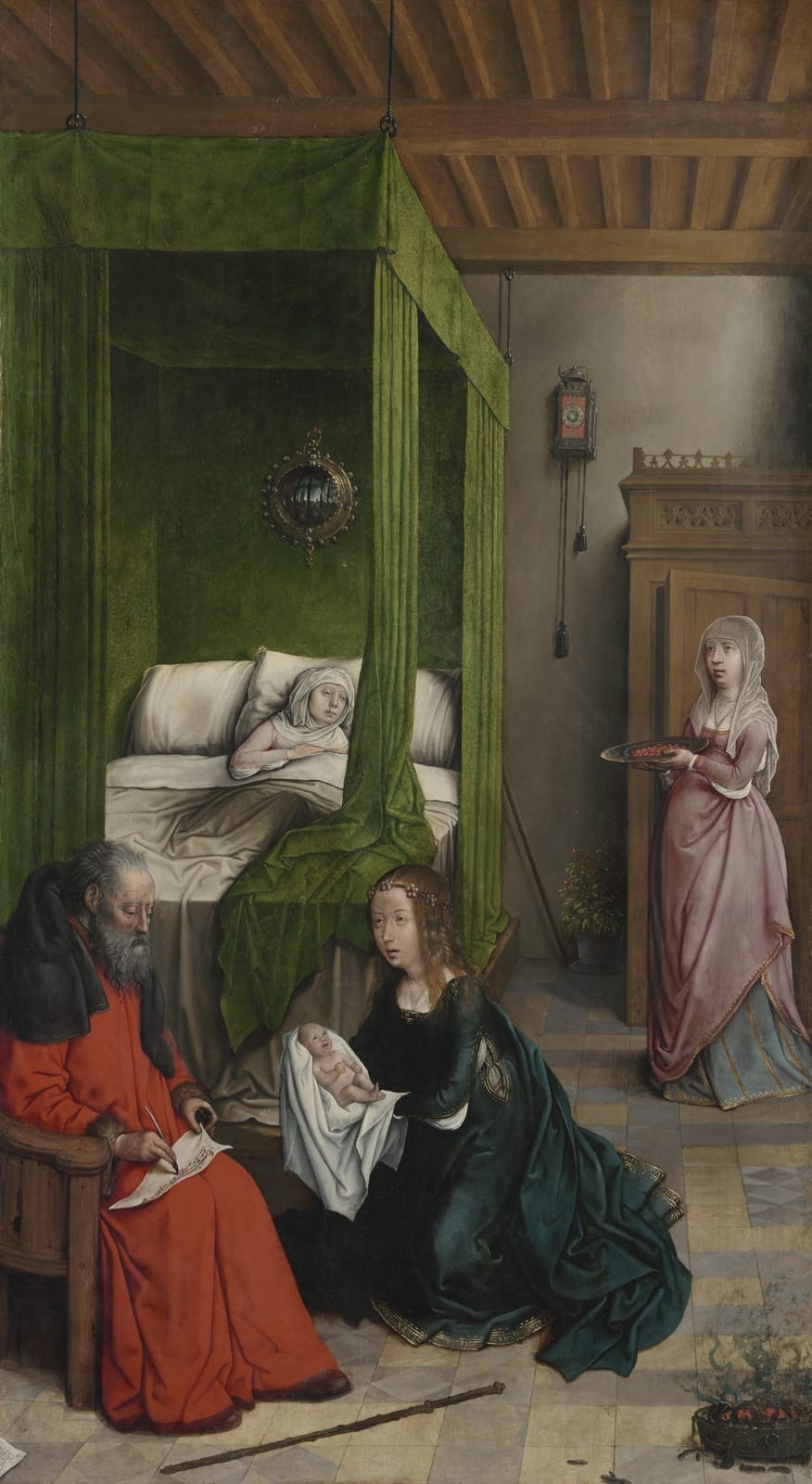
The Birth and Naming of St John the Baptist
The Birth and Naming of St John the Baptist, Juan de Flandes (1450–1519), c. 1496–1499. Credits

After Pentecost

June 24, 2026

June 24: The Nativity of St. John the Baptist

From Dom Guéranger’s The Liturgical Year.

THE Voice of one crying in the wilderness: ‘Prepare ye the way of the Lord; behold thy God!’ In this world grown now so cold, who can understand earth's transports at hearing these glad tidings so long expected? The promised God was not yet manifested; but already had the heavens bowed down to make way for his passage. No longer was he ‘the One who is to come,’ he for whom our fathers, the illustrious saints of the prophetic age, ceaselessly called in their indomitable hope. Still hidden, indeed, but already in our midst, he was resting beneath that virginal cloud, compared with which the heavenly purity of Thrones and Cherubim waxes dim; yea, the united fires of burning Seraphim grow faint in presence of the single love wherewith she alone encompasses him in her human heart, she that lowly daughter of Adam whom he had chosen for his Mother. Our accursed earth, become in a moment more blessed than heaven that had so long been closed against the prayers of men, only waited for the revelation of the august mystery.

This week's Sunday: The Fourth Sunday after Pentecost

From Dom Guéranger’s The Liturgical Year.

The fourth Sunday after Pentecost was called, for a long period, in the west, the Sunday of mercy, because, formerly, there was read upon it the passage from St. Luke beginning with the words: ‘Be merciful, as your Father is merciful.’ But, this Gospel having been since assigned to the Mass of the first Sunday after Pentecost, the Gospel of the fifth Sunday was made that of the fourth; the Gospel of the sixth became that of the fifth; and so on, up to the twenty-third. The change we speak of was, however, not introduced into many Churches till a very late period; and it was not universally received till the sixteenth century.

Whilst the Gospels were thus brought forward a week, in almost the whole series of these Sundays, the Epistles, Prayers, and the other sung portions of the ancient Masses were, with a few exceptions, left as originally drawn up.

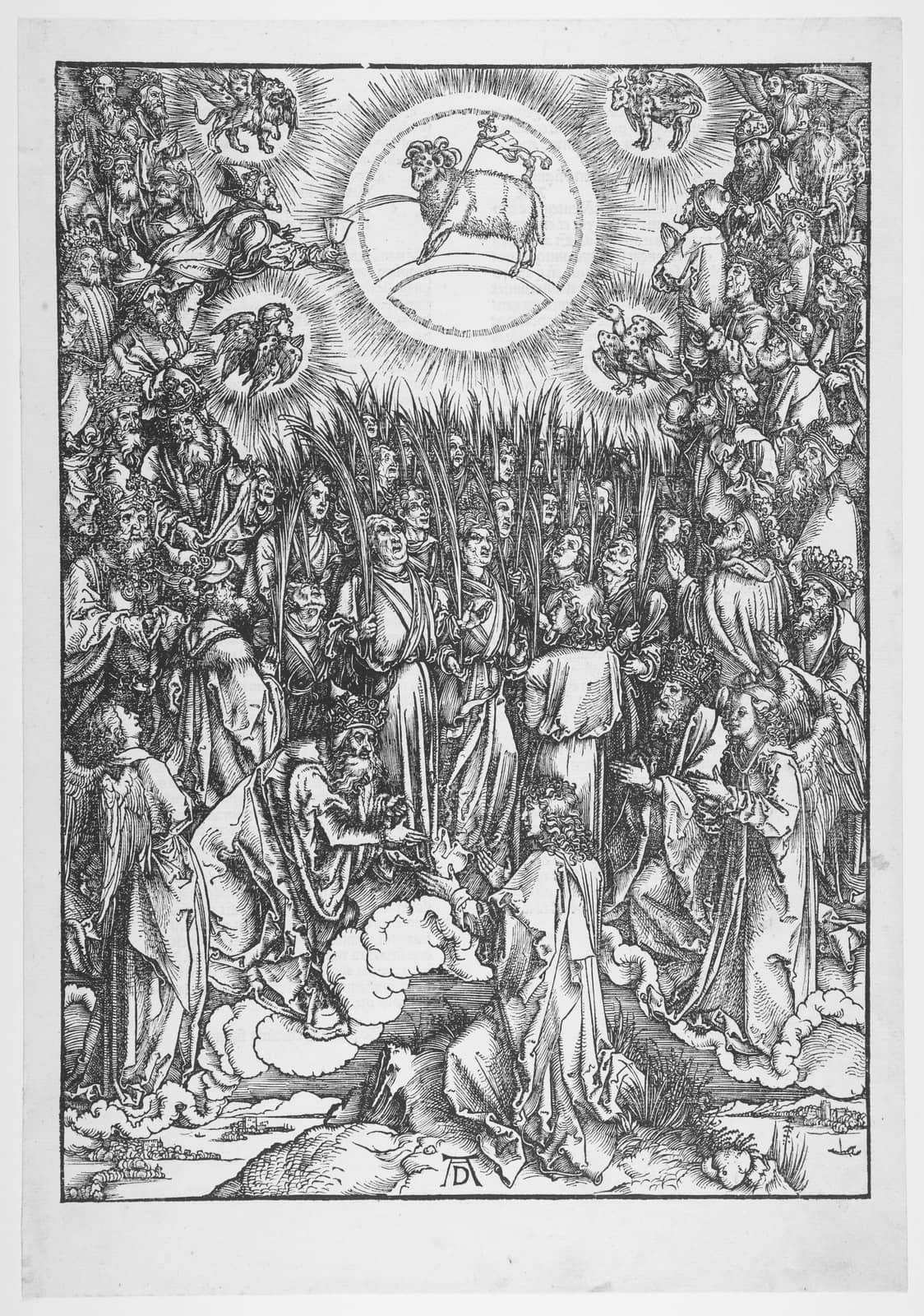
The elders and the saints adore the Lamb
Albrecht Dürer (1471–1528), The Adoration of the Lamb, from The Apocalypse, 1498. Credits

Email view of this day