This day

June 25, 2026

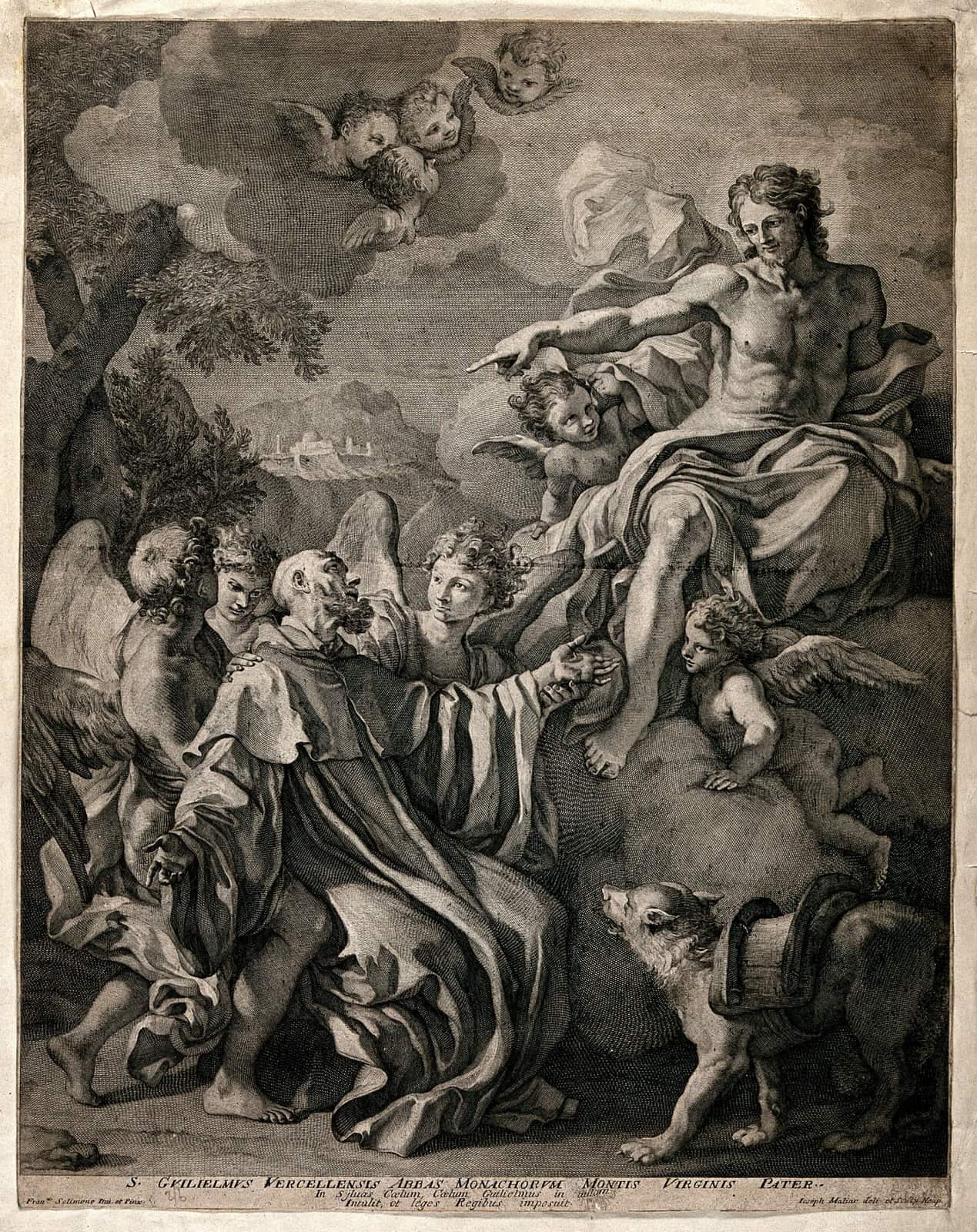
Saint William of Vercelli kneels before Christ, with the wolf of Montevergine
The Ecstasy of Saint William of Vercelli, Giuseppe Magliar, after Francesco Solimena (1657–1747), 18th century. Credits

After Pentecost

June 25, 2026

June 25: St. William, Abbot

From Dom Guéranger’s The Liturgical Year.

MARTYRS are numerous on the cycle during the octave of St John. But not only in martyrdom's peerless glory does our Lord reveal the power of his grace, or the victorious force of example left to the world by his Precursor. At the very outset we have presented to our homage one of those countless athletes of penance, who succeeded John in the desert; one of those who fleeing, like him, in early youth, a society wherein their souls’ foreboding told of only peril and annoy, consecrated a lifetime to Christ’s complete triumph within them over the triple concupiscence, thus bearing witness to the Lord, by deeds which the world ignores, but which make angels to rejoice and hell to tremble. William was one of the chiefs of this holy militia. The Order of Monte-Vergine, which owes its origin to him, has deserved well of the monastic institute and of the whole Church in the south of Italy, wherein God has been pleased, at different times, to raise up a dyke against the encroaching waves of sensual pleasures by the stern spectacle of austere virtue.

This week's Sunday: The Fourth Sunday after Pentecost

From Dom Guéranger’s The Liturgical Year.

The fourth Sunday after Pentecost was called, for a long period, in the west, the Sunday of mercy, because, formerly, there was read upon it the passage from St. Luke beginning with the words: ‘Be merciful, as your Father is merciful.’ But, this Gospel having been since assigned to the Mass of the first Sunday after Pentecost, the Gospel of the fifth Sunday was made that of the fourth; the Gospel of the sixth became that of the fifth; and so on, up to the twenty-third. The change we speak of was, however, not introduced into many Churches till a very late period; and it was not universally received till the sixteenth century.

Whilst the Gospels were thus brought forward a week, in almost the whole series of these Sundays, the Epistles, Prayers, and the other sung portions of the ancient Masses were, with a few exceptions, left as originally drawn up. The connexion which the liturgists of the eleventh, twelfth, and thirteenth centuries had fancied they found between the Gospel and the rest of the liturgy for these Sundays was broken.

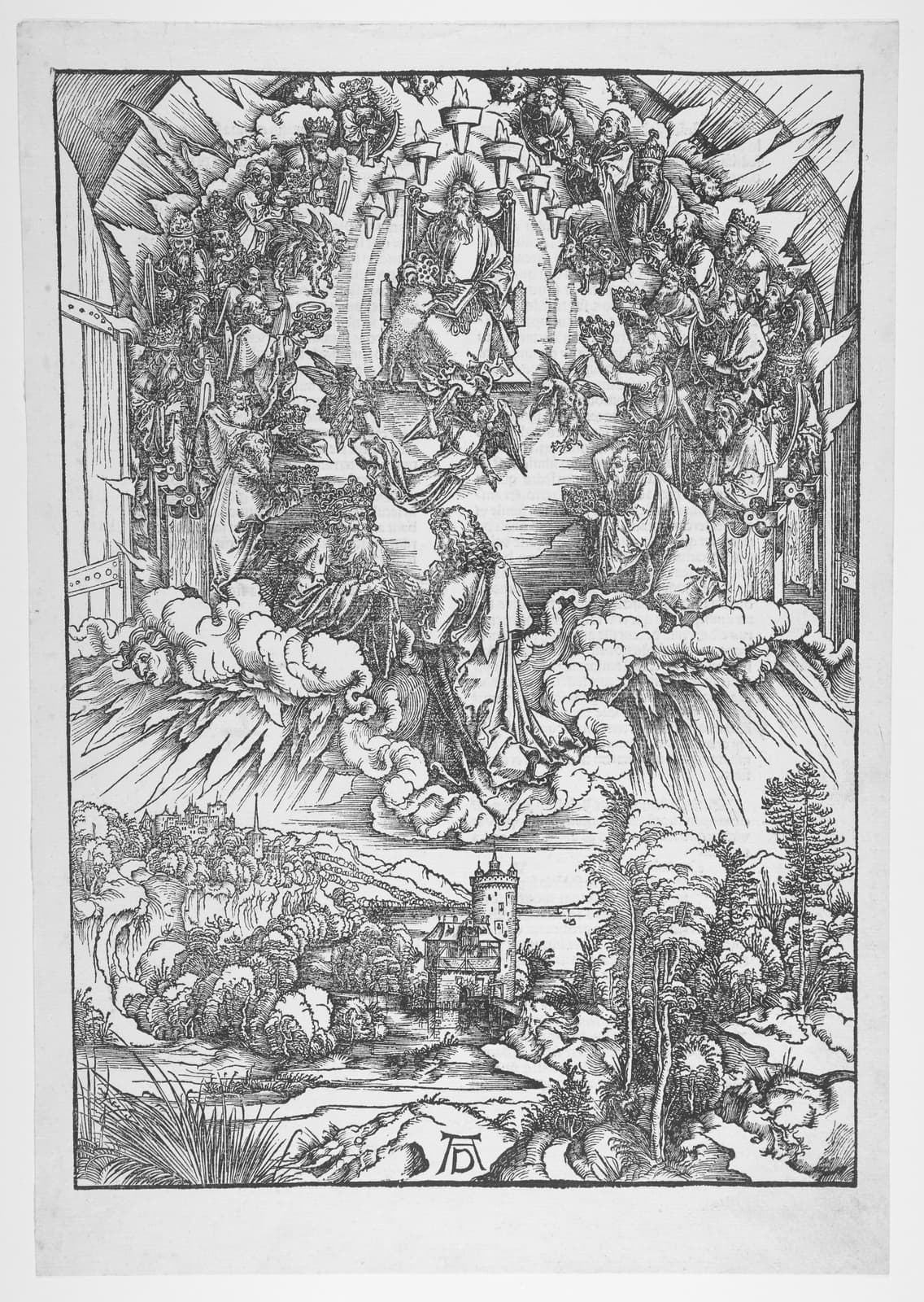
Saint John before God and the elders
Albrecht Dürer (1471–1528), Saint John Before God and the Elders, from The Apocalypse, 1498. Credits

Email view of this day