This day

July 22, 2026

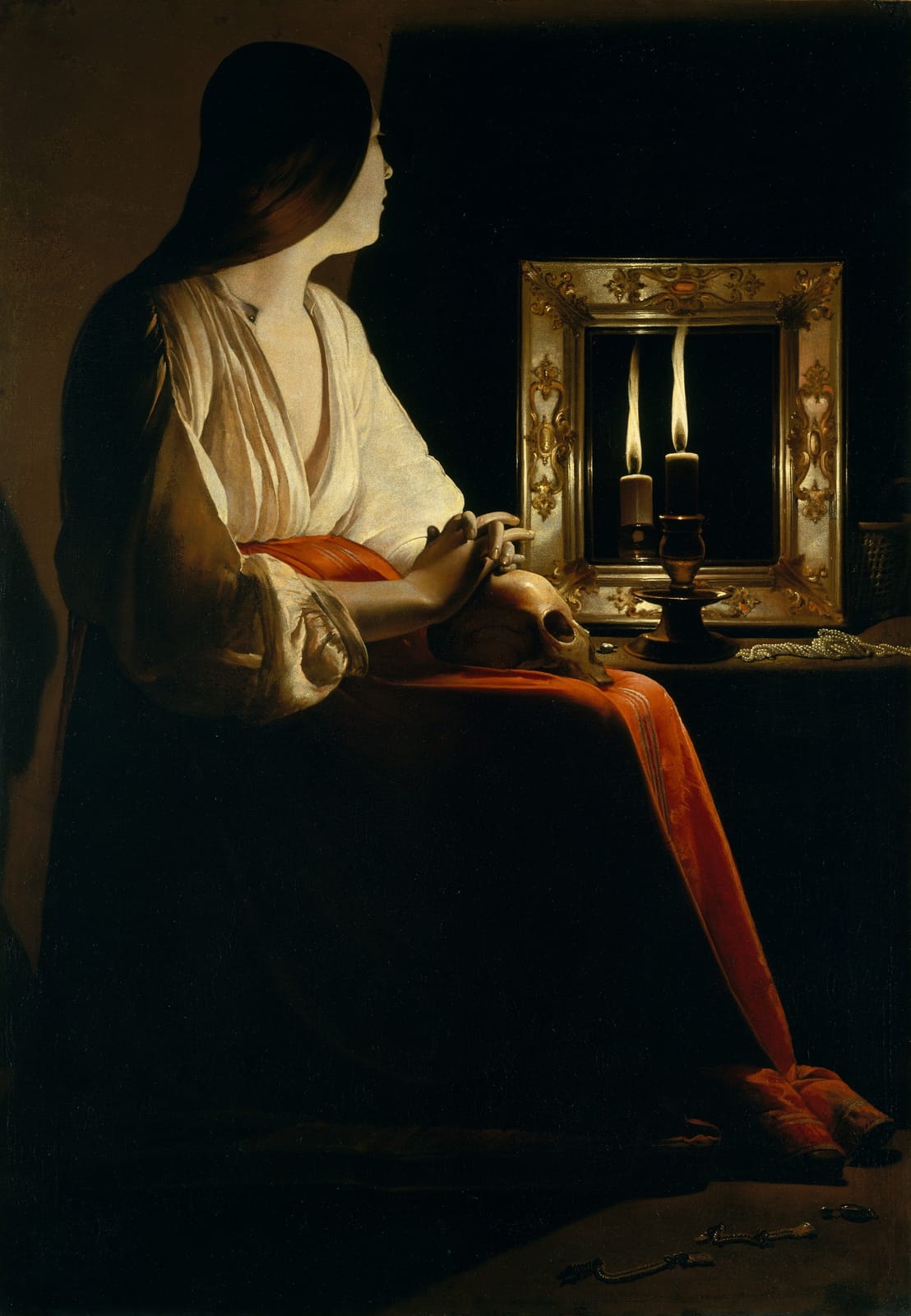
The Penitent Magdalen sits with a skull beside a candle
The Penitent Magdalen, Georges de La Tour (1593–1652), c. 1640. Credits

After Pentecost

July 22, 2026

July 22: St. Mary Magdalen

From Dom Guéranger’s The Liturgical Year.

‘THREE saints,’ said our Lord to St. Bridget of Sweden, 'have been more pleasing to me than all others: Mary my mother, John the Baptist, and Mary Magdalen.’ The Fathers tell us that Magdalen is a type of the Gentile Church, called from the depth of sin to perfect holiness; and, indeed, better than any other, she personifies both the wanderings and the love of the human race, espoused by the Word of God. Like the most illustrious characters of the law of grace, she has her antitype in past ages. Let us follow the history of this great penitent as traced by unanimous tradition: Magdalen’s glory will not be thereby diminished.

When, before all ages, God decreed to manifest His glory, He willed to reign over a world drawn from nothing; and as His goodness was equal to His power, He would have the triumph of supreme love to be the law of that kingdom, which the Gospel likens unto a king who made a marriage for his son.

Passing over the pure intelligences whose nine choirs are filled with divine light, the immortal Son of the King of ages looked down to the extreme limits of creation; there he beheld human nature, made, indeed, to know God, but acquiring that knowledge laboriously; its weakness would better show His divine condescension: with it, then, He chose to contract His alliance.

This week's Sunday: The Eighth Sunday after Pentecost

From Dom Guéranger’s The Liturgical Year.

In the middle ages this Sunday was called the sixth and last Sunday after the Natalis of the apostles (that is, the feast of St. Peter); it was, indeed, the last for the years when Easter had been kept as late in April as was possible; but it was only the first after that feast of St. Peter when Easter immediately followed the spring equinox.

We have already noticed the variable character of this last portion of the liturgical cycle, which is the result of Easter being kept on a different day each year; and that in consequence of this variation this week may be the second in which the Sapiential Books are read, or, what is of more frequent occurrence, the Books of Kings may still be providing the lessons for the Divine Office. In this latter case it is the ancient temple raised by Solomon, the king of peace, to the glory of Jehovah, that engages the Church's attention to-day. We shall find that the portions of the Mass which are chanted on this Sunday are closely connected with the lessons read in last night’s Office.

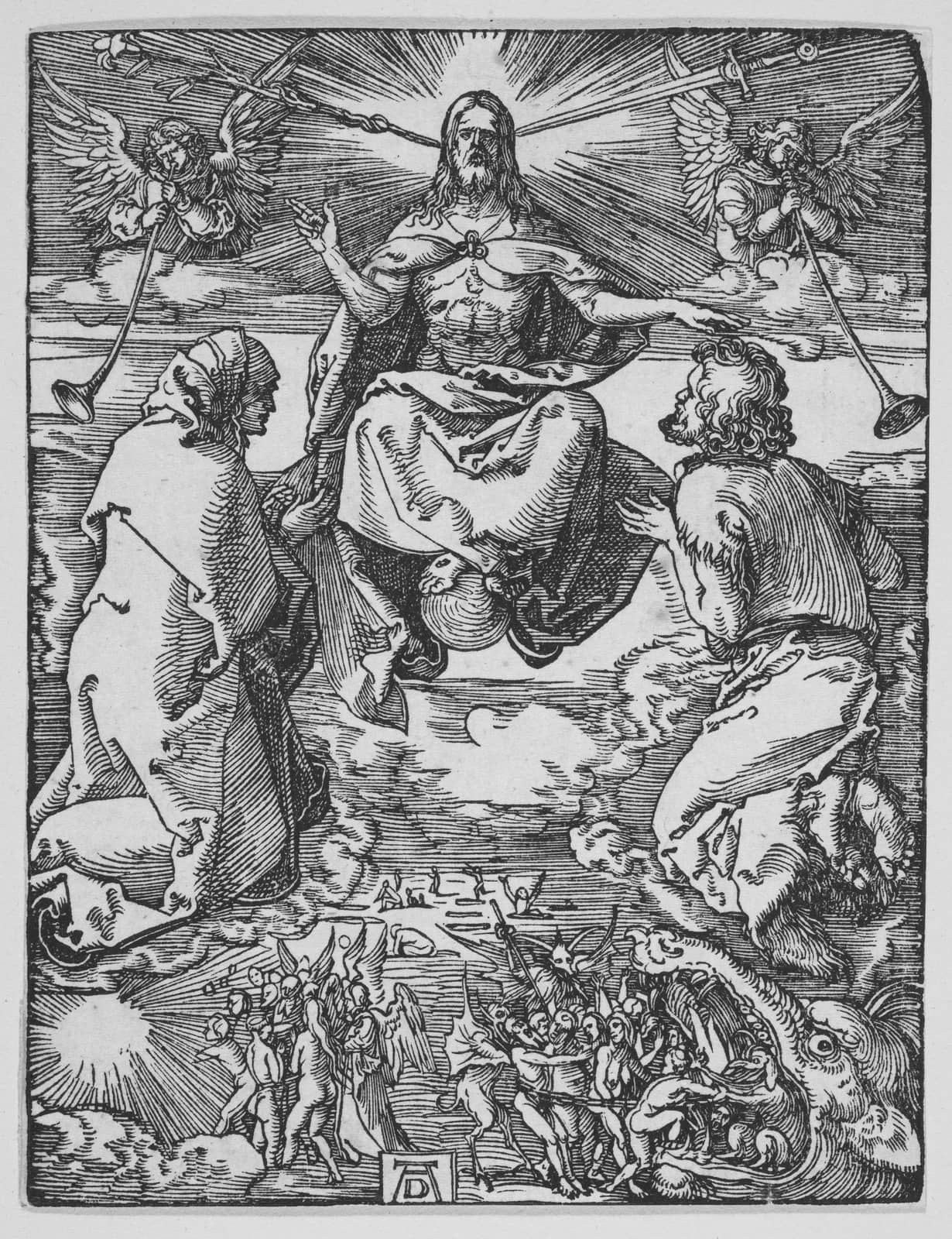
The Last Judgment
Albrecht Dürer (1471–1528), The Last Judgment, from The Small Passion, ca. 1510. Credits

Email view of this day