This day

August 4, 2026

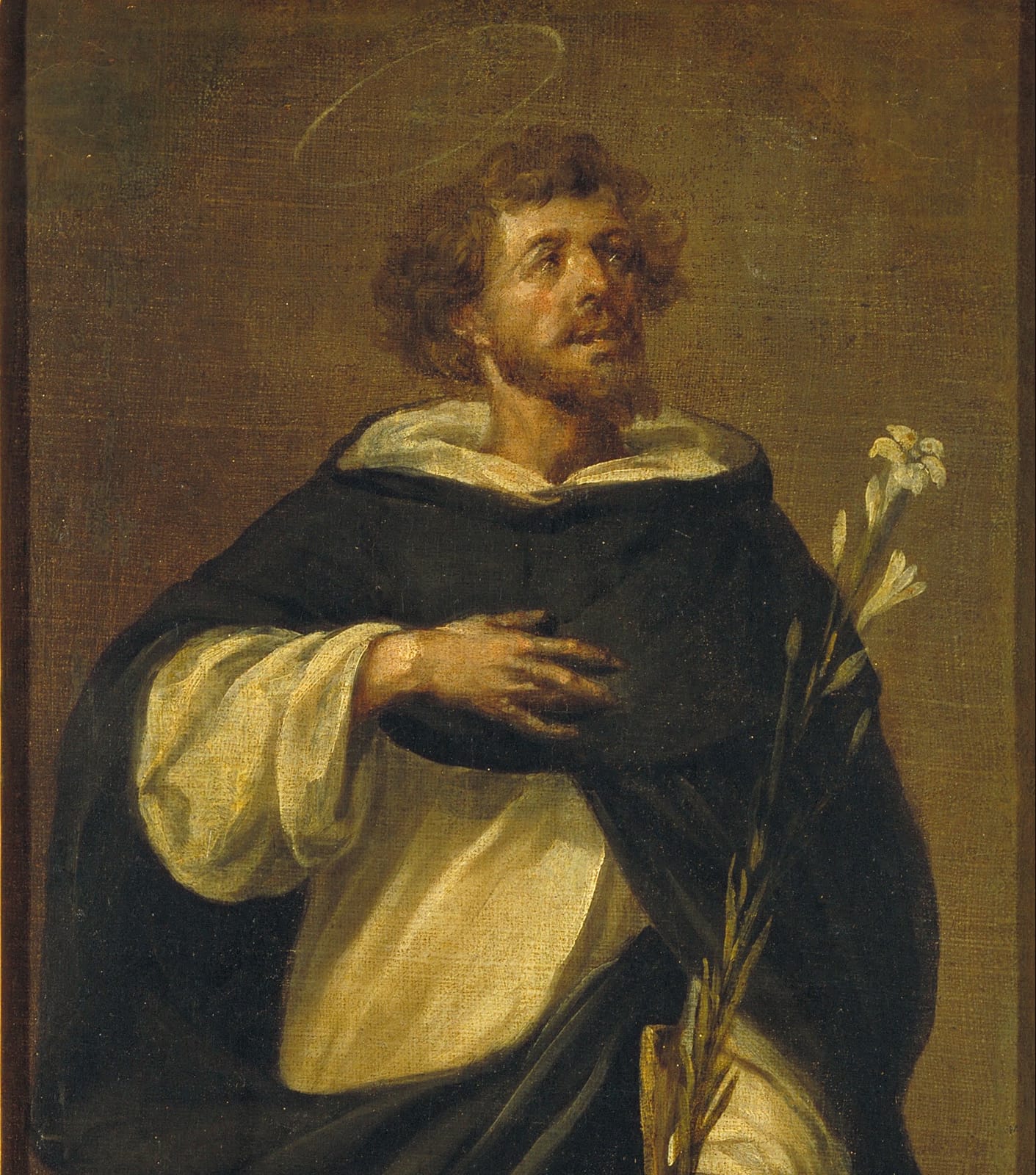
St Dominic in Dominican habit with lilies
Saint Dominic de Guzmán, Juan de Valdés Leal (1622–1690). Credits

After Pentecost

August 4, 2026

August 4: St. Dominic, Confessor

From Dom Guéranger’s The Liturgical Year.

In that clime
Where springs the pleasant west wind to unfold
The fresh leaves, with which Europe sees herself
New-garmented; nor from those billows far,
Beyond whose chiding, after weary course,
The sun doth sometimes hide him; safe abides
The happy Calaroga under guard
Of the great shield, wherein the lion lies
Subjected and supreme. And there was born
The loving minion of the Christian faith,
The hallowed wrestler, gentle to his own,
And to his enemies terrible. So replete
His soul with lively virtue, that when first
Created, even in the mother's womb,
It prophesied. When, at the sacred font,
The spousals were complete 'twixt faith and him,
Where pledge of mutual safety was exchanged,
The dame, who was his surety, in her sleep
Beheld the wondrous fruit, that was from him
And from his heirs to issue. And that such
He might be construed, as indeed he was,
She was inspired to name him of his owner,
Whose he was wholly; and so called him Dominic.

O happy father! Felix rightly named.
O favoured mother! rightly named Joanna;
If that do mean as men interpret it.

This week's Sunday: The Tenth Sunday after Pentecost

From Dom Guéranger’s The Liturgical Year.

The destruction of Jerusalem has closed that portion of the prophetic Scriptures which was based on the institutions and history of the figurative period. The altar of the true God, built by Solomon on the summit of Moriah, was the authentic evidence of the true religion, to those who were then living under the Law of expectation. Even after the promulgation of the new Testament, the continued existence of that altar (the only one heretofore recognized by the Most High as His own) was some sort of an excuse for such of the Jews as clung obstinately to the old order of things. That excuse was taken away when the temple was so destroyed as that not a stone was left on a stone; and the blindest partisans of the Mosaic system were compelled to acknowledge the total abrogation of a religion which was reduced by God Himself to the impossibility of ever offering the sacrifices essential to its existence.

The considerateness wherewith the Church had, so far, treated the Synagogue would henceforward be unmeaning.

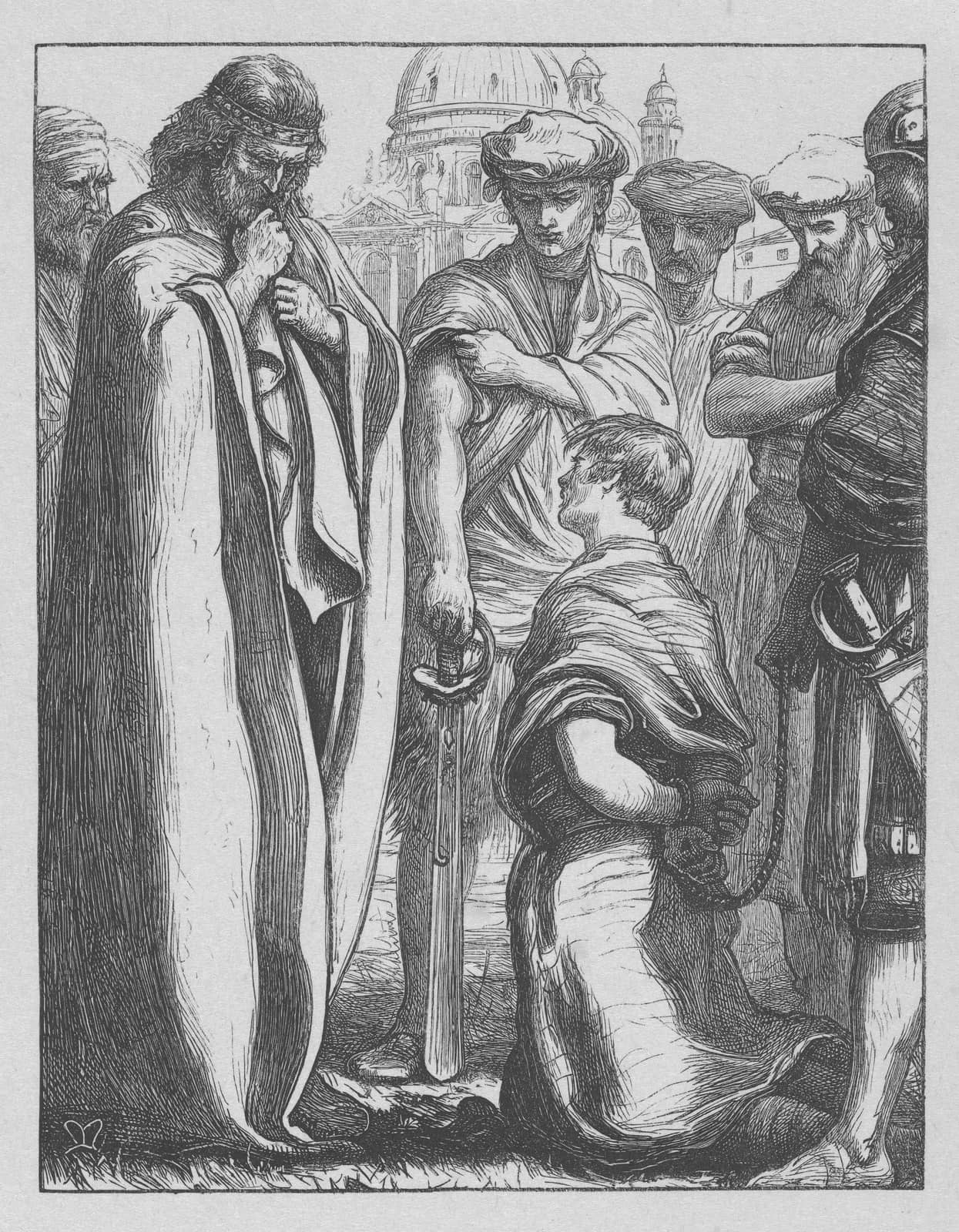
The parable of the unmerciful servant
Sir John Everett Millais (1829–1896), The Unmerciful Servant, from The Parables of Our Lord and Saviour Jesus Christ, 1864. Credits

Email view of this day