After Pentecost
August 5, 2026
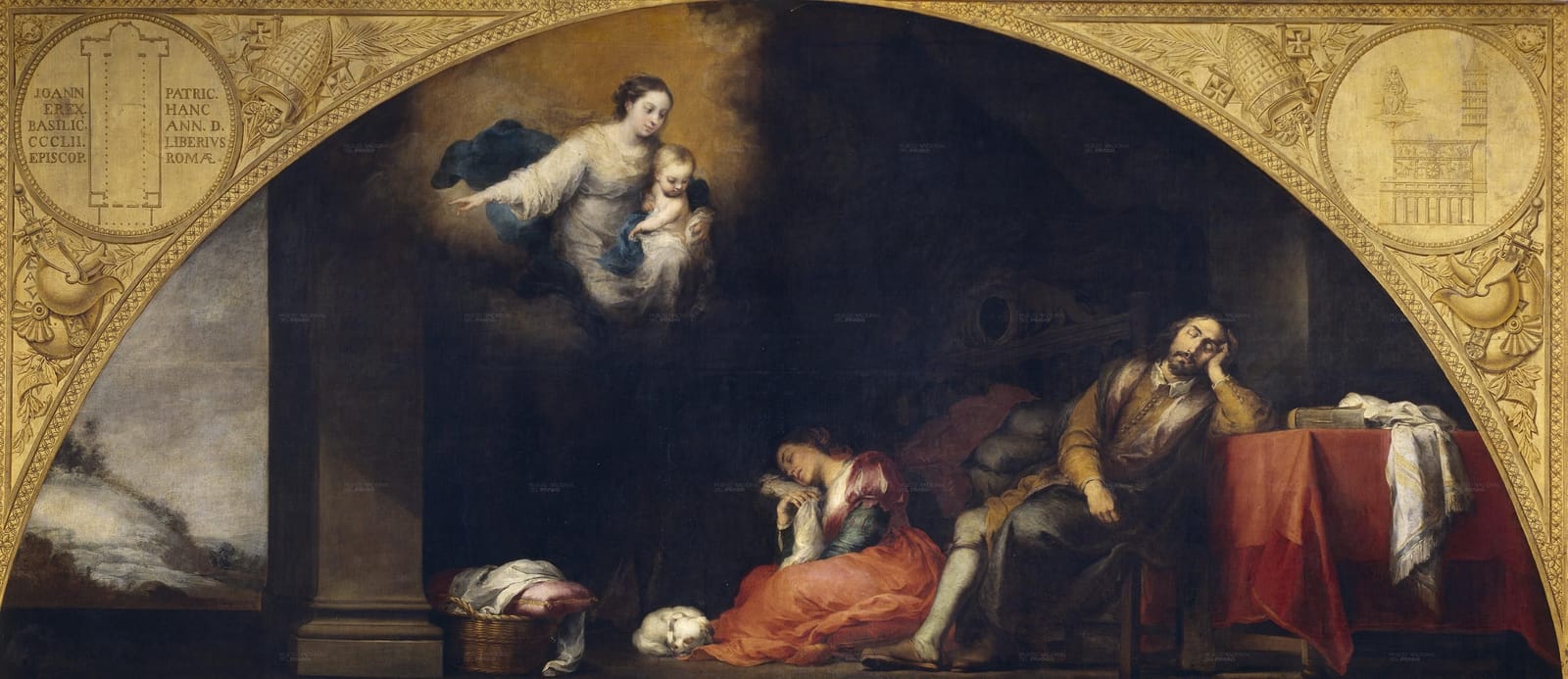
August 5: Our Lady of the Snow
From Dom Guéranger’s The Liturgical Year.
ROME, delivered from slavery by Peter on the first of this month, offers to the world a wonderful spectacle. O Wisdom, who, since the glorious Pentecost, hast spread over the whole world, where could it be more true to sing of thee that thou hast trodden the proud heights under thy victorious feet? On seven hills had pagan Rome set up her pageantry and built temples to her false gods; seven churches now appear at the summits on which purified Rome rests her now truly eternal foundations.
By their very site, the basilicas of St. Peter and St. Paul, of St. Laurence and St. Sebastian, placed at the four outer angles of the city of the Cæsars, recall the long siege continued for three centuries around the ancient Rome, while the new Rome was being founded. Helena and her son Constantine, recommencing the work of the foundations of the Holy City, carried the trenches further out; nevertheless, the churches which were their own peculiar work—viz., Holy Cross in Jerusalem, and St. Saviour's on the Lateran, are still at the very entrance of the pagan stronghold, close to the gates, and leaning against the ramparts; just as a soldier, setting foot within a tremendous fortress which has been long invested, advances cautiously, surveying both the breach through which he has just passed, and the labyrinth of unknown paths opening before him.