This day

August 10, 2026

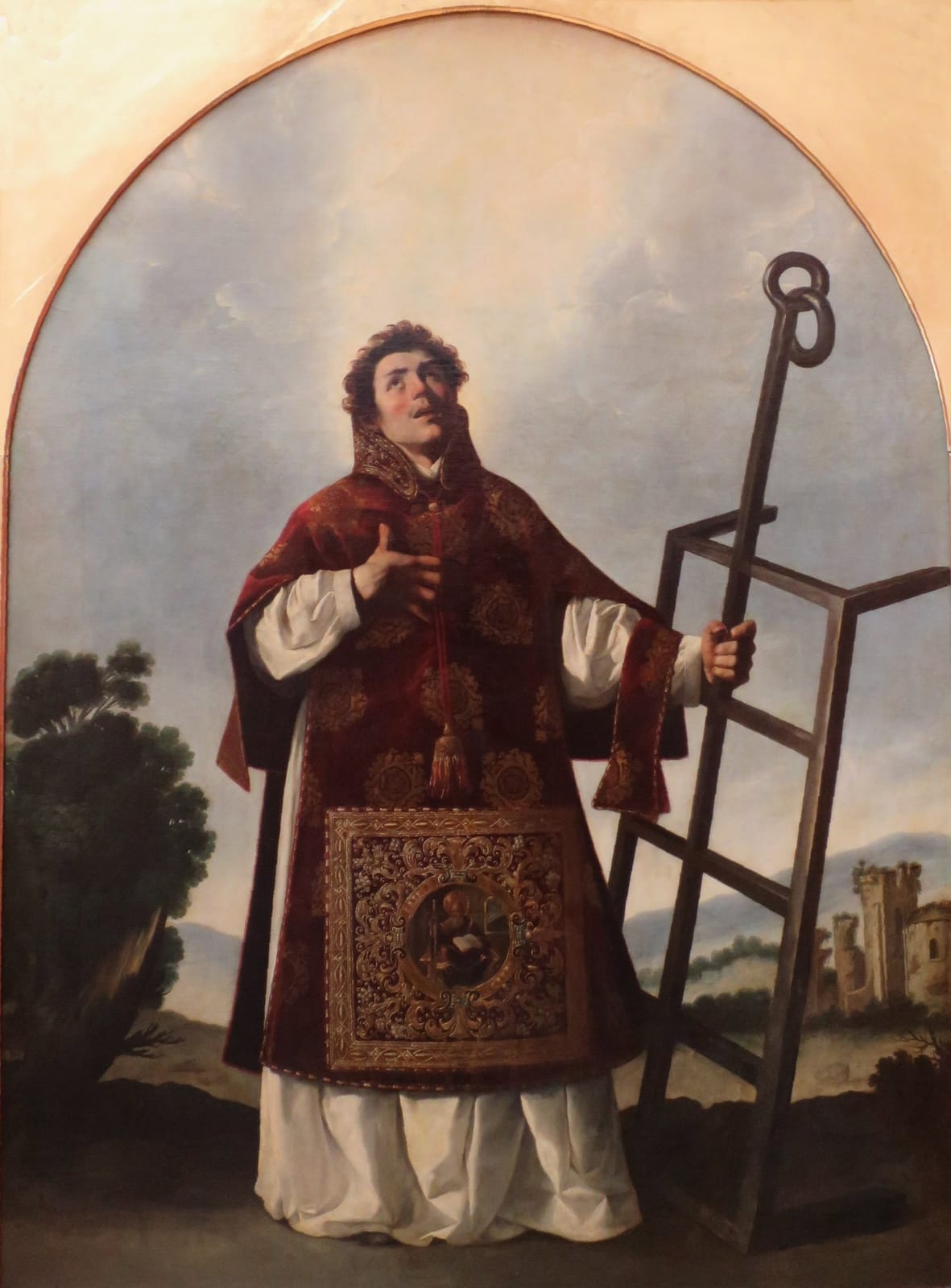
Saint Lawrence
Saint Lawrence, Francisco de Zurbarán (1598–1664), 1636. Credits

After Pentecost

August 10, 2026

August 10: St. Laurence, Deacon and Martyr

From Dom Guéranger’s The Liturgical Year.

‘ONCE the mother of false gods, but now the bride of Christ, O Rome, it is through Laurence thou art victorious! Thou hast conquered haughty monarchs and subjected nations to thine empire; but though thou hadst overcome barbarism, thy glory was incomplete till thou hadst vanquished the unclean idols. This was Laurence's victory, a combat bloody yet not tumultuous like those of Camillus or of Cæsar; it was the contest of faith, wherein self is immolated, and death is overcome by death. What words, what praises suffice to celebrate such a death? How can I worthily sing so great a martyrdom?'

Thus opens the sublime poem of Prudentius, composed little more than a century after the saint's martyrdom. In this work the poet has preserved to us the traditions existing in his own day, whereby the name of the Roman deacon was rendered so illustrious. About the same time St. Ambrose, with his irresistible eloquence, described the meeting of Sixtus and his deacon on the way to martyrdom. But, before both Ambrose and Prudentius, Pope St. Damasus chronicled the victory of Laurence's faith, in his majestic monumental inscriptions, which have such a ring of the days of triumph.

This week's Sunday: The Eleventh Sunday after Pentecost

From Dom Guéranger’s The Liturgical Year.

With the Greeks, this Sunday—their eleventh of Saint Matthew—is called the Parable of the King, who calls his servants to account. In the western Church, it has gone under the name of Sunday of the deaf and dumb, ever since the Gospel of the pharisee and the publican has been assigned to the tenth. To-day's Mass, as we now have it, still gives evidence as to what was its ancient arrangement. Our commentary on to-day's liturgy will show us this very plainly.

In the years when Easter falls nearest to March 21 the Books of Kings are continued as lessons of Matins up to, but never beyond, this Sunday. The sickness of the good king Ezechias, and the miraculous cure he obtained by his prayers and tears, are then the subject of the first lessons of the night-Office.

The learned and pious Abbot Rupert, writing on this Sunday's Mass previous to the change made in the order of the Gospel lessons, thus explains the Church's reason for selecting the following Introit: ‘The publican in the Gospel accuses himself, saying: “I am not worthy to lift up mine eyes to heaven.”

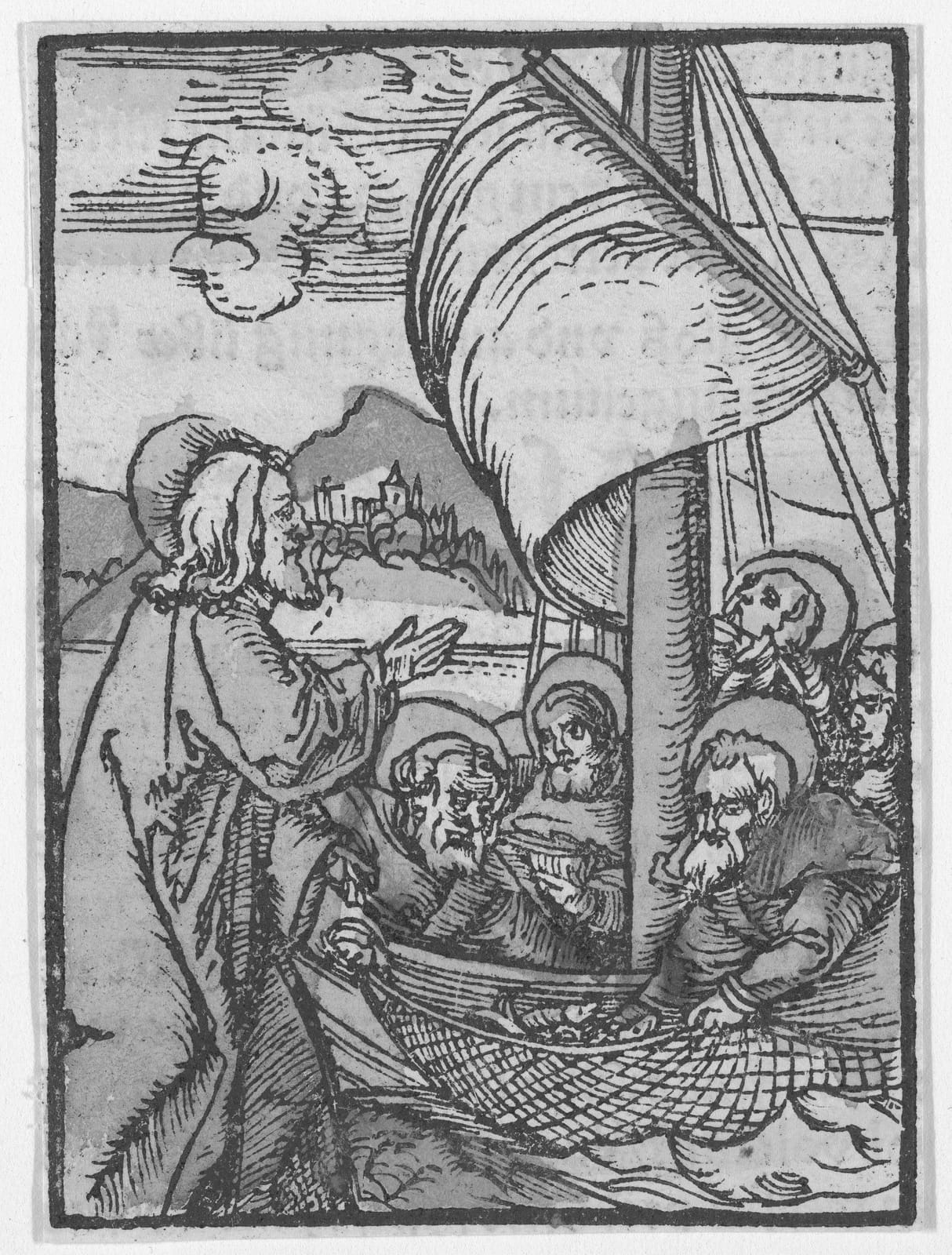
Peter hauling in a second draught of fishes
Hans Schäufelein (1480–1540), The Second Draught of Fishes by Saint Peter, from Das Plenarium, 1517. Credits

Email view of this day