This day

August 20, 2026

St Bernard of Clairvaux
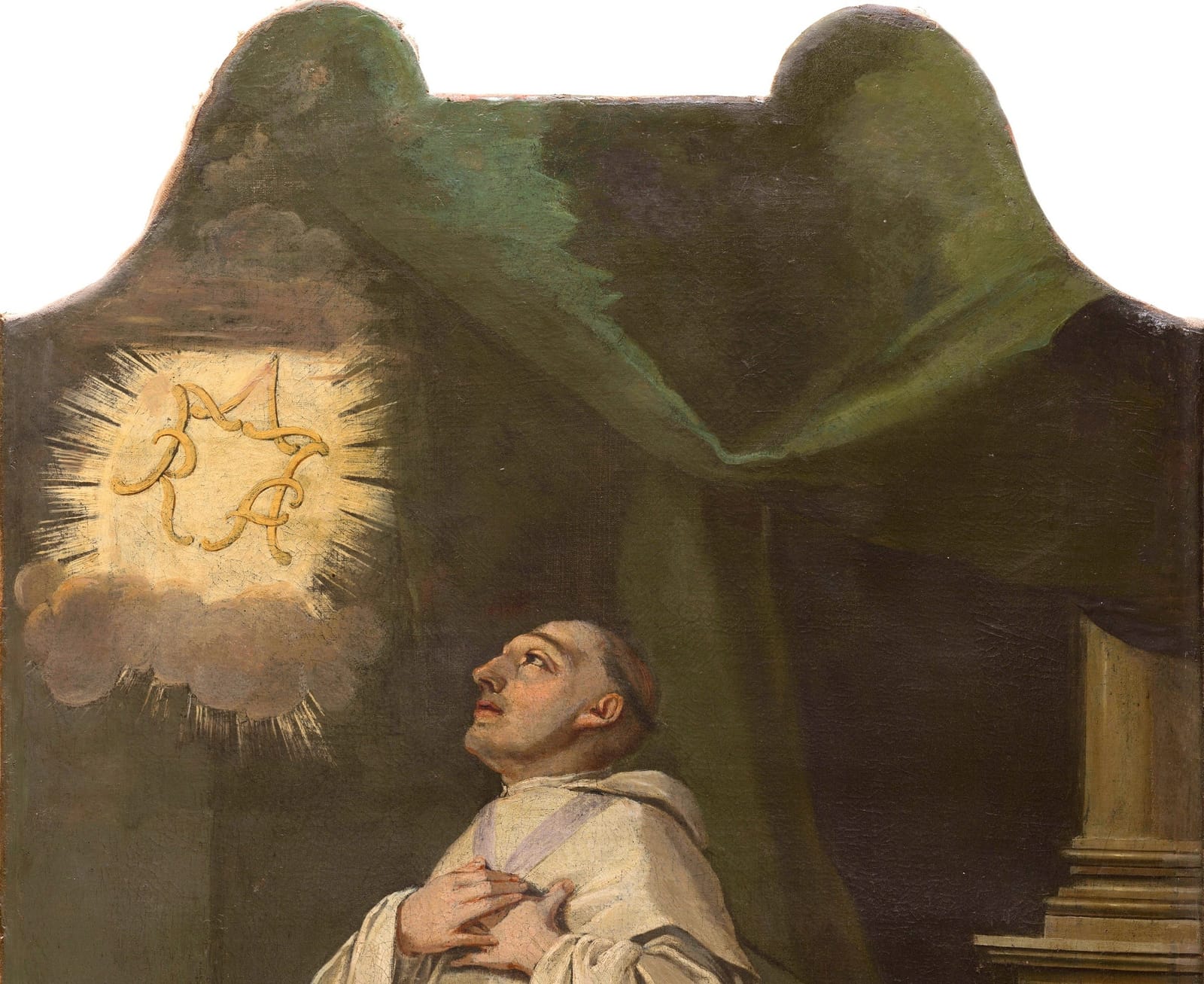
Święty Bernard z Clairvaux, Franciszek Ignacy Molitor (1741–1794). Credits

After Pentecost

August 20, 2026

August 20: St. Bernard, Abbot and Doctor of the Church

From Dom Guéranger’s The Liturgical Year.

THE valley of wormwood has lost its bitterness; having become Clairvaux, or the bright valley, its light shines over the world; from every point of the horizon vigilant bees are attracted to it by the honey from the rock which abounds in its solitude. Mary turns her glance upon its wild hills, and with her smile sheds light and grace upon them. Listen to the harmonious voice arising from the desert; it is the voice of Bernard, her chosen one. 'Learn, O man, the counsel of God; admire the intentions of Wisdom, the design of love. Before bedewing the whole earth, he saturated the fleece; being to redeem the human race, he heaped up in Mary the entire ransom. O Adam, say no more: “The woman whom Thou gavest me offered me the forbidden fruit;" say rather: “The woman whom Thou gavest me has fed me with a fruit of blessing.”With what ardour ought we to honour Mary, in whom was set all the fulness of good! If we have any hope, any saving grace, know that it overflows from her who to-day rises replete with love: she is a garden of delights, over which the divine South Wind does not merely pass with a light breath, but sweeping down from the heights, He stirs it unceasingly with a heavenly breeze, so that it may shed abroad its perfumes, which are the gifts of various graces.

This week's Sunday: The Twelfth Sunday after Pentecost

From Dom Guéranger’s The Liturgical Year.

On this Sunday, which is their twelfth of Saint Matthew, the Greeks read in the Mass the episode of the young rich man who questions Jesus, given in the nineteenth chapter of the Saint’s Gospel. In the west, it is the Gospel of the Good Samaritan which gives its name to this twelfth Sunday after Pentecost.

The Introit begins with that beautiful verse of Psalm lxix.: 'Come to mine assistance, O God! O Lord, make haste to help me!’ Cassian, in his tenth Conference, has admirably drawn out the beauty of these words, and shows how they are appropriate for every circumstance of life, and how fully they respond to every sentiment of the Christian soul. Durandus applies this Introit to Job, because the lessons for the Divine Office, which are taken from that Book of Scripture, sometimes, though not often, coincide with this Sunday. Rupert looks on this Introit as the fitting prayer of the deaf and dumb man, whose cure was the subject of our reflexions this day last week. He says: 'The human race, in the person of our first parents, had become deaf to the commandments of God, and dumb in His praise; the first use he makes of his untied tongue, is to call upon the God who has healed him.'

The Last Judgment
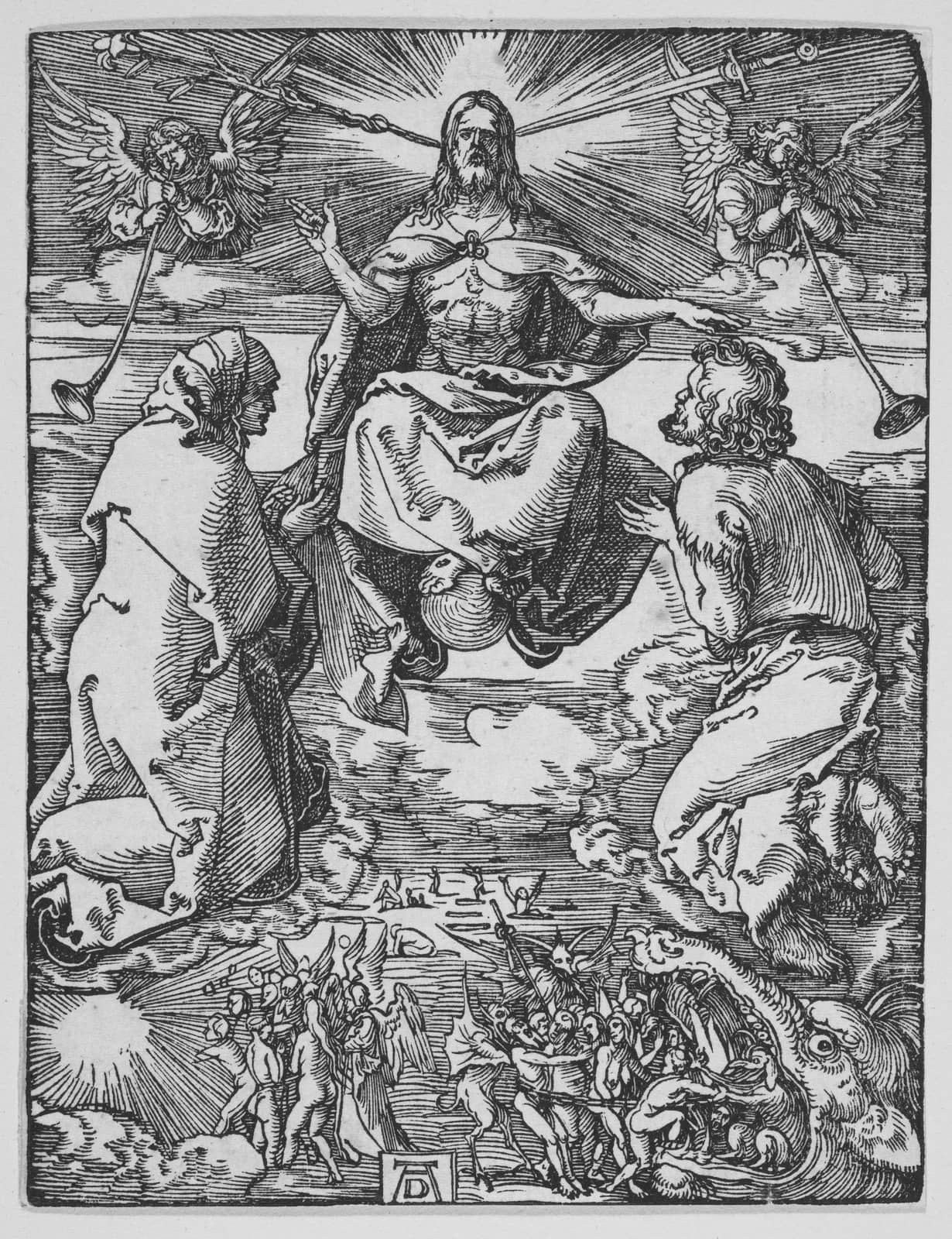
Albrecht Dürer (1471–1528), The Last Judgment, from The Small Passion, ca. 1510. Credits

Email view of this day