
This day

August 21, 2026

St Jane Frances de Chantal
Saint Jane Frances Frémyot de Chantal. Credits

After Pentecost

August 21, 2026

August 21: St. Jane Frances de Fremiot de Chantal, Widow

From Dom Guéranger’s The Liturgical Year.

ALTHOUGH Mary's glory is within her, beauty appears also in the garment wherewith she is clad: a mysterious robe woven of the virtues of the saints, who owe to her both their justice and their reward. As every grace comes to us through our Mother, so all the glory of heaven converges towards that of the Queen.

Now among the blessed souls there are some more immediately connected with the holy Virgin. Prevented by the peculiarly tender love of the Mother of grace, they left all things, when on earth, to run after the odour of the perfumes of the Spouse she gave to the world; in heaven they keep the greater intimacy with Mary which was theirs even in the time of exile. Hence it is, that at this time of her exaltation beside the Son of God, the Psalmist sings also of the virgins entering joyously with her into the temple of the King. The crowning of our Lady is truly the special feast of these daughters of Tyre, who have themselves become princesses and queens in order to form her noble escort and her royal court.

This week's Sunday: The Twelfth Sunday after Pentecost

From Dom Guéranger’s The Liturgical Year.

On this Sunday, which is their twelfth of Saint Matthew, the Greeks read in the Mass the episode of the young rich man who questions Jesus, given in the nineteenth chapter of the Saint’s Gospel. In the west, it is the Gospel of the Good Samaritan which gives its name to this twelfth Sunday after Pentecost.

The Introit begins with that beautiful verse of Psalm lxix.: 'Come to mine assistance, O God! O Lord, make haste to help me!’ Cassian, in his tenth Conference, has admirably drawn out the beauty of these words, and shows how they are appropriate for every circumstance of life, and how fully they respond to every sentiment of the Christian soul. Durandus applies this Introit to Job, because the lessons for the Divine Office, which are taken from that Book of Scripture, sometimes, though not often, coincide with this Sunday. Rupert looks on this Introit as the fitting prayer of the deaf and dumb man, whose cure was the subject of our reflexions this day last week.

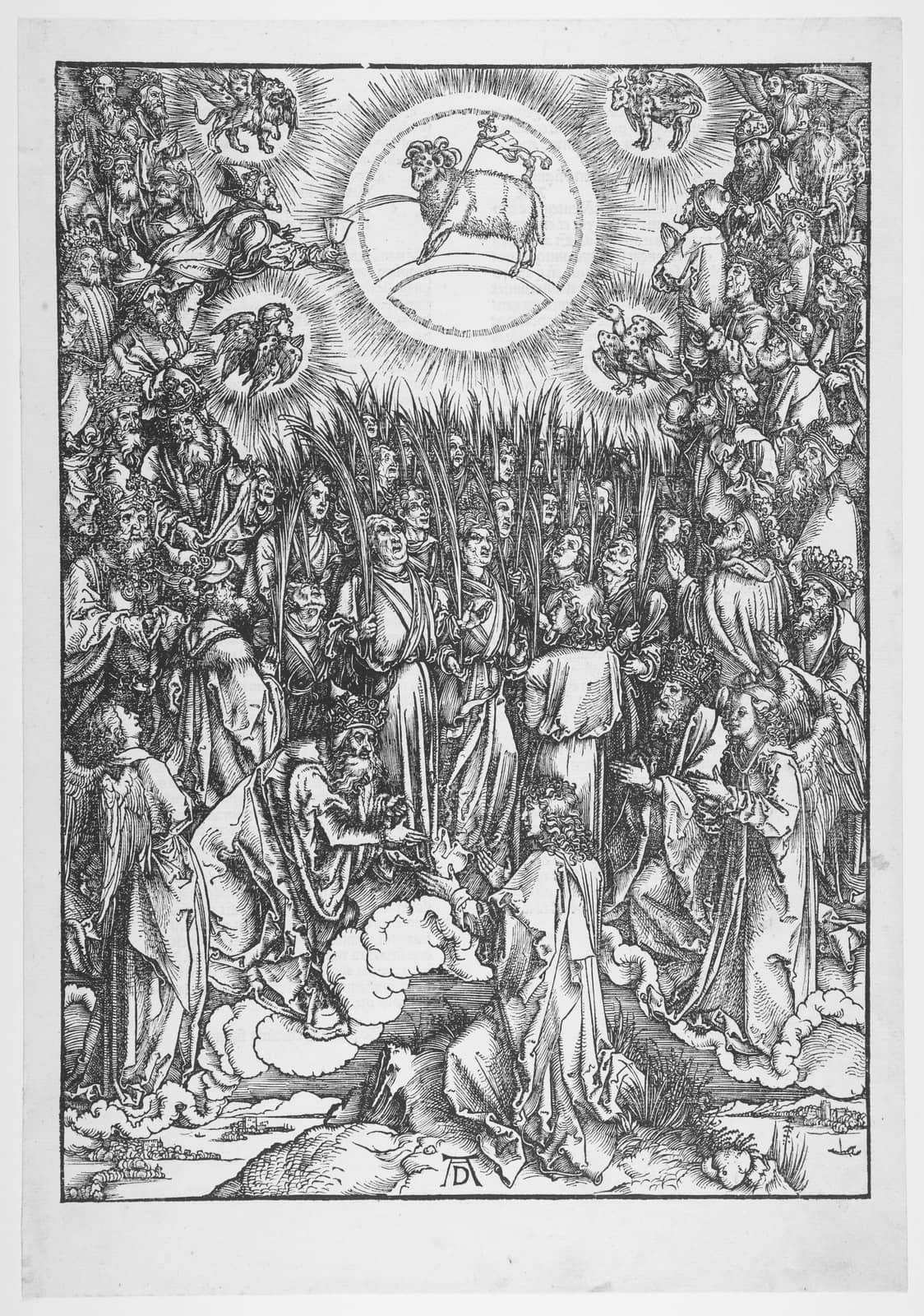
The elders and the saints adore the Lamb
Albrecht Dürer (1471–1528), The Adoration of the Lamb, from The Apocalypse, 1498. Credits

Email view of this day