This day

September 2, 2026

After Pentecost

September 2, 2026

September 2: St. Stephen, King of Hungary, Confessor

From Dom Guéranger’s The Liturgical Year.

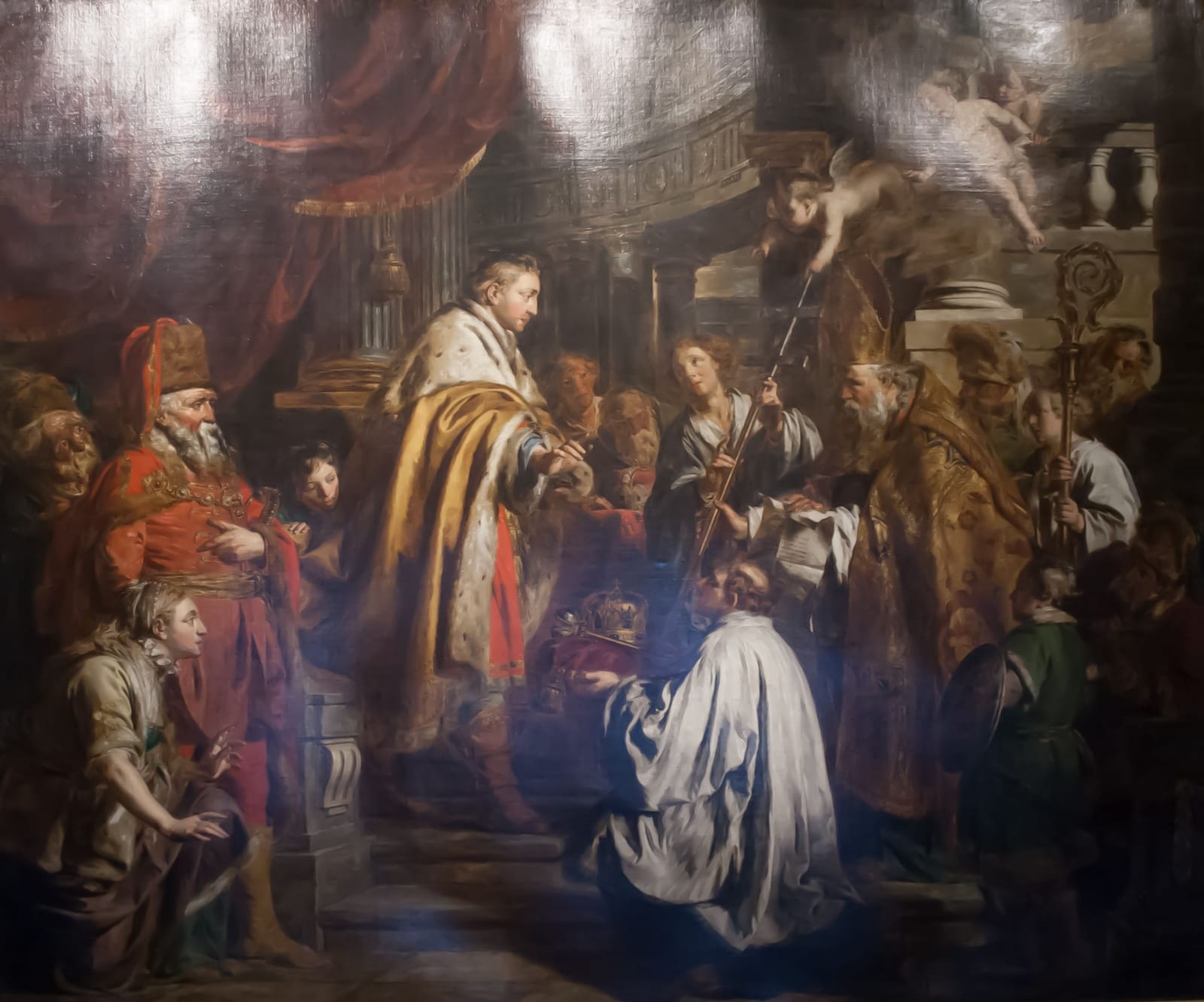
‘Out of the eater came forth meat, and out of the strong came forth sweetness. The people with teeth of steel, grinding the nations, gives itself up as food to him, to whom was said: “Kill and eat;” the mouth of the Huns, formerly vomiting foam and rage, now distils the honey of charity. Such, O Christ, are thy miracles; such are Thy works, O our God!’ Thus does Baronius, on reaching in his history the year of Christ 1000, hail the arrival of the Hungarian deputies, who came to offer to the Roman Church the suzerainty of their land, and beseech the Vicar of Christ to confer the title of king upon their duke Stephen.

We are carried back in thought a century earlier, when, led by Arcades, the son of Aleut, under the banner of the hawk, the Magyars came down from the mountains of Transylvania into the plains watered by the Theiss and the Danube. Attila seemed to live again in those sons of his race, who poured like a torrent over Germany, Gaul, and Italy. But the empire of the Huns over reconquered Pannonia was to be lasting only on condition of its ceasing to be the scourge of God, and becoming the rampart of His Church.

This week's Sunday: The Fourteenth Sunday after Pentecost

From Dom Guéranger’s The Liturgical Year.

In the western Church this Sunday is called that of the two masters, because of the Gospel which is read upon it. The Greeks give it the name of the Sunday of the invited to the marriage-feast, or, the fourteenth of St. Matthew, unless the feast of the Exaltation of the holy Cross (September 14) happen to fall during the ensuing week. In this latter case this and the following Sunday are called ‘of the Exaltation,' and take for their Gospels the first from St. John, the second from St. Mark. After this, follow the Sundays called ‘of St. Luke,’which go on till Lent, in the manner already described for St. Matthew.

Behold, O God, our protector! and look on the face of thy Christ! Thus begins the Church, as she advances towards the altar, whereon the holy sacrifice is going to be offered up. The Church is the bride of the Man-God; she is, as the apostle says, His glory; but the Spouse, according to the same St. Paul, is both the image and the glory of God, and the head of His bride.

The parable of the unmerciful servant
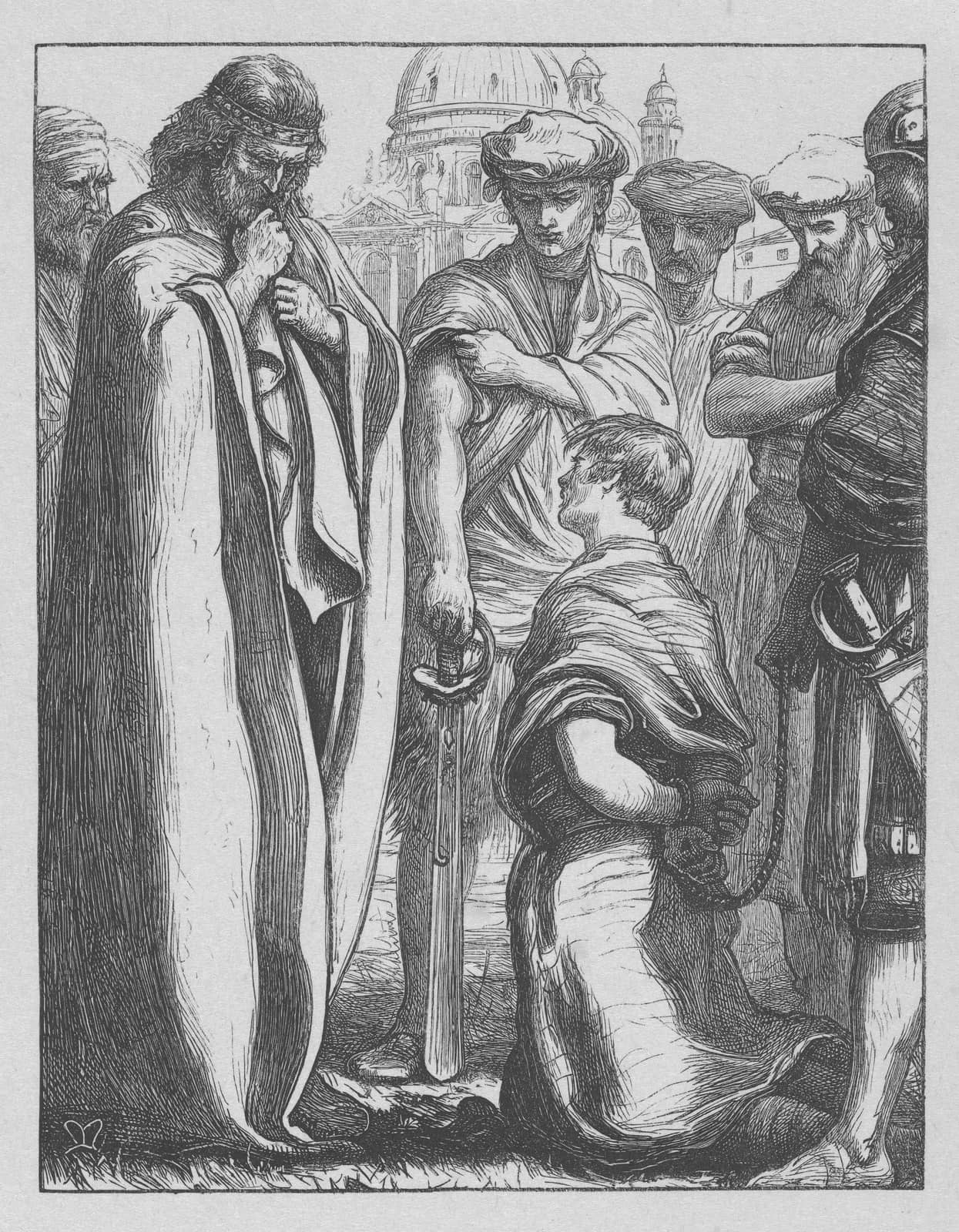
Sir John Everett Millais (1829–1896), The Unmerciful Servant, from The Parables of Our Lord and Saviour Jesus Christ, 1864. Credits

Email view of this day