After Pentecost
October 14, 2026
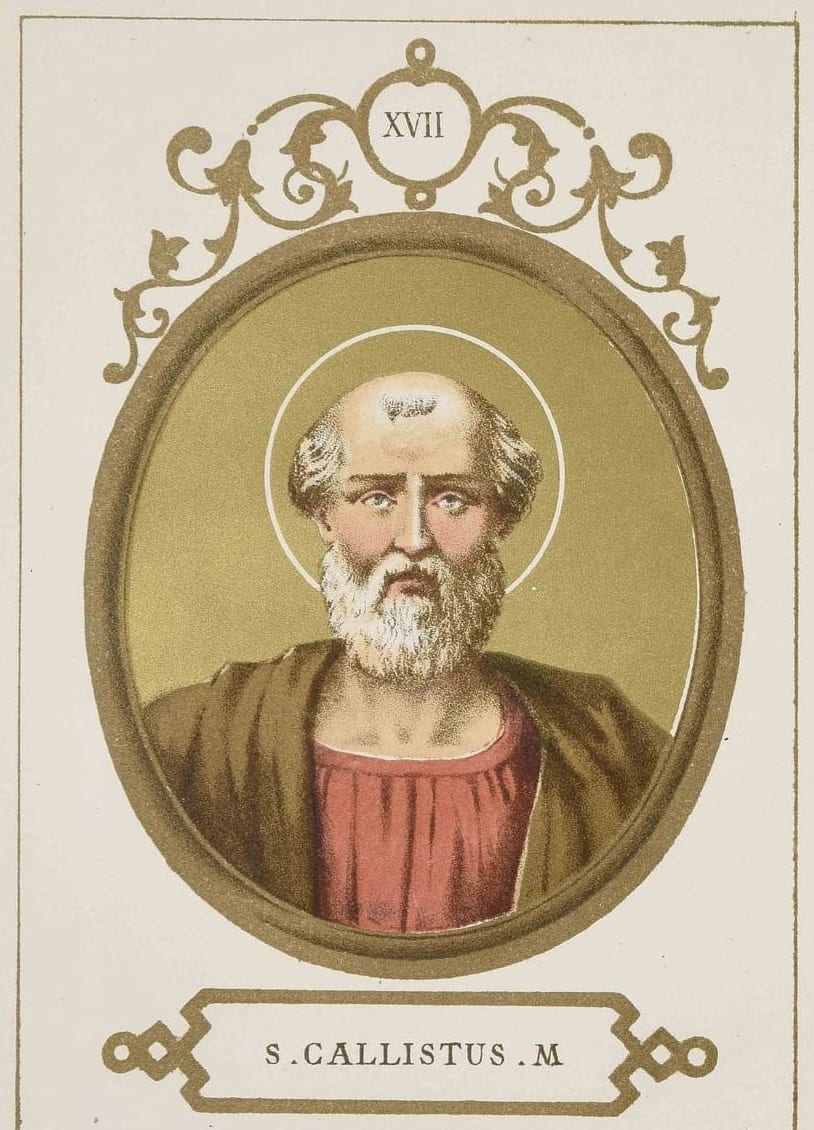
October 14: St. Callixtus I, Pope and Martyr
From Dom Guéranger’s The Liturgical Year.
He was a sign of contradiction in Israel. In his own time, Christians were ranged either around him or against him. The trouble excited by his mere name sixteen hundred years ago, was renewed in the middle of the nineteenth century by the discovery of a famous book, which gave an occasion to the sectaries of our own days to stand with those of old against Callixtus and the Church. The book, entitled Philosophumena or refutation of heresies, was composed in the third century; it represented Callixtus, whose life and character were painted in the darkest colours, as one of the worst corruptors of doctrine.
In that third century, however, the author of the Philosophumena, attacking the Pontiff he wished to supplant, and setting up in Rome, as he himself acknowledges, Chair against Chair, did but publish to the Church his own shame, by ranging himself among those very dissenters of whom his book professed to be the refutation and the history. The name of this first antipope has not come down to us. But behold his punishment! The work of his envious pen, despised by his contemporaries, was to reappear at the right moment to awaken the slumbering attention of a far-off posterity.