This day

February 5, 2027

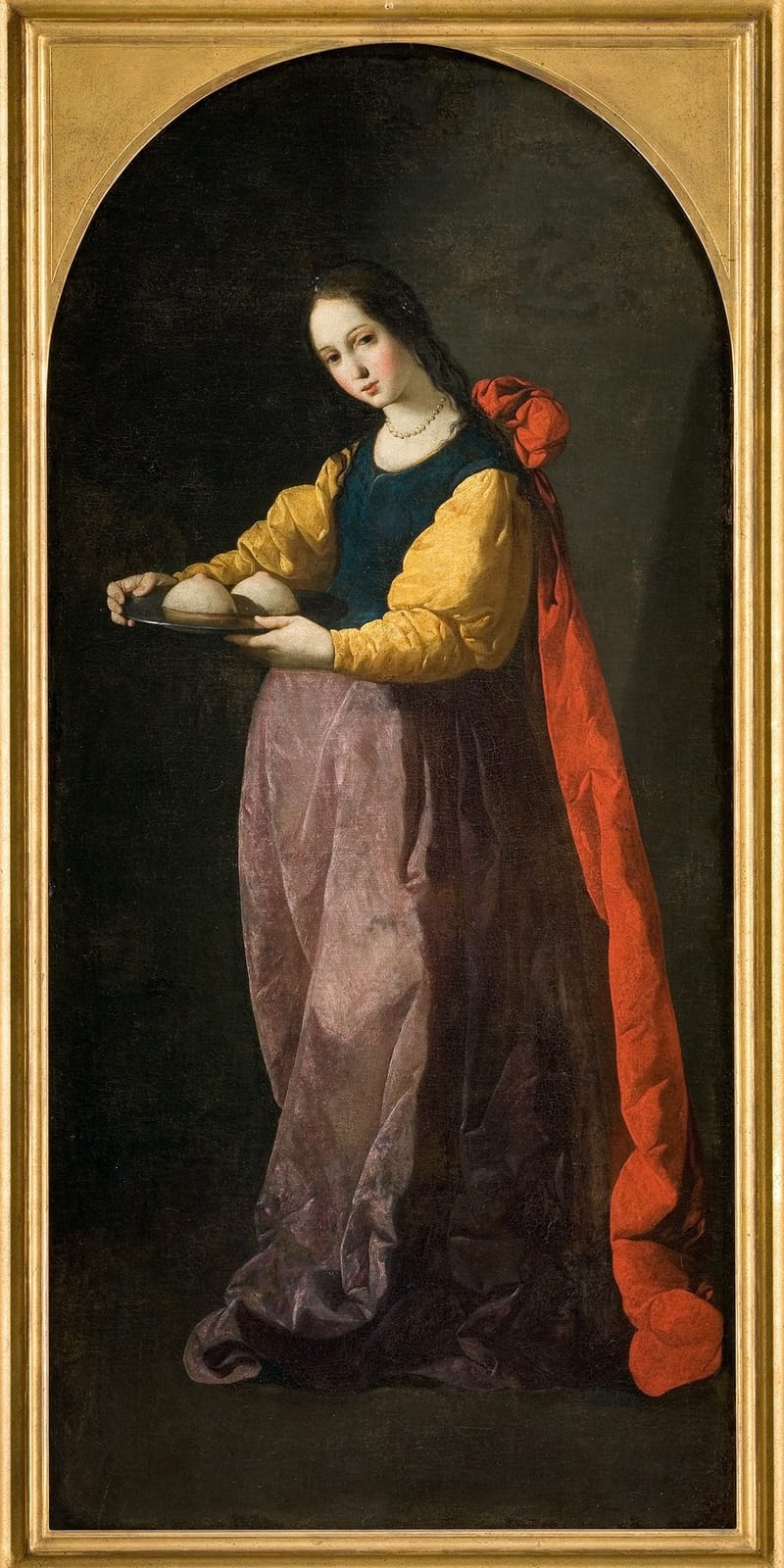
St Agatha in yellow sleeves and red mantle holding a platter with her severed breasts
Saint Agatha, Francisco de Zurbarán (1598–1664), c. 1635–40. Credits

Septuagesima

February 5, 2027

A Double leads the weekday.Rubric

February 5: St. Agatha, Virgin and Martyr

From Dom Guéranger’s The Liturgical Year.

Since the commencement of the ecclesiastical year, we have kept the feasts of two out of the four illustrious virgins whose names are daily honoured in the holy Sacrifice of the Lamb: the third comes to-day, lighting up the heaven of the Church with her bright soft rays. Lucy first, then Agnes, and now the gracious visit of Agatha. The fourth, Cecily, the immortal Cecily, is to be one of that magnificent constellation which gives such splendour to the closing of the year. To-day, then, let us keep a feast in honour of Agatha, the virgin daughter of that same fair Sicily which can boast of her Lucy. We must not allow the holy sadness of our present season to take aught from the devotion we owe to our saint. The joy wherewith we celebrate her merits will lead us to study her virtues. She will repay us by her prayers; she will encourage us to persevere in the path which is to bring us to the God she so nobly loved and served, and with whom she is now for ever united.


Friday of Sexagesima Week

From Dom Guéranger’s The Liturgical Year.

God chastises the world by the deluge; but He is faithful to the promise made to our first parents, that the head of the serpent should be crushed. The human race has to be preserved, therefore, until the time shall come for the fulfilment of this promise. The Ark gives shelter to the just Noah, and to his family. The angry waters reach even to the tops of the highest mountains; but the frail yet safe vessel rides peacefully on the waves. When the day fixed by God shall come, they that dwell in this Ark shall once more tread the earth, purified as it then will be; and God will say to them, as heretofore to our first parents: ‘Increase, and multiply, and fill the earth.'

Mankind, then, owes its safety to the Ark. O saving Ark, that wast planned by God Himself, and didst sail unhurt amidst the universal wreck!

Christ points to a laborer working in a vineyard
Hans Schäufelein (1480–1540), The Parable of the Workers in the Vineyard, from Das Plenarium, 1517. Credits

Email view of this day