This day

February 4, 2027

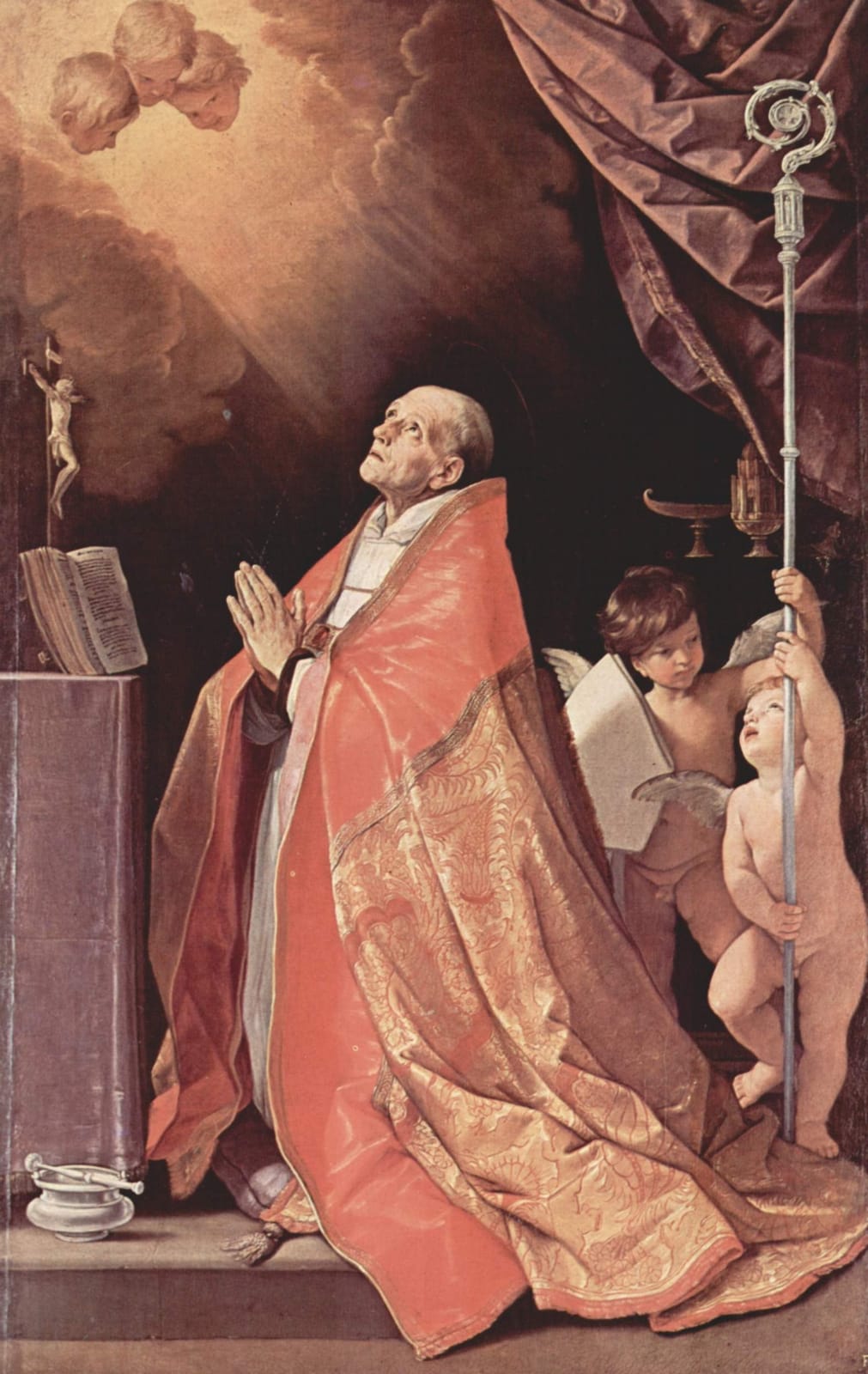
Bishop saint in coral cope praying; putti with crozier and book
St Andrew Corsini in Prayer, Guido Reni (1575–1642), 1630–1635. Credits

Septuagesima

February 4, 2027

A Double leads the weekday.Rubric

February 4: St. Andrew Corsini, Bishop and Confessor

From Dom Guéranger’s The Liturgical Year.

The saintly bishop, whose feast we keep to-day pressingly invites us, by his austere life and his burning zeal for the salvation of souls, to procure, at all costs, our own reconciliation with the divine justice. We are indebted for this feast to a member of the illustrious family of the Corsini, Pope Clement XII., who, however, was but the instrument used by divine Providence. The holy bishop of the little town of Fiesole ever sought to be unknown during his life, and God, who willed that he should be glorified by the whole Church, inspired the sovereign Pontiff to inscribe his name among the saints of the universal calendar. Andrew the saint was once a sinner; his example will encourage us in the work of our conversion.

Let us read the account of his virtues as given us by the Church.

Andream Florentiæ ex nobili Corsinorum familia natura parentes precibus a Deo impetrarunt, et beatæ Virgini spoponderunt. Qualis autem futurus esset, divino præsagio, antequam nasceretur, ostensum est: nam mater gravida sibi visa est per quietem lupum edidisse, qui, ad Carmelitarum ædem pergens, in ipso templi vestibuio statim in agnum conversus est.


Thursday of Sexagesima Week

From Dom Guéranger’s The Liturgical Year.

God promised Noah that He would never more punish the earth with a deluge. But, in His justice, He has many times visited the sins of men with a scourge which, in more senses than one, bears a resemblance to a deluge: the invasion of enemies. We meet with these invasions in every age; and each time we see the hand of God. We can trace the crimes that each of them was sent to punish, and in each we find a manifest proof of the infinite justice wherewith God governs the world.

It is not requisite that we should here mention the long list of these revolutions, which we might almost say make up the history of mankind, for in its every page we read of conquests, extinction of races, destruction of nations, and violent amalgamations, which effaced the traditions and character of the several peoples that were thus forced into union. We will confine our considerations to the two great invasions, which the just anger of God has permitted to come upon the world since the commencement of the Christian era.

Christ healing a blind man
Hans Schäufelein (1480–1540), Christ Healing the Blind, from Das Plenarium, 1517. Credits

Email view of this day