This day

April 1, 2027

Paschal Time

April 1, 2027

Thursday in Easter Week

From Dom Guéranger’s The Liturgical Year.

This is the day which the Lord hath made: let us be glad and rejoice therein.

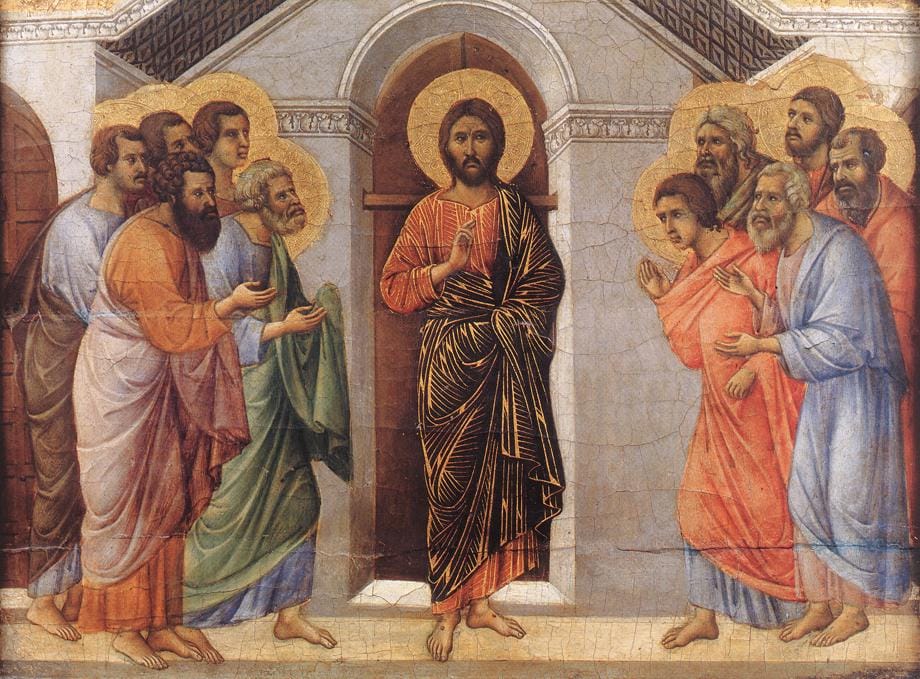
AFTER having glorified the Lamb of God, and the Passover whereby our Lord destroyed our enemies; after having celebrated our deliverance by water, and our entrance into the Promised Land; let us now fix our respectful gaze upon him whose triumph is prefigured by all these prodigies. So dazzling is the glory that now beams from this Man-God, that, like the prophet of Patmos, we shall fall prostrate before him. But he is so wonderful, too, in his love, that he will encourage us to enjoy the grand vision: he will say to us, as he did to his disciple: ‘Fear not! I am the First, and the Last; and alive, and was dead; and behold! I am living for ever and ever, and have the keys of death and of hell.’

Yes, he is now Master of death, which had held him captive; he holds in his hand the keys of hell. These expressions of Scripture signify that he has power over death and the tomb; he has conquered them.

This week's Sunday: Easter Sunday

From Dom Guéranger’s The Liturgical Year.

This is the day which the Lord hath made; let us be glad and rejoice therein!

THE night between Saturday and Sunday has well-nigh run its course, and the day-dawn is appearing. The Mother of sorrows is waiting, in courageous hope and patience, for the blissful moment of her Jesus’ return. Magdalen and the other holy women have spent the night in watching, and are preparing to start for the sepulchre. In limbo, the Soul of our crucified Lord is about to give the glad word of departure to the myriads of the long-imprisoned holy souls who cluster round him in adoring love. Death is still holding his silent sway over the sepulchre where rests the Body of Jesus. Since the day when he gained his first victim, Abel, he has swept off countless generations; but never has he held in his grasp a prey so noble as this that now lies in the tomb near Calvary.

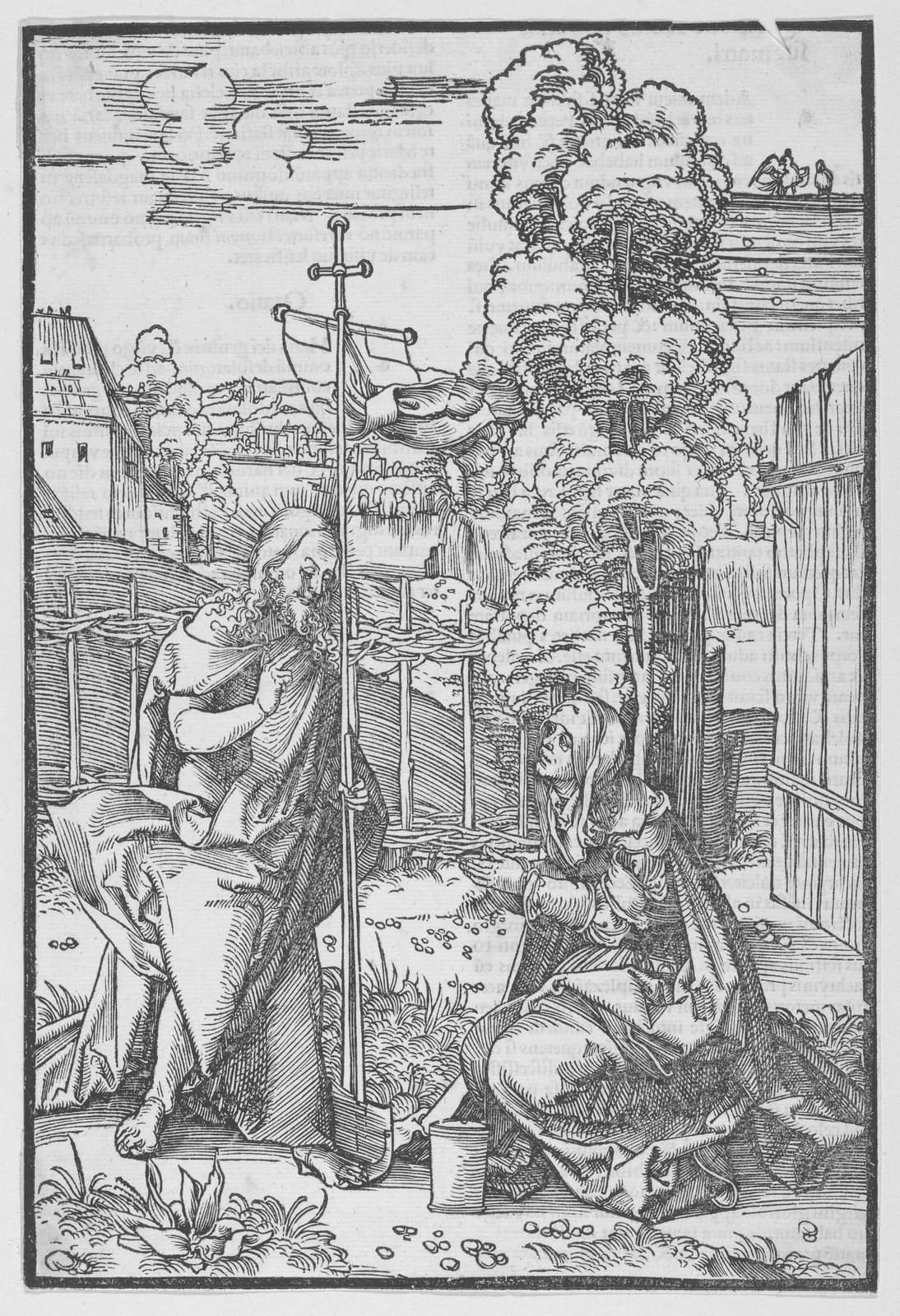
Noli me tangere: the risen Christ appears to Mary Magdalene in the garden
Hans Schäufelein (1480–1540), Christ Appearing to Mary Magdalen (Noli Me Tangere), from Speculum passionis domini nostri Ihesu Christi, 1507. Credits

Email view of this day