This day

April 2, 2027

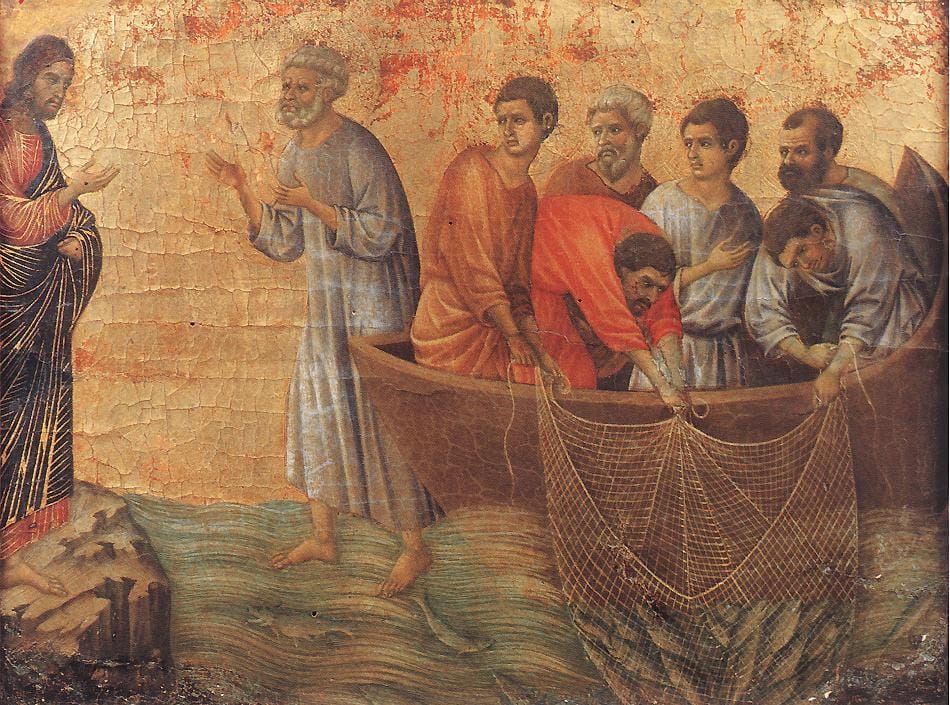
The risen Christ stands on the shore as the Apostles haul in their net
Appearance on Lake Tiberias, Duccio di Buoninsegna (c. 1255–1319), 1308–11. Credits

Paschal Time

April 2, 2027

Friday in Easter Week

From Dom Guéranger’s The Liturgical Year.

This is the day which the Lord hath made: let us be glad and rejoice therein.

EIGHT days ago, we were standing near the Cross, on which died the Man of Sorrows, abandoned by his Father, and rejected, by a solemn judgement of the Synagogue, as a false Messias: and lo! this is the sixth time the sun has risen upon our earth since the voice of the angel was heard proclaiming the Resurrection of this adorable Victim. The Church, his widowed spouse, then lay prostrate before the justice of the eternal God and Father, who 'spared not even his own Son,’ because he had taken upon himself the likeness of sin; but now she is feasting in the sight of her Jesus’ triumph, for he bids her be exceeding glad. But if within this glad Octave, there be one day, rather than another, on which she should proclaim his triumph, it assuredly is the Friday; for it was on that day she saw him ‘filled with reproaches’ and crucified.

To-day, therefore, let us meditate upon our Saviour’s Resurrection as being the zenith of his own dear glory, and as the chief argument whereon rests our faith in his divinity.’If Christ be not risen again,' says the Apostle, ‘your faith is vain:’ but, because he is risen again, our faith rests on the surest of foundations.
Chapter 6: On Holy Communion during Paschal Time

From Dom Guéranger’s The Liturgical Year.

IN Passiontide, the Christian went to holy Communion impressed with these words of the Apostle: ‘As often as ye shall eat this Bread, and drink the Chalice, ye shall show the death of the Lord.’ He united himself with the divine Victim immolated for the sins of the world, and he died with his Saviour. During Paschal Time, the heavenly Food produces its effects in another manner; it fortifies the life of the soul, and gives to the body the germ of immortality. It is true that in each season of the liturgical year this twofold effect is produced in those who worthily receive Communion, namely, immolation and resurrection; but as, during the days consecrated to the Passion, the application of the mystery of immolation and sacrifice is more direct and more in accordance with the sentiments of the communicant, so also, during Paschal Time, the divine contact of the Body of our risen Jesus makes us feel, in a way that Easter alone can do, that to the holy Eucharist we owe the future resurrection of our bodies.

Our Saviour himself teaches us this, where he says: ‘Your fathers did eat manna in the desert, and are dead.

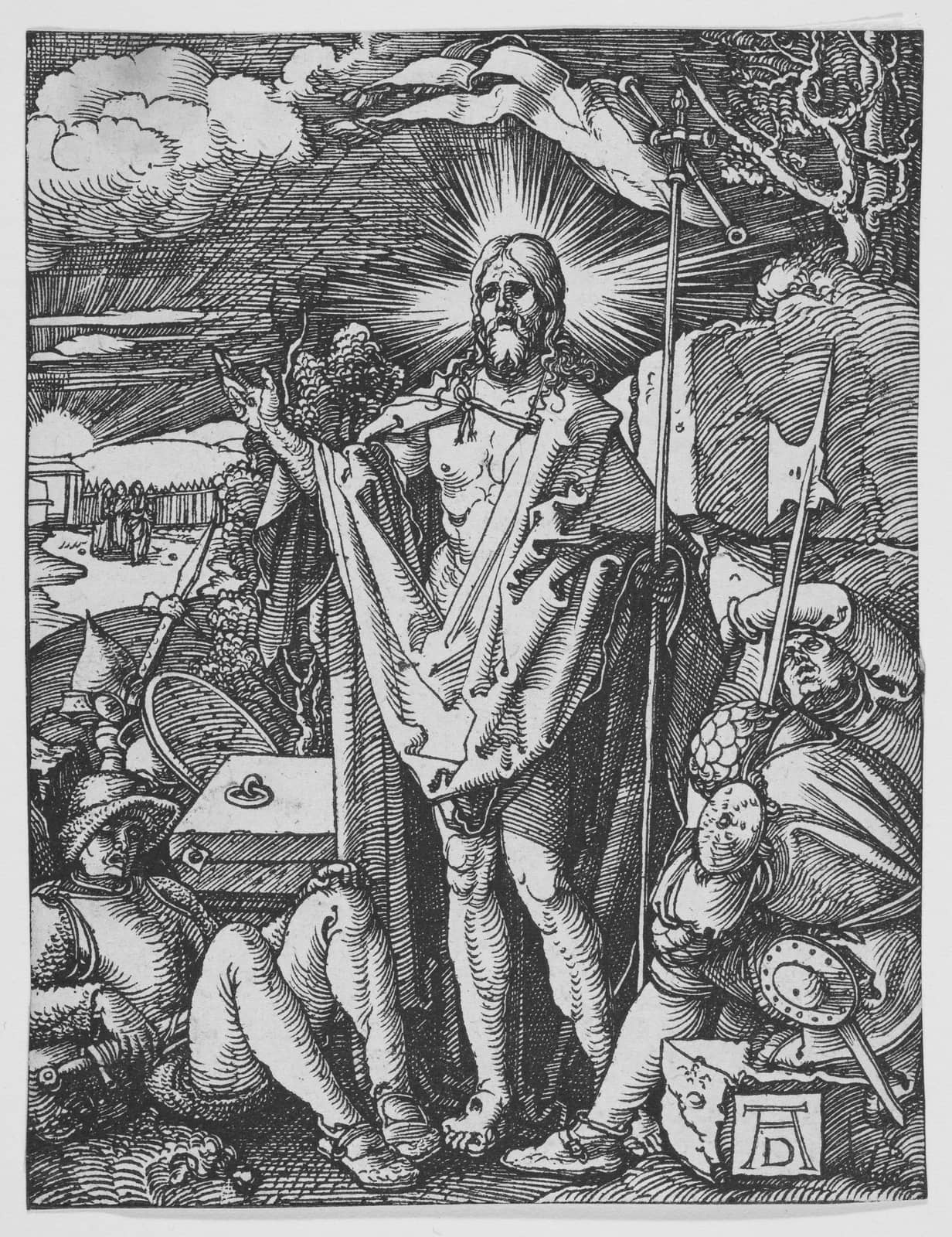
The risen Christ stepping from the tomb
Albrecht Dürer (1471–1528), The Resurrection, from The Small Passion, ca. 1510. Credits

Email view of this day