This day

April 25, 2027

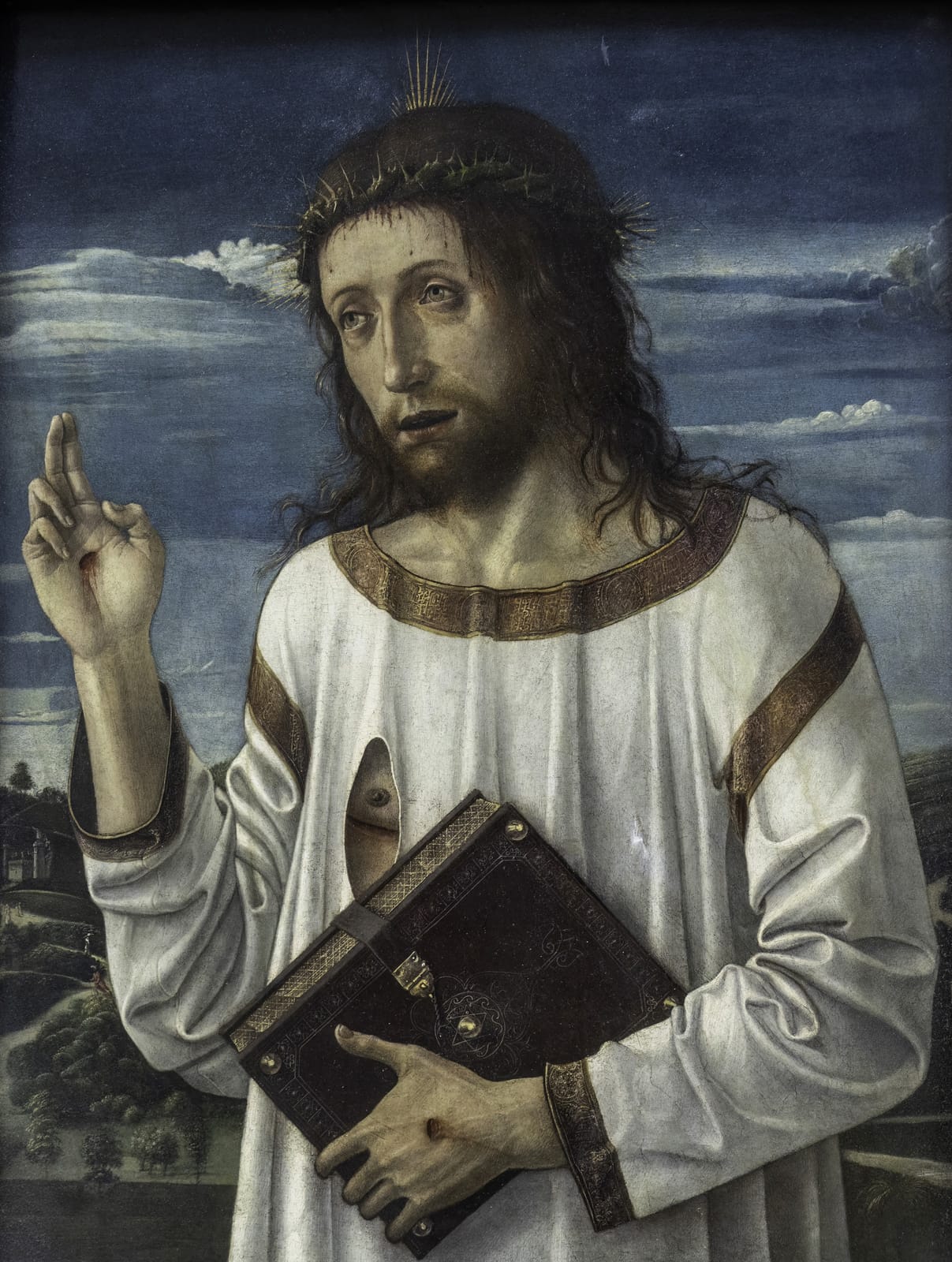
Christ blessing, holding a book, with the wound in his side visible through his tunic
Blessing Christ, Giovanni Bellini (1430–1516), c. 1465–70. Credits

Paschal Time

April 25, 2027

Fourth Sunday after Easter

From Dom Guéranger’s The Liturgical Year.

℣. In thy resurrection, O Christ, alleluia.
℟. Let heaven and earth rejoice, alleluia.

OUR Jesus has organized his Church, and confided to his Apostles the sacred deposit of the truths which are to form the object of our faith. We must now follow him in another work, of equal importance to the world, to which he gives his divine attention during these forty days: it is the institution of the sacraments. It is not enough that we believe; we must, moreover, be made just—that is, we must bear upon us the likeness of God’s holiness; we must receive, we must have incorporated within us that great fruit of the redemption which is called grace; that thus being made living members of our divine Head, we may be made join theirs with him of the kingdom of heaven. Now it is by means of the sacraments that Jesus is to produce in us this wondrous work of our justification; he applies to us the merits of his Incarnation and Sacrifice, but he applies them by certain means, which he himself, in his power and wisdom, has instituted.
Chapter 5: On Hearing Mass during Paschal Time

From Dom Guéranger’s The Liturgical Year.

WHEN we assisted at the holy Sacrifice during Passiontide. our attention was fixed on the real immolation of the Lamb; we looked upon the altar as a new Calvary; and our devotion was centred upon the divine Victim slain for our ransom. During Eastertide the Lamb presents himself to us in another aspect; he is living, he is resplendent with glory, he is the Conqueror. He still deigns to be immolated; but it is that he may invite us to a joyous banquet—the banquet of the Pasch—wherein he gives us to eat of his Flesh. In her chants during the Mass the Church is untiring in her Alleluia; she affectionately kisses the Wounds of her Jesus, which now dart forth rays of dazzling brightness. Her altar is the throne of the risen God; she approaches it without fear, for the divine Conqueror of death, though so resplendent in his glory, is more loving and affable than ever.

Another source of joy to the Church, when at the holy altar, is the sight of her children partaking of the banquet of the Paschal Lamb.

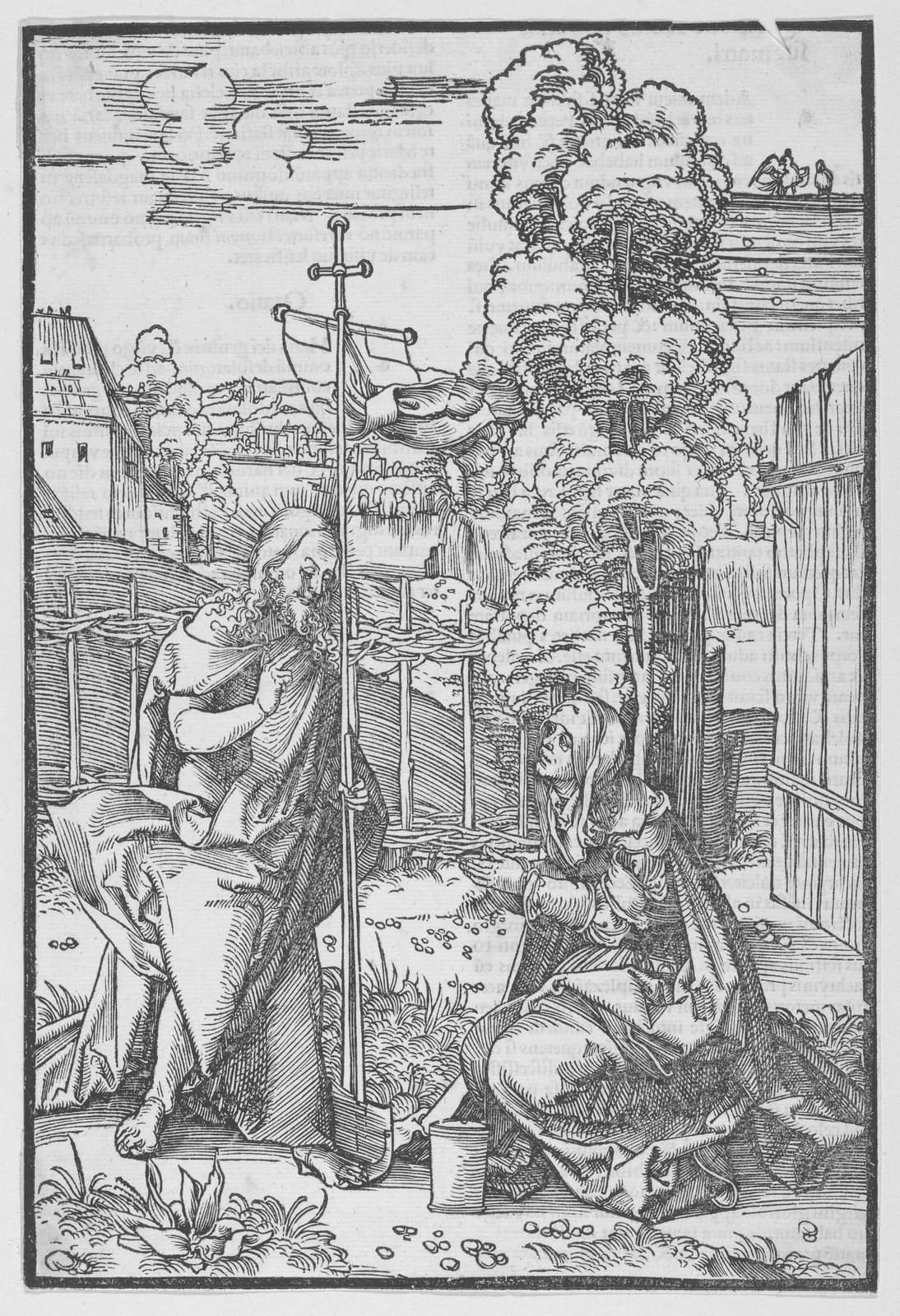
Noli me tangere: the risen Christ appears to Mary Magdalene in the garden
Hans Schäufelein (1480–1540), Christ Appearing to Mary Magdalen (Noli Me Tangere), from Speculum passionis domini nostri Ihesu Christi, 1507. Credits

Email view of this day