This day

June 11, 2027

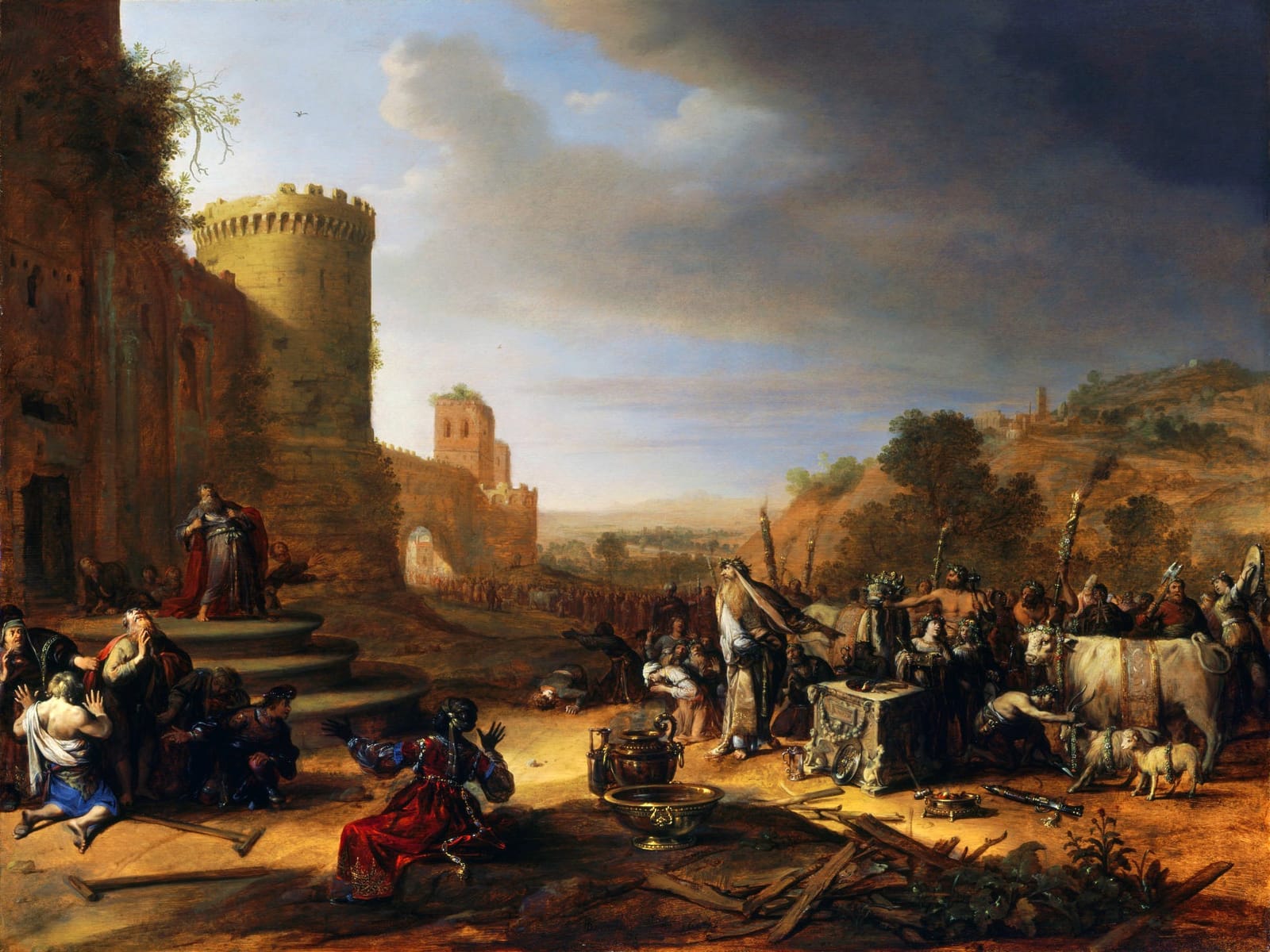
Saints Paul and Barnabas at Lystra
Saints Paul and Barnabas at Lystra, Bartholomeus Breenbergh (1598–1657), 1637. Credits

After Pentecost

June 11, 2027

June 11: St. Barnabas, Apostle

From Dom Guéranger’s The Liturgical Year.

THE promulgation of the new alliance invited all nations to sit down at the marriage-feast in the kingdom of God; since that day, the sanctifying Spirit is ever producing saints in every age, and at moments which correspond most mysteriously to the deep and hidden designs of eternal Wisdom over the particular history of a people. Nor must we be astonished at this: for Christian nations having their appointed part in the advancing of the kingly sway of the Man-God, this vocation imposes duties upon them, and gives them rights superior to nature’s law; the supernatural order invests them with its inherent greatness; and the Holy Ghost, by means of his elect, fosters not only their birth but likewise their development. This wondrous working of divine Providence, as presented on history’s page, is indeed admirable; where the hidden influence of sanctity, in even the frail and lowly, is ever being divinely used to overrule the powerful action of the mighty, who seem, in men’s eyes, to be leading everything their own way. Among the saints strikingly appointed as channels of grace to nations, none are so particularly entitled to universal remembrance and gratitude as the apostles, for they are the foundation stones of the edifice of Christian society, whereof the Gospel is both the strength and the primary law.

This week's Sunday: The Third Sunday after Pentecost

From Dom Guéranger’s The Liturgical Year.

The faithful soul has now witnessed in the holy liturgy the close of the mysteries of our redemption. The Holy Ghost has come down to support her during this second portion of her career, by forming and developing within her the fullness of the Christian life as taught by her divine Saviour when on earth. He begins by teaching her how to pray. Prayer, said our Lord, must be continual: we ought always to pray, and not to faint. We know not what we should pray for as we ought; but the holy Spirit helpeth our infirmity, and Himself asketh for us with unspeakable groanings.

In the Introit and the whole Mass for this Sunday, we are taught that prayer must have, amongst its other requisite qualities, that of humble repentance for our past sins, and of confidence in God’s infinite mercy.

This is the Third Sunday after Pentecost; it is the first that has no rubrical connexion with the great feasts we have been solemnizing; it is a Sunday with all the simplicity of the Office of the Time.

Respice in me, et miserere mei, Domine, quoniam unicus et pauper sum ego; vide humilitatem meam, et laborem meum: et dimitte omnia peccata mea, Deus meus.

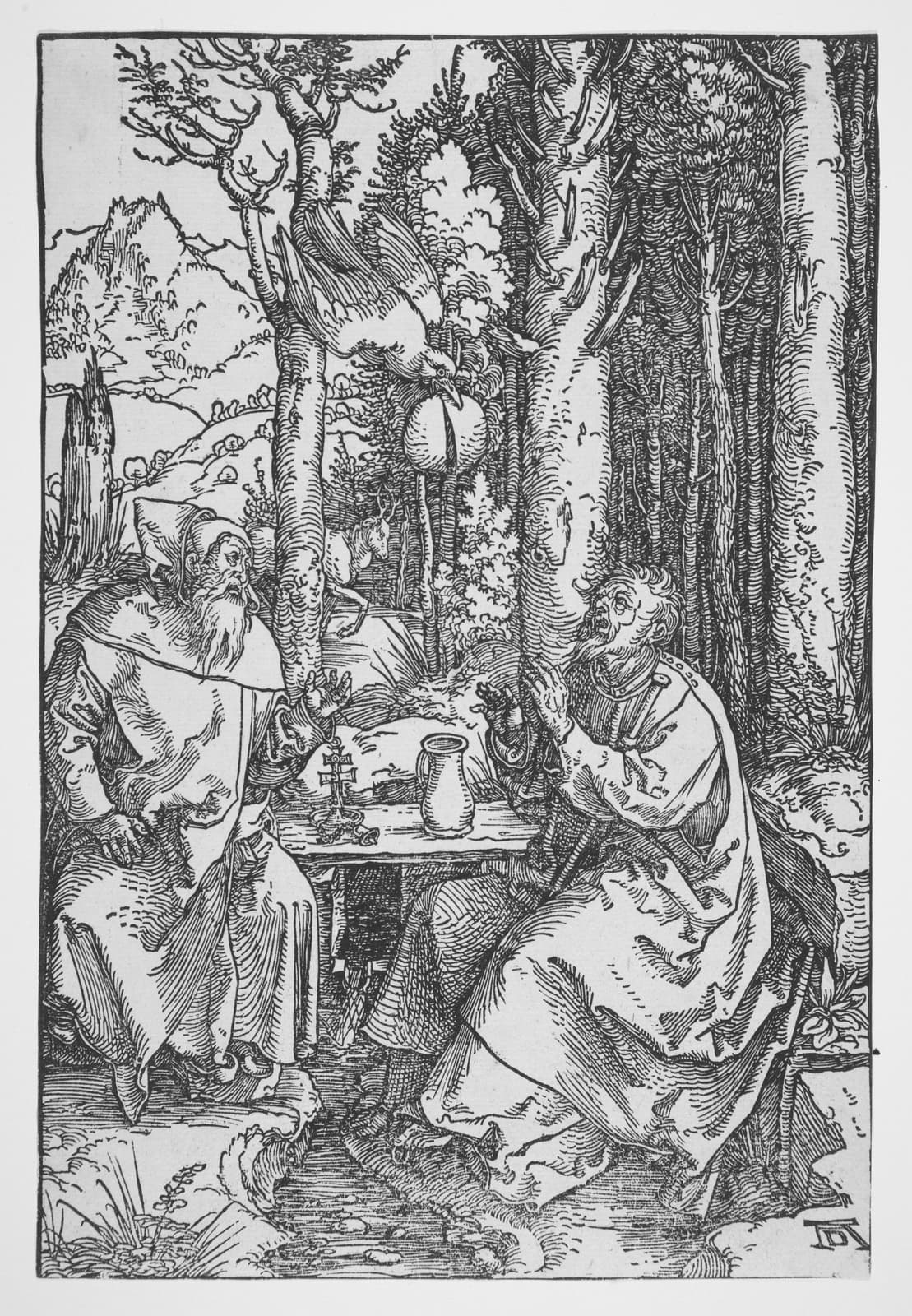
Saint Anthony visiting Saint Paul the Hermit in the desert
Albrecht Dürer (1471–1528), Saint Anthony and Saint Paul in the Desert, ca. 1503. Credits

Email view of this day