After Pentecost
June 19, 2027
A Double leads; Sts. Gervase and Protase are commemorated.Rubric
June 19: St. Juliana Falconieri, Virgin
From Dom Guéranger’s The Liturgical Year.
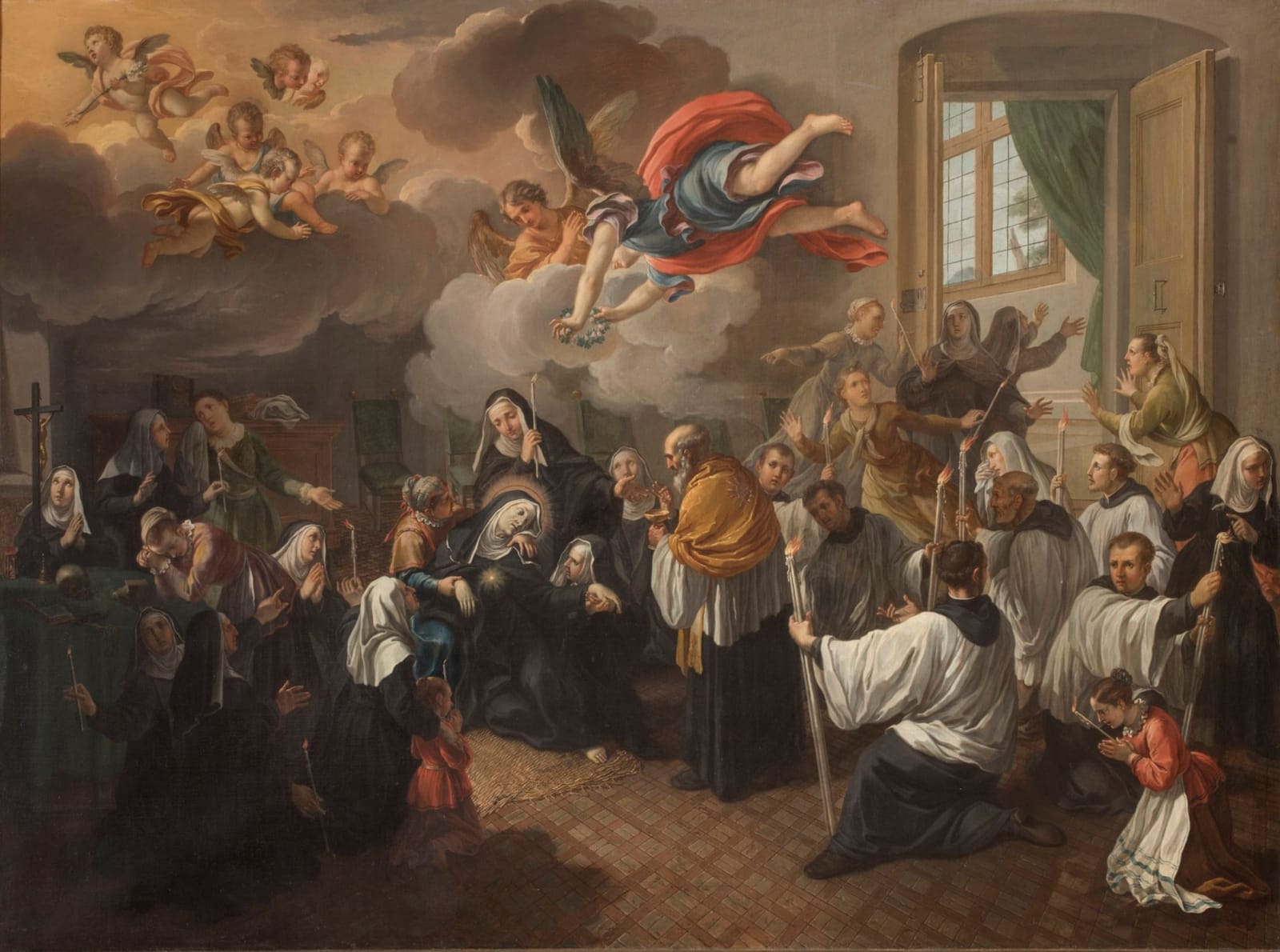
THIS day witnesses the close of the pilgrimage of one who was miraculously supplied with the divine Viaticum. Juliana presents herself at heaven's gate, showing upon her heart the impress of the sacred Host. The lily emblazoned on the city escutcheon of Florence glistens with fresh radiance to-day, for it was she who gave birth to our saint, as well as to so many others, some of whom have already beamed across our path, and some are about to follow; all of them brilliant in sublime virtues practised within the ancient walls of this 'city of flowers,' under the delighted glance and the urging influence of the Spirit of love. But what shall we say of the glory of the mountains which nobly crown this fair city, a diadem lovely in men's eyes, and still more so to angels’ gaze? What of Vallombrosa, and, farther in the blue distance, of Camaldoli, of Alberno? all sacred fortresses, at whose feet hell trembling howls, all sacred reservoirs of choicest grace, guarded by seraphim, whence flow in gushing streams, more abundant and more pure than Arno’s tide, living waters of salvation on all the smiling land around!