This day

August 8, 2027

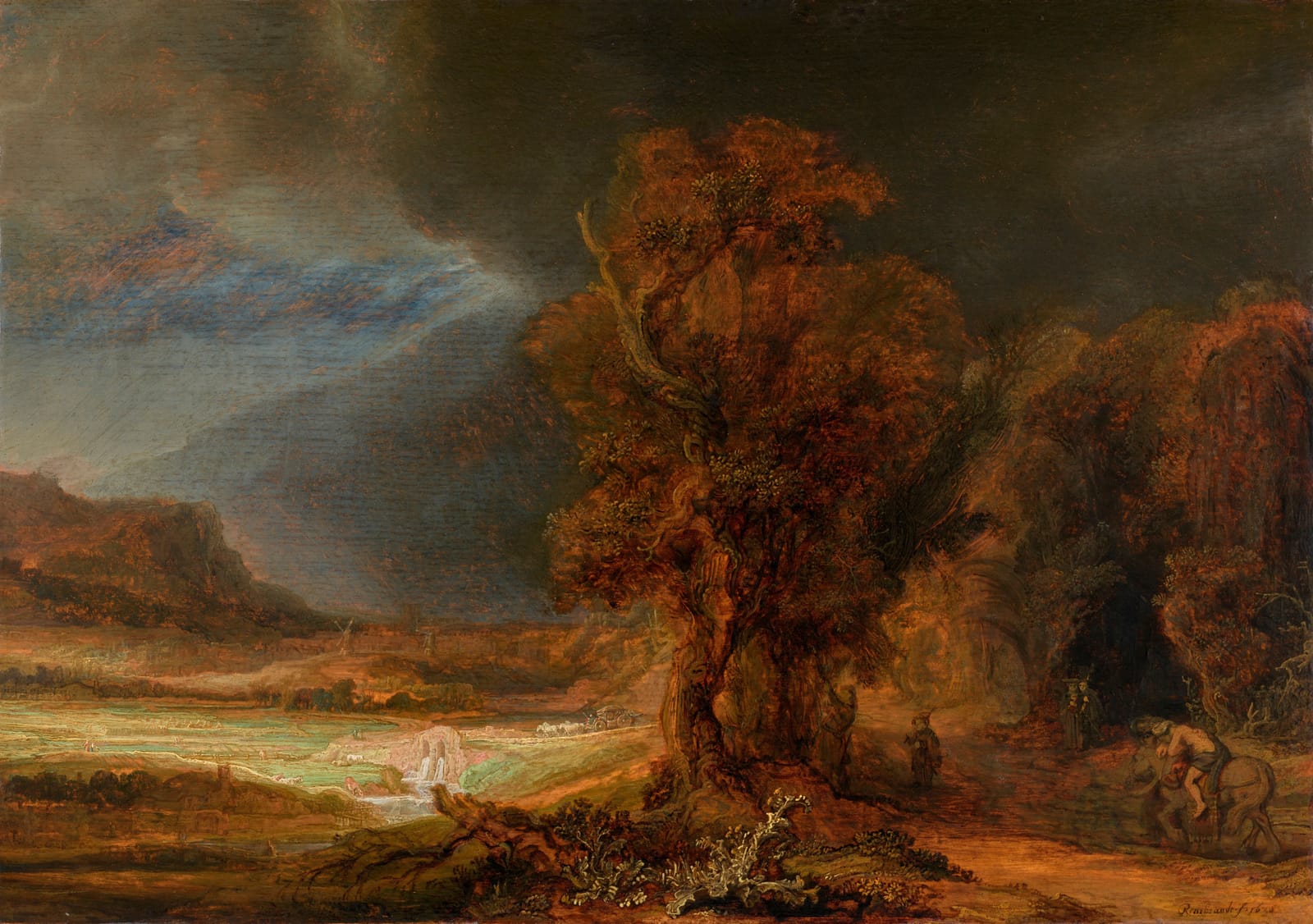
Landscape with the Good Samaritan
Landscape with the Good Samaritan, Rembrandt (1606–1669), 1638. Credits

After Pentecost

August 8, 2027

The Twelfth Sunday after Pentecost

From Dom Guéranger’s The Liturgical Year.

On this Sunday, which is their twelfth of Saint Matthew, the Greeks read in the Mass the episode of the young rich man who questions Jesus, given in the nineteenth chapter of the Saint’s Gospel. In the west, it is the Gospel of the Good Samaritan which gives its name to this twelfth Sunday after Pentecost.

The Introit begins with that beautiful verse of Psalm lxix.: 'Come to mine assistance, O God! O Lord, make haste to help me!’ Cassian, in his tenth Conference, has admirably drawn out the beauty of these words, and shows how they are appropriate for every circumstance of life, and how fully they respond to every sentiment of the Christian soul. Durandus applies this Introit to Job, because the lessons for the Divine Office, which are taken from that Book of Scripture, sometimes, though not often, coincide with this Sunday. Rupert looks on this Introit as the fitting prayer of the deaf and dumb man, whose cure was the subject of our reflexions this day last week. He says: 'The human race, in the person of our first parents, had become deaf to the commandments of God, and dumb in His praise; the first use he makes of his untied tongue, is to call upon the God who has healed him.'
Chapter 3: The Practice for the Time after Pentecost

From Dom Guéranger’s The Liturgical Year.

The object which the Church has in view by her liturgical year is the leading of the Christian soul to union with Christ, and this by the Holy Ghost. This object is the one which God Himself has in giving us His own Son to be our mediator, our teacher, and our Redeemer, and in sending us the Holy Ghost to abide among us. To this end is directed all that aggregate of rites and prayers which we have hitherto explained: they are not a mere commemoration of the mysteries achieved for our salvation by the divine goodness, but they bring with them the graces corresponding to each of those mysteries; that thus we may come, as the apostle expresses it, ‘to the age of the fullness of Christ.’

As we have elsewhere explained, our sharing in the mysteries of Christ, which are celebrated in the liturgical year, produces in the Christian what is called in mystic theology the illuminative life, in which the soul gains continually more and more of the light of the Incarnate Word, who, by His examples and teachings, renovates each one of her faculties, and imparts to her the habit of seeing all things from God’s point of view.

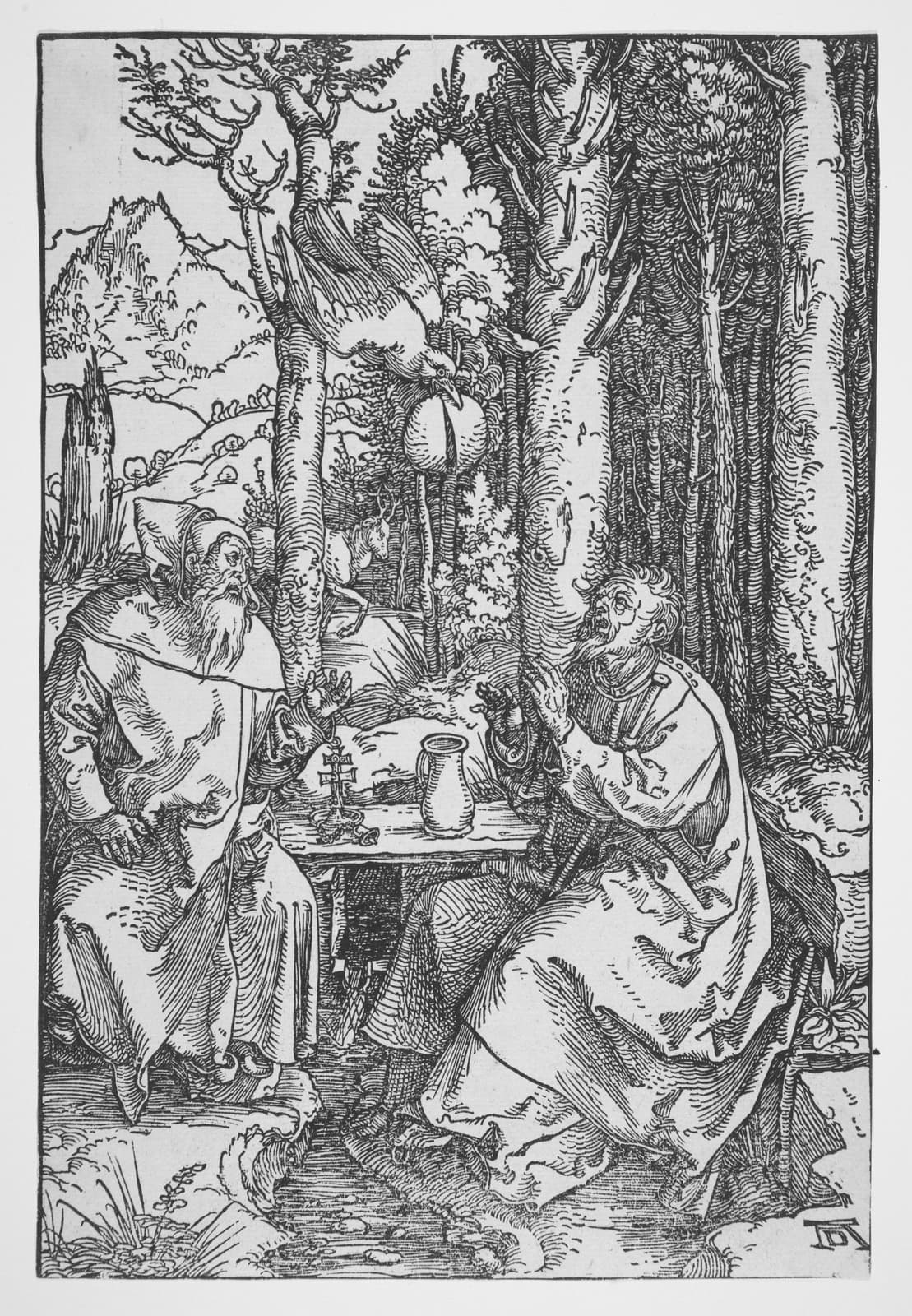
Saint Anthony visiting Saint Paul the Hermit in the desert
Albrecht Dürer (1471–1528), Saint Anthony and Saint Paul in the Desert, ca. 1503. Credits

Email view of this day