
This day

August 12, 2027

St Clare of Assisi
Saint Clare of Assisi, Simone Martini (1284–1344). Credits

After Pentecost

August 12, 2027

August 12: St. Clare, Virgin

From Dom Guéranger’s The Liturgical Year.

THE same year in which St. Dominic, before making any project with regard to his sons, founded the first establishment of the Sisters of his Order, the companion destined for him by heaven received his mission from the Crucifix in the church of St. Damian, in these words: ‘Go, Francis, repair My house, which is falling to ruin.' The new patriarch inaugurated his work, as Dominic had done, by preparing a dwelling for his future daughters, whose sacrifice might obtain every grace for the great Order he was about to found. The house of the Poor Ladies occupied the thoughts of the seraph of Assisi, even before St. Mary of the Portiuncula, the cradle of the Friars Minor. Thus, for a second time this month, Eternal Wisdom shows us that the fruit of salvation, though it may seem to proceed from the word and from action, springs first from silent contemplation.

Clare was to Francis the help like unto himself, who begot to the Lord that multitude of heroic virgins and illustrious penitents soon reckoned by the Order in all lands, coming from the humblest condition and from the steps of the throne.

This week's Sunday: The Twelfth Sunday after Pentecost

From Dom Guéranger’s The Liturgical Year.

On this Sunday, which is their twelfth of Saint Matthew, the Greeks read in the Mass the episode of the young rich man who questions Jesus, given in the nineteenth chapter of the Saint’s Gospel. In the west, it is the Gospel of the Good Samaritan which gives its name to this twelfth Sunday after Pentecost.

The Introit begins with that beautiful verse of Psalm lxix.: 'Come to mine assistance, O God! O Lord, make haste to help me!’ Cassian, in his tenth Conference, has admirably drawn out the beauty of these words, and shows how they are appropriate for every circumstance of life, and how fully they respond to every sentiment of the Christian soul. Durandus applies this Introit to Job, because the lessons for the Divine Office, which are taken from that Book of Scripture, sometimes, though not often, coincide with this Sunday. Rupert looks on this Introit as the fitting prayer of the deaf and dumb man, whose cure was the subject of our reflexions this day last week.

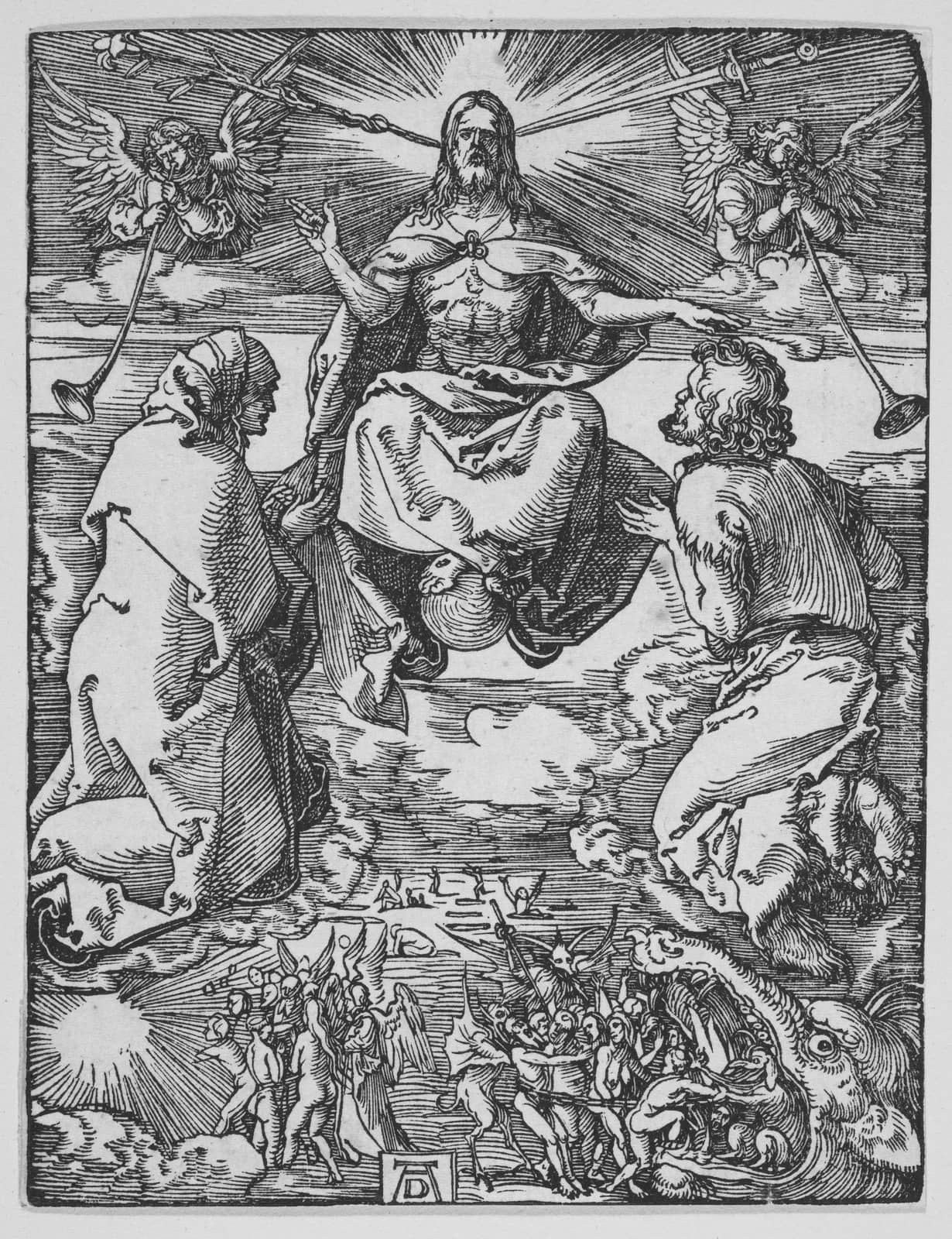
The Last Judgment
Albrecht Dürer (1471–1528), The Last Judgment, from The Small Passion, ca. 1510. Credits

Email view of this day