After Pentecost
August 11, 2027
August 11: Sts. Tiburtius and Susanna, Martyrs
From Dom Guéranger’s The Liturgical Year.
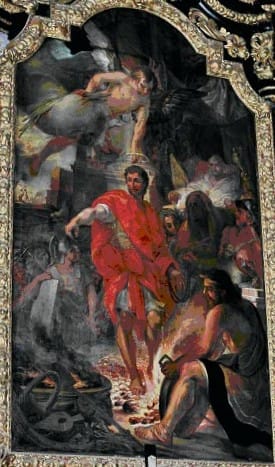
LAURENCE is followed to-day by the son of Chromatius, prefect of Rome, Tiburtius, who also suffered upon burning coals for the confession of his faith. Though forty years intervened between the two martyrdoms, it was the same Holy Spirit that animated these witnesses of Christ and suggested to them the same answer to their executioners. Tiburtius, walking upon the fire, cried out: 'Learn that the God of the Christians is the only God, for these hot coals seem flowers to me.'
Equally near to the great archdeacon stands an illustrious virgin, so bright herself as not to be eclipsed by him. A relative of both the Emperor Diocletian, and the holy Pope Caius, Susanna, it is said, one day beheld the imperial crown at her feet. But she obtained a far greater nobility; for, by preferring the wreath, of virginity, she won at the same time the palm of martyrdom.
Now, as St. Leo remarks, on the glorious solemnity whose octave we are keeping, if no one is good for himself alone, if the favours of Divine Wisdom profit not only the recipient, then no one is more wise than the martyr, no eloquence can instruct the people so well as his.