This day

October 8, 2027

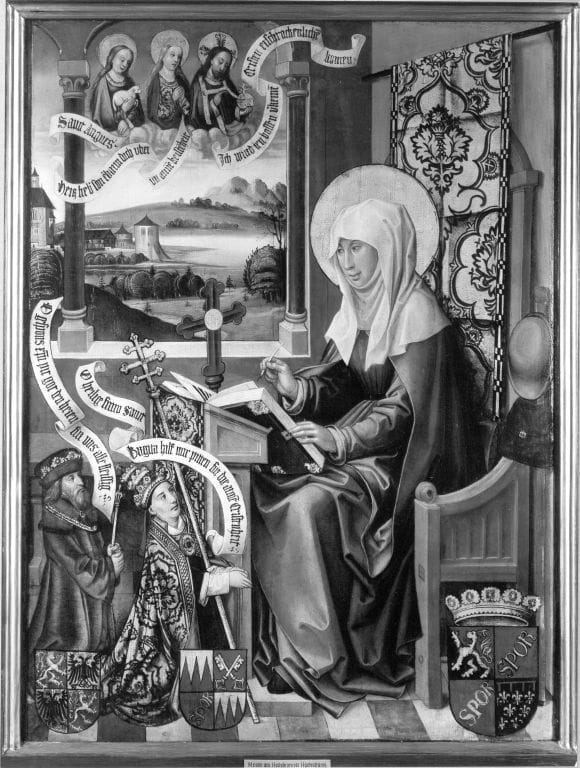
Saint Bridget Writing her Revelations
Saint Bridget Writing her Revelations, Hans Traut (1487–1516), 1505. Credits

After Pentecost

October 8, 2027

A Double leads; Sts. Sergius, Bacchus, Marcellus and Apuleius are commemorated.Rubric

October 8: St. Bridget, Widow

From Dom Guéranger’s The Liturgical Year.

‘Who, O Lord, has treated Thee thus?’ ‘They that despise Me and forget My love.’ This was the first revelation of the Son of God to Bridget of Sweden. Francis of Assisi, raising before the world the standard of the cross, had announced that Christ was about to recommence the dolorous way; not now in His own Person, but in the Church, who is flesh of His flesh. The truth of this declaration Bridget experienced from the very opening of that fatal fourteenth century, during which such innumerable disasters, the results of crime, fell at once upon the west.

Born in the year when Sciarra Colonna, a new Pilate’s servant, dared to strike the Vicar of Christ, Bridget’s childhood was contemporaneous with those sad falls, which caused the Church to be despised by her enemies. There were no saints in Christendom comparable to the great ones of old; in the preceding age the Latin races had exhausted their vitality in producing flowers; but where were the promised fruits? Ancient Europe had nought but affronts for the Word of God; this feast, this apparition of Jesus in cold Scandinavia, seems to point to His flight from the habitual centre of His predilection.
Chapter 7: On the Office of Vespers for Sundays and Feasts during the Time after Pentecost

From Dom Guéranger’s The Liturgical Year.

The Office of Vespers, or Evensong, consists firstly of the five following psalms. For certain feasts some of these psalms are changed for others, which are more appropriate to those occasions.

After the Pater and Ave have been said in secret, the Church commences this Hour with her favourite supplication:
℣. Deus, in adjutorium meum intende.
℟. Domine, ad adjuvandum me festina.
℣. Gloria Patri, et Filio, et Spiritui Sancto.
℟. Sicut erat in principio, et nunc et semper, et in sæcula sæculorum. Amen. Alleluia.

Ant. Dixit Dominus.

℣. Incline unto mine aid, O God.
℟. O Lord, make haste to help me.
℣. Glory be to the Father, and to the Son, and to the Holy Ghost.
℟. As it was in the beginning, is now, and ever shall be, world without end. Amen. Alleluia.

Ant. The Lord said.

The first psalm is a prophecy of the future glories of the Messias. The Son of David shall sit on the right hand of the heavenly Father. He is King; He is Priest; He is the Son of Man, and the Son of God.

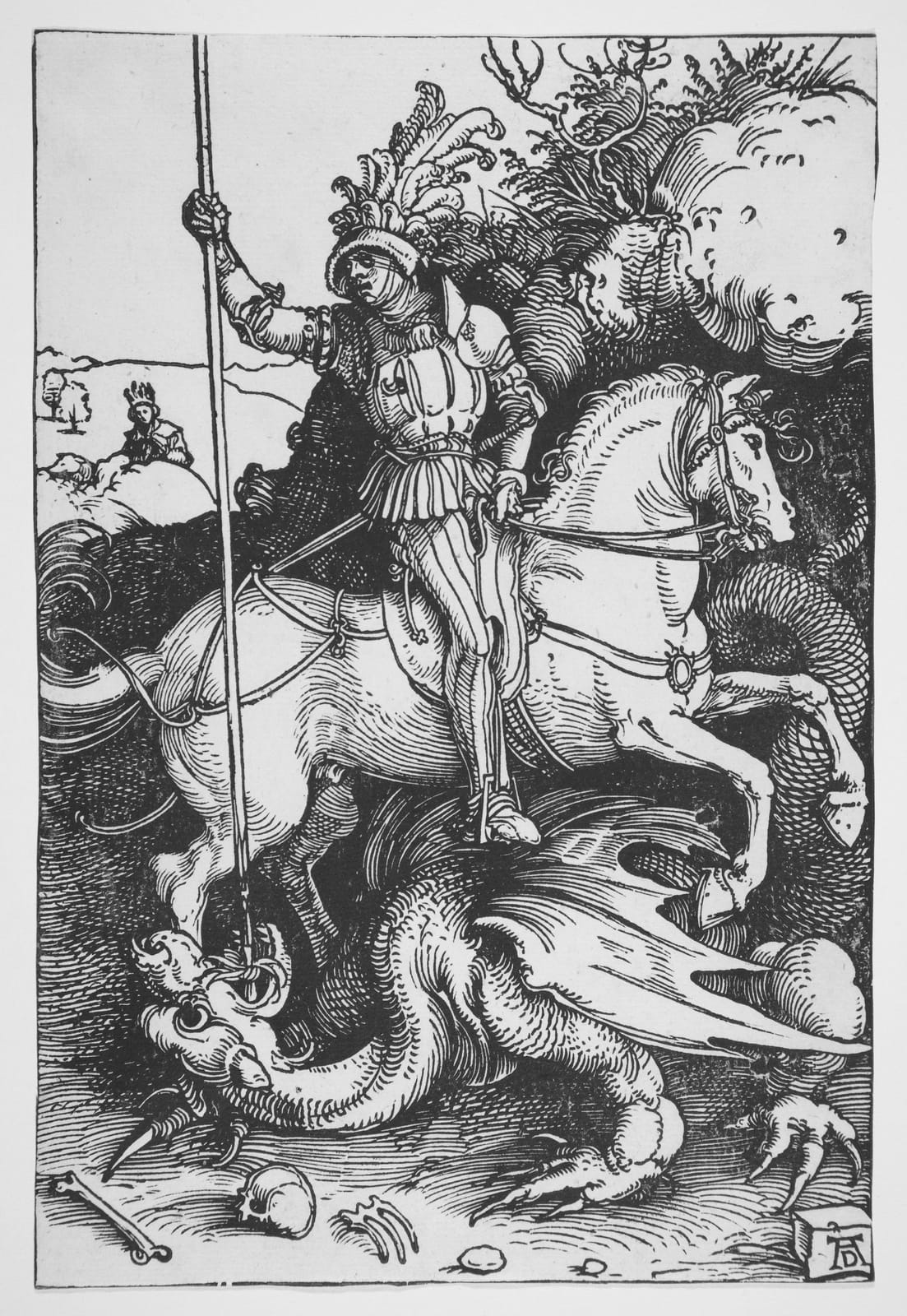
Saint George slaying the dragon
Albrecht Dürer (1471–1528), Saint George Slaying the Dragon, ca. 1504. Credits

Email view of this day