After Pentecost
October 9, 2027
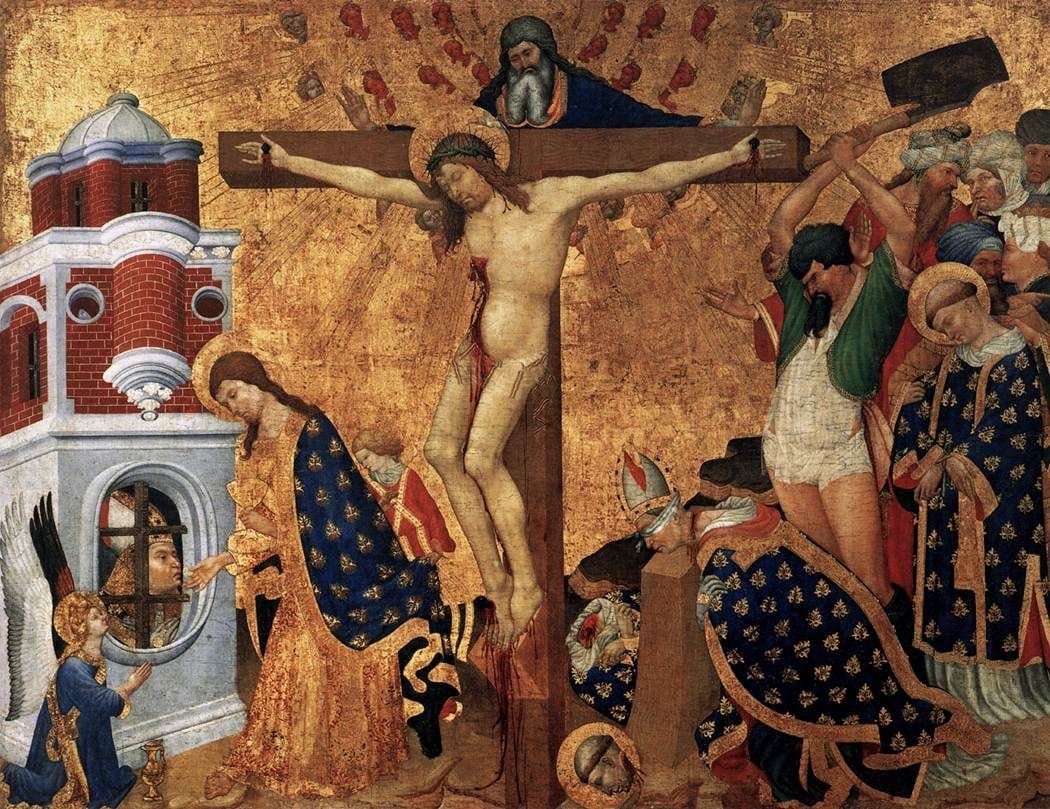
October 9: St. Dionysius, Bishop and Martyr, and Sts. Rusticus and Eleutherius, Martyrs
From Dom Guéranger’s The Liturgical Year.
Ushered in by Bridget the northern prophetess, Dionysius appears as the brightest star in that constellation of mystics, which illumines the close of the cycle with the first glimmers of eternal union. Soon we shall salute Teresa of Jesus, and her guide Peter of Alcantara; while from the shades of his Obscure night, John of the cross will rise in glory next month near to the great St. Gertrude.
The Man-God began to do and to teach, gave us first example then doctrine; so too the Church, in her liturgical year, first sets before us the examples of the saints, and afterwards teaches us the rules of sanctity as formulated by these holy ones themselves. Strong in the results she has obtained, she now seems to rest in the security gained by experience; and, as in the proper of the time, of which that of the saints is the faithful echo, she yields to her desire of seeing her children able to comprehend, with all the saints, what is the breadth and length and height and depth. To know also the charity of Christ, which surpasseth all knowledge, that they may be filled unto all the fulness of God.