After Pentecost
July 17, 2028
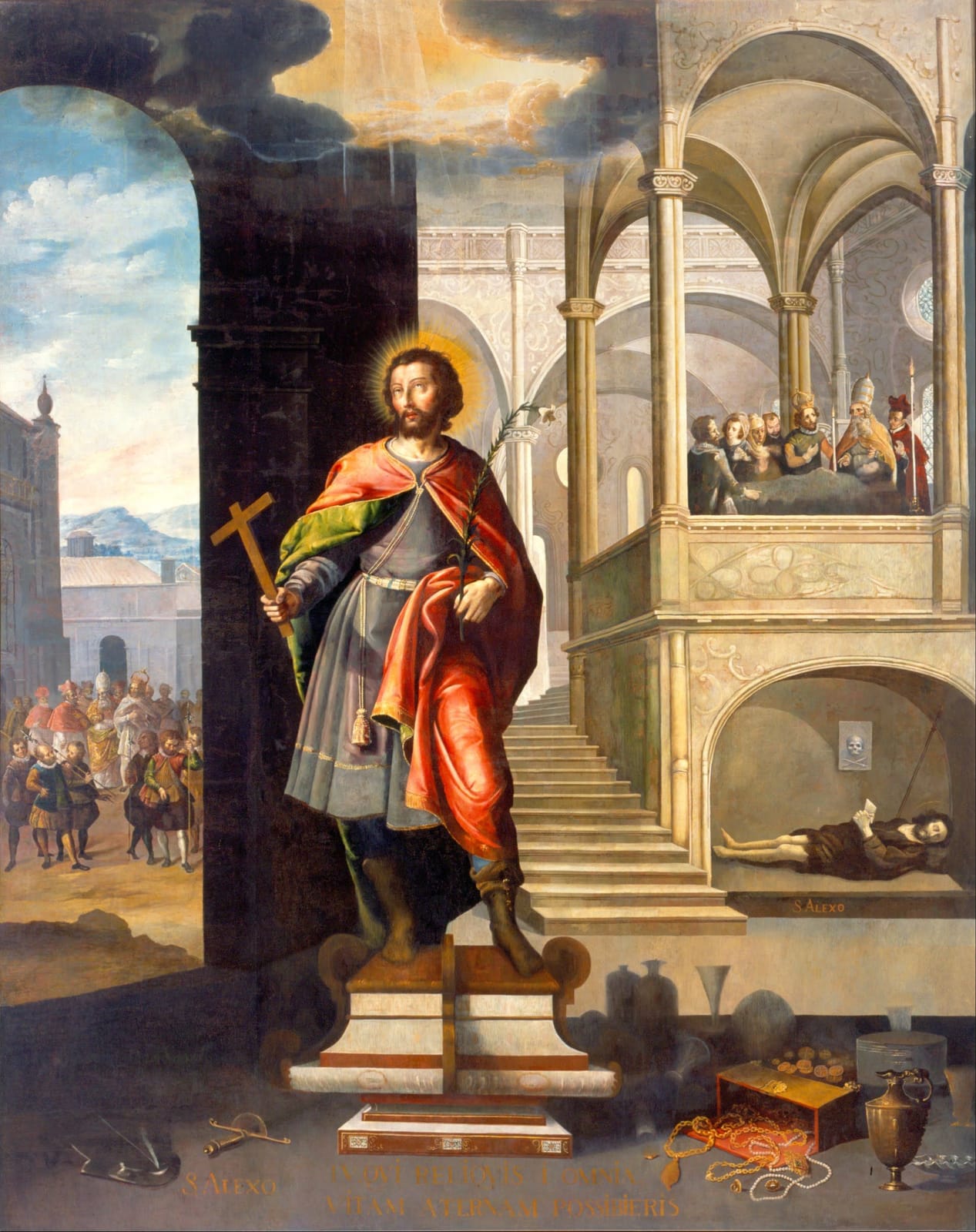
July 17: St. Alexius, Confessor
From Dom Guéranger’s The Liturgical Year.
ALTHOUGH we are not commanded to follow the saints to the extremities where their heroic virtue leads them, nevertheless, from their inaccessible heights, they still guide us along the easier paths of the plain. As the eagle upon the orb of day, they fixed their unflinching gaze upon the Sun of Justice; and, irresistibly attracted by His divine splendour, they poised their flight far above the cloudy region where we are glad to screen our feeble eyes. But however varied be the degrees of brightness for them and for us, the light itself is unchangeable, provided that, like them, we draw it from the authentic source. When the weakness of our sight would lead us to mistake false glimmerings for the truth, let us think of these friends of God; if we have not courage enough to imitate them, where the commandments leave us free to do so or not, let us at least conform our judgments and appreciations to theirs: their view is more trustworthy, because farther reaching; their sanctity is nothing but the rectitude wherewith they follow up unflinchingly, even to its central focus, the heavenly ray, whereof we can scarcely bear a tempered reflection.