After Pentecost
July 18, 2028
A Double leads; St. Symphorosa and her Seven Sons is commemorated.Rubric
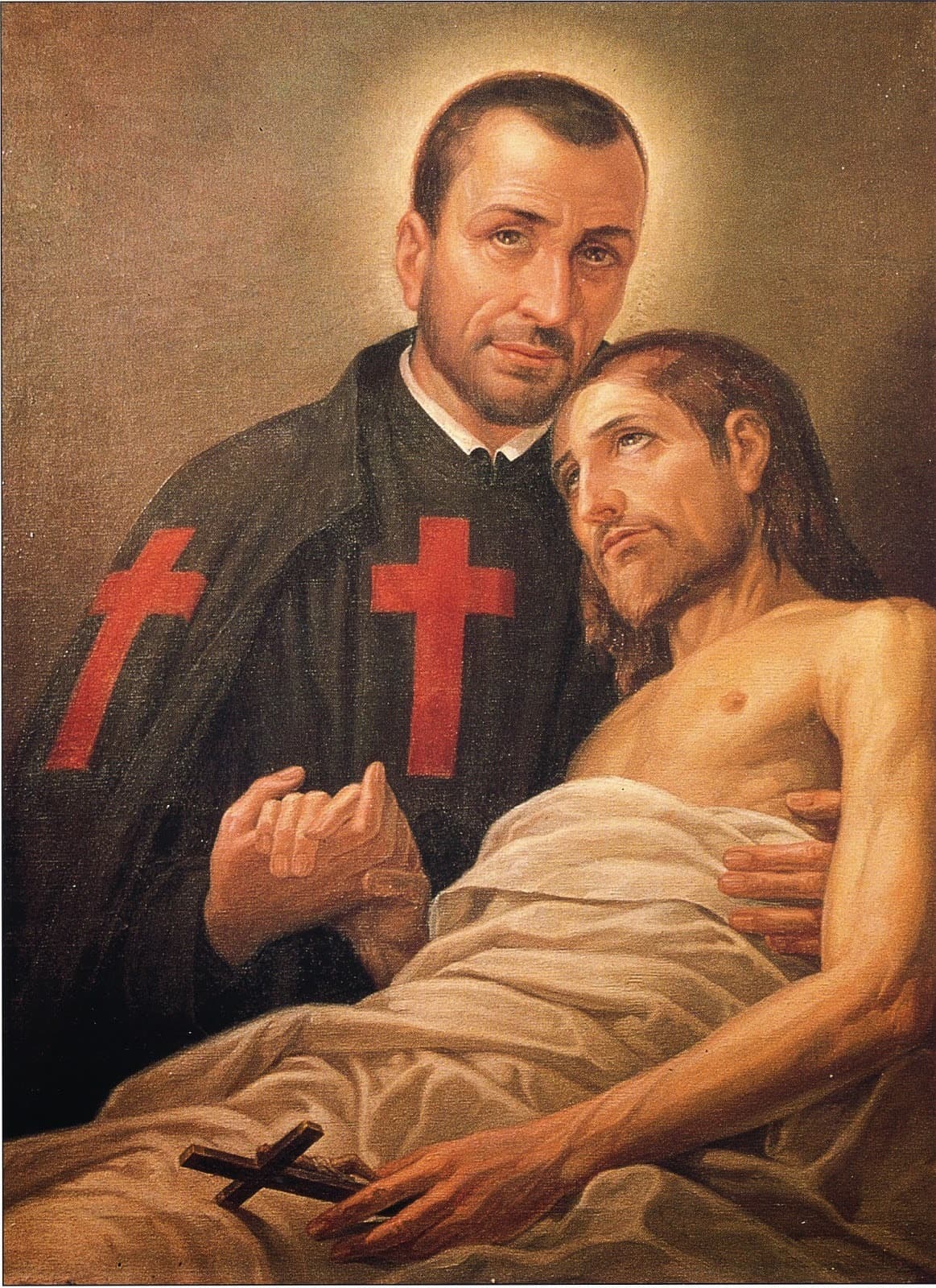
July 18: St. Camillus of Lellis, Confessor
From Dom Guéranger’s The Liturgical Year.
THE Holy Spirit, who desires to raise our souls above this earth, does not therefore despise our bodies. The whole man is His creature and His temple, and it is the whole man He must lead to eternal happiness. The Body of the Man-God was His masterpiece in material creation; the divine delight He takes in that perfect Body He extends in a measure to ours; for that same Body, framed by Him in the womb of the most pure Virgin, was from the very beginning the model on which ours are formed. In the re-creation which followed the Fall, the Body of the Man-God was the means of the world’s redemption; and the economy of our salvation requires that the virtue of His saving Blood should not reach the soul except through the body, the divine sacraments being all applied to the soul through the medium of the senses. Admirable is the harmony of nature and grace; the latter so honours the material part of our being that she will not draw the soul without it to the light and to heaven.