This day

November 13, 2028

After Pentecost

November 13, 2028

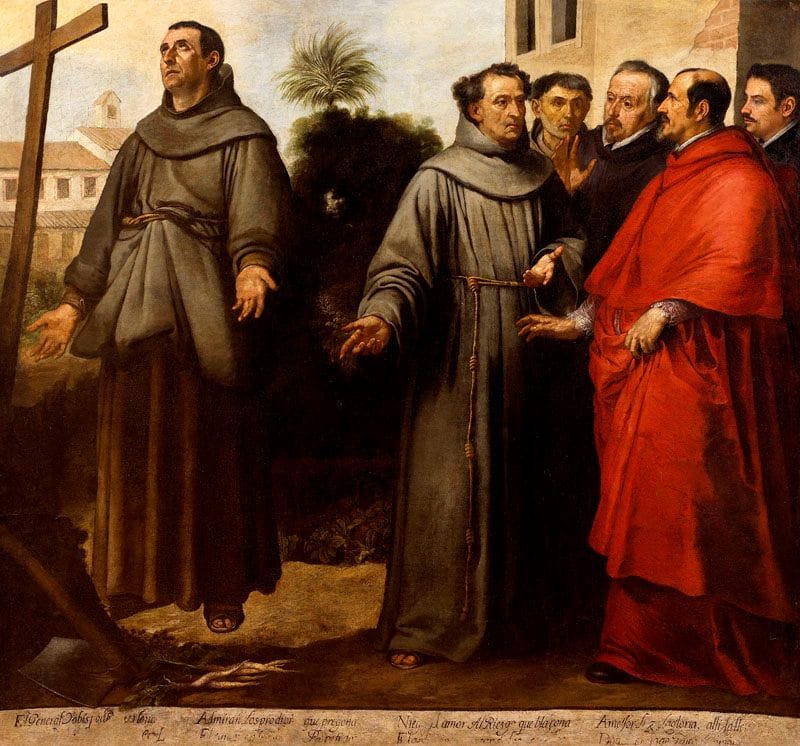
November 13: St. Didacus, Confessor

From Dom Guéranger’s The Liturgical Year.

A HUMBLE lay-brother, Didacus of St. Nicholas, is welcomed to-day by his father St. Francis into the company of Bernardine of Siena and John Capistran, who preceded him by a few years to heaven. The two latter left Italy and the whole of Europe still echoing with their voices, the one making peace between cities in the name of the Lord Jesus, the other urging on the Christian hosts to battle with the victorious Crescent. The age which they contributed so powerfully to save from the results of the great schism and to restore to its Christian destinies, knew little of Didacus but his unbounded charity. It was the year of the great Jubilee, 1450. Rome having become once more, practically as well as theoretically, the holy city in the eyes of the nations, not even the most terrible scourges could keep her children at a distance. From every quarter of the globe, crowds, urged by the evils of the time, flocked to the sources of salvation; and Satan's work of ruin was retarded by seventy years.

Men doubtless attributed but a very small share of such results to the humble brother, who was spending himself in the Ara-Coeli, in the service of the plague-stricken; especially if they compared, him with his brethren, the great Franciscan apostles.

This week's Sunday: The Twenty-Third Sunday after Pentecost

From Dom Guéranger’s The Liturgical Year.

When the number of the Sundays after Pentecost is only twenty-three, the Mass for to-day is taken from the twenty-fourth and last Sunday; and the Mass appointed for the twenty-third is said on the previous Saturday, or on the nearest day of the preceding week which is not impeded by a double or semi-double feast.

But, under all circumstances, the antiphonary ends to-day. The Introits, Graduals, Communions, and Postcommunions, which are given below, are to be repeated on each of the Sundays till Advent, which vary in number each year. Our readers will remember that, in the time of St. Gregory, Advent was longer than we now have it; and that, in those days, its weeks commenced in that part of the cycle which is now occupied by the last Sundays after Pentecost. This is one of the reasons for the lack of liturgical riches in the composition of the dominical Masses which follow the twenty-third.

Even on this one, the Church, without losing sight of the last day, used to lend a thought to the new season which was fast approaching, the season, that is, of preparation for the great feast of Christmas.

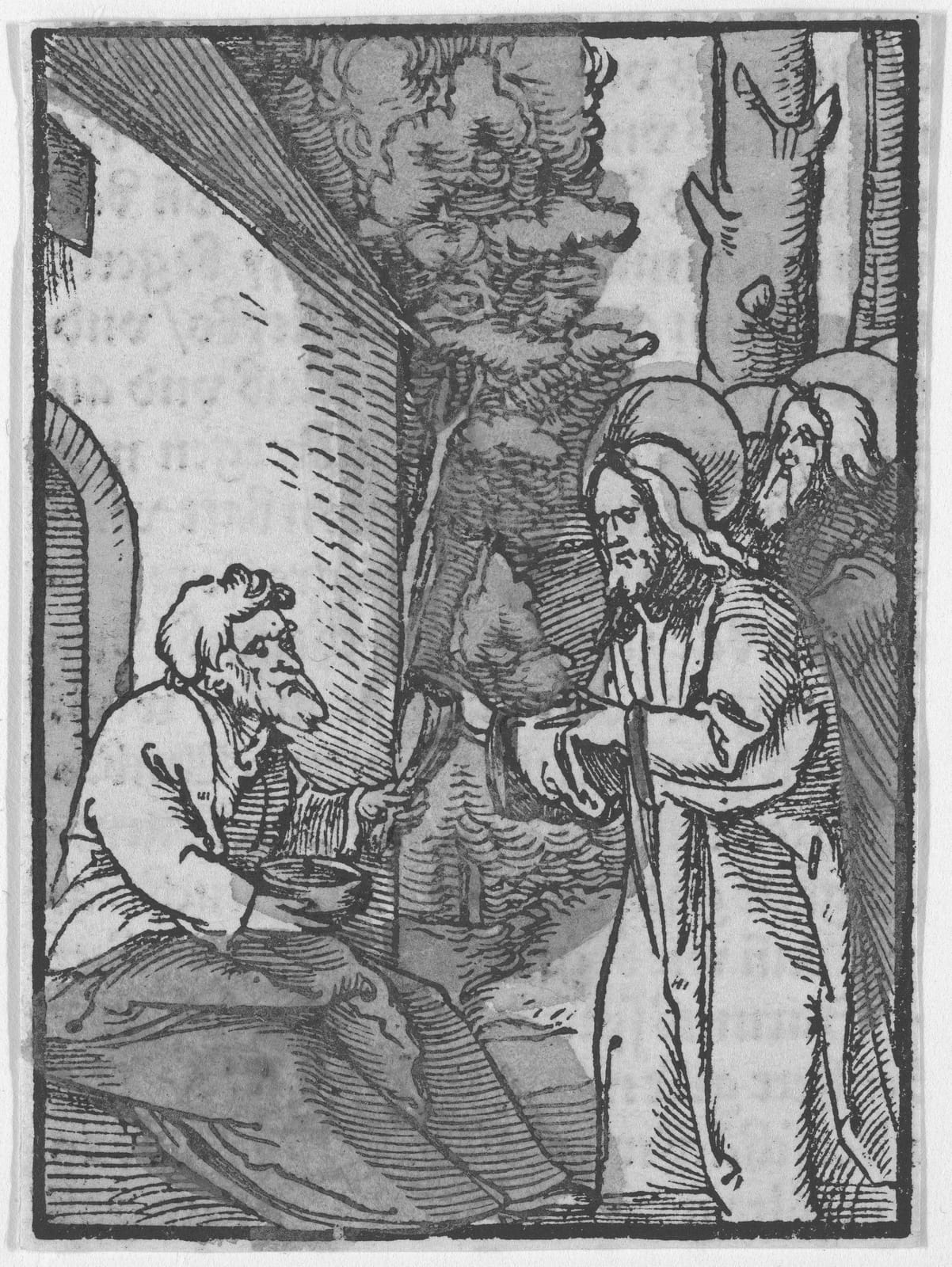
Christ healing a leper
Hans Schäufelein (1480–1540), Christ Healing the Leper, from Das Plenarium, 1517. Credits

Email view of this day