This day

November 14, 2028

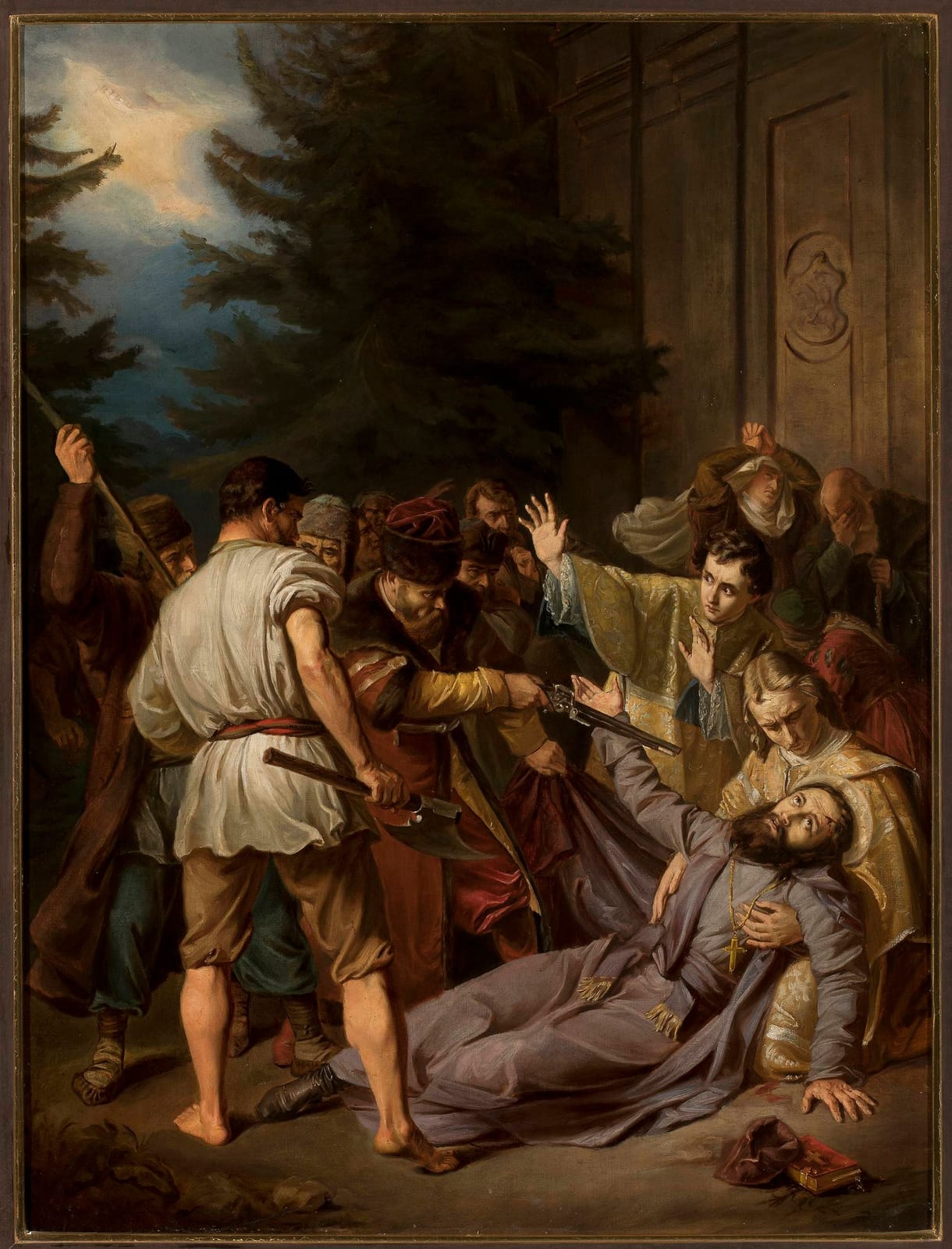
Martyrdom of Josaphat Kuntsevych
Martyrdom of Josaphat Kuntsevych, Józef Simmler (1823–1868), c. 1861. Credits

After Pentecost

November 14, 2028

November 14: St. Josaphat, Bishop and Martyr

From Dom Guéranger’s The Liturgical Year.

JOSAPHAT Kuncewicz, contemporary with St. Francis de Sales and St. Vincent de Paul, might have been taken for a Greek monk of the eleventh century, or an ascetic of the Thebaid. A stranger to the intellectual culture of the West, he knew only the liturgical books and sacred texts used in his own church; as a priest, an archimandrite, a reformer of his Order of St. Basil, and lastly as Archbishop, he combated all his life against the consequences of the schism of Photius, and closed the struggle by culling the palm of martyrdom. Yet all this took place in the heart of Europe, in the countries then subject to Catholic Poland, during the reign of the most pious of its kings. How is this mystery to be explained?

Immediately after the Mongolian invasions, Poland received into her arms, rather than conquered, the Ruthenian nation, that is to say the Slays of the Greek rite from the Dnieper and the Dwina, who had formed around their capital and religious metropolis, Kiev, the nucleus of the power now known as Russia. Had she granted a participation in her own national life to these brethren separated from, but not enemies to, the Roman unity, who came to her full of confidence in her strength and her justice, Poland would have secured the triumph of the Catholic cause, and her own dominion throughout Slavonia.

This week's Sunday: The Twenty-Third Sunday after Pentecost

From Dom Guéranger’s The Liturgical Year.

When the number of the Sundays after Pentecost is only twenty-three, the Mass for to-day is taken from the twenty-fourth and last Sunday; and the Mass appointed for the twenty-third is said on the previous Saturday, or on the nearest day of the preceding week which is not impeded by a double or semi-double feast.

But, under all circumstances, the antiphonary ends to-day. The Introits, Graduals, Communions, and Postcommunions, which are given below, are to be repeated on each of the Sundays till Advent, which vary in number each year. Our readers will remember that, in the time of St. Gregory, Advent was longer than we now have it; and that, in those days, its weeks commenced in that part of the cycle which is now occupied by the last Sundays after Pentecost. This is one of the reasons for the lack of liturgical riches in the composition of the dominical Masses which follow the twenty-third.

Even on this one, the Church, without losing sight of the last day, used to lend a thought to the new season which was fast approaching, the season, that is, of preparation for the great feast of Christmas.

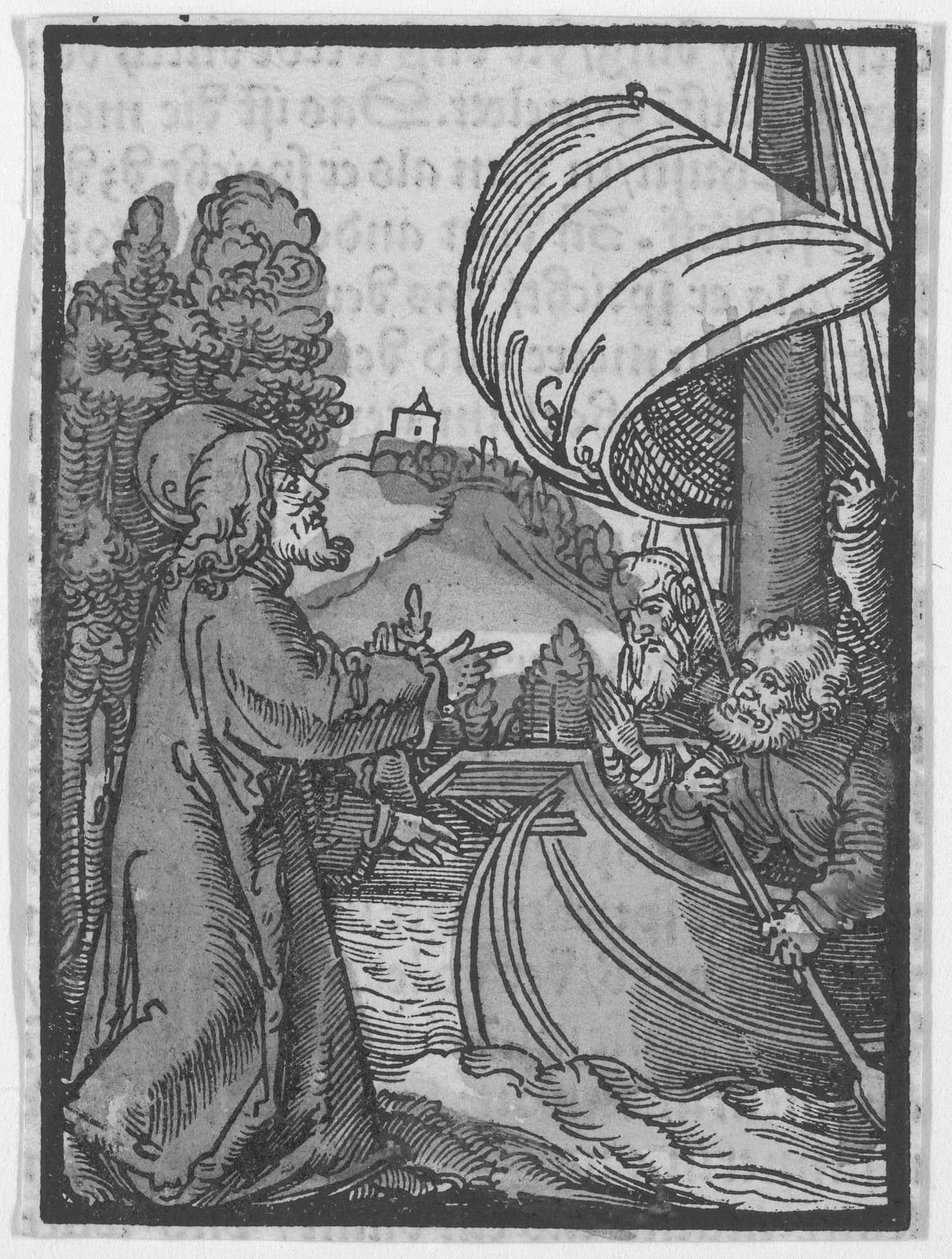
Christ calming the storm on the lake
Hans Schäufelein (1480–1540), Christ Calming the Storm on Lake Tiberias, from Das Plenarium, 1517. Credits

Email view of this day