This day

February 6, 2029

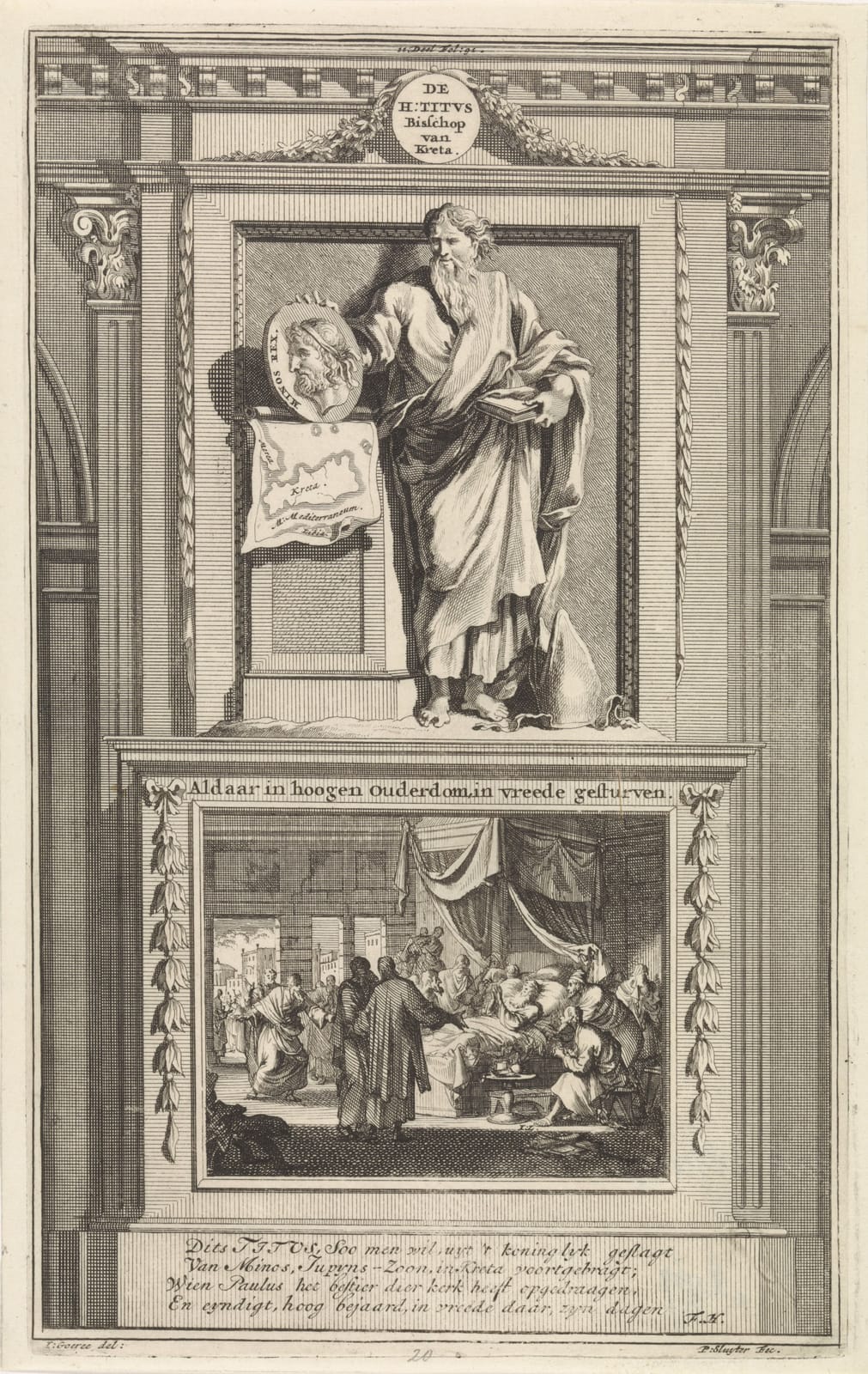
De H. Titus, bishop of Crete
De H. Titus Bisschop van Kreta, Anonymous, 1698. Credits

Septuagesima

February 6, 2029

A Double leads the weekday; St. Dorothy is commemorated.Rubrics

February 6: St. Titus, Bishop and Confessor

From Dom Guéranger’s The Liturgical Year.

We are to celebrate, to-day, the Feast of a holy Bishop of the Apostolic Age—a Disciple of the Apostle St. Paul. Little is known of his life; but, by addressing to him one of his inspired Epistles, the Apostle of the Gentiles has immortalised his memory. Wheresoever the Faith of Christ has been or shall be preached, Titus’ name has been venerated by the Faithful; and as long as the world lasts, the holy Church will read to her children this Epistle, which was written, indeed, to a simple Bishop of the Isle of Crete, but was dictated by the Holy Ghost, and therefore destined to be a part of those Sacred Scriptures, which contain the Word of God. The counsels and directions given in this admirable Letter, were the rule of the holy Bishop, for whom St. Paul entertained a very strong affection. St. Titus had the honour of establishing the Christian Religion in that famous Island, which was one of the strongholds of Paganism. He survived his master, who was put to death by Nero. Like St. John, he sweetly slept in Christ at a very advanced age, respected and loved by the Church he had founded.

Tuesday of Sexagesima Week

From Dom Guéranger’s The Liturgical Year.

When we reflect upon the terrible events which happened in the first age of the world, we are lost in astonishment at the wickedness of man, and at the effrontery wherewith he sins against his God. How was it that the dread words of God, which were spoken against our first parents in Eden, could be so soon forgotten? How could the children of Adam see their father suffering and doing such endless penance, without humbling themselves and imitating this model of repentance? How was it that the promise of a Mediator, who was to reopen the gate of heaven for them, could be believed, and yet not awaken in their souls the desire of making themselves worthy to be His ancestors, and partakers of that grand regeneration, which He was to bring to mankind? And yet, the years which followed the death of Adam were years of crime and scandal; nay, he himself lived to see one of his own children become the murderer of a brother. But why be thus surprised at the wickedness of these our first brethren?

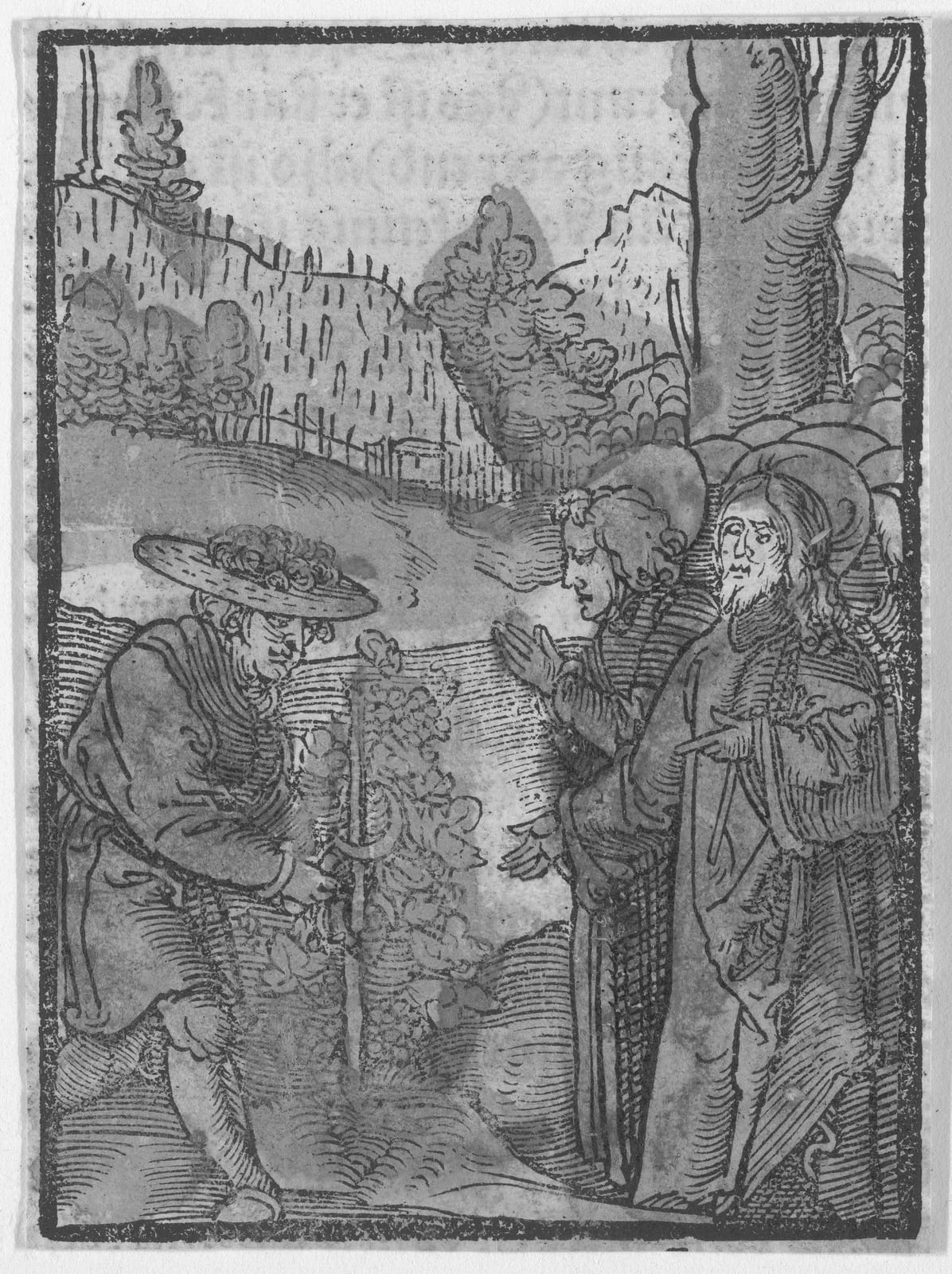
Christ points to a laborer working in a vineyard
Hans Schäufelein (1480–1540), The Parable of the Workers in the Vineyard, from Das Plenarium, 1517. Credits

Email view of this day