This day

April 17, 2029

Paschal Time

April 17, 2029

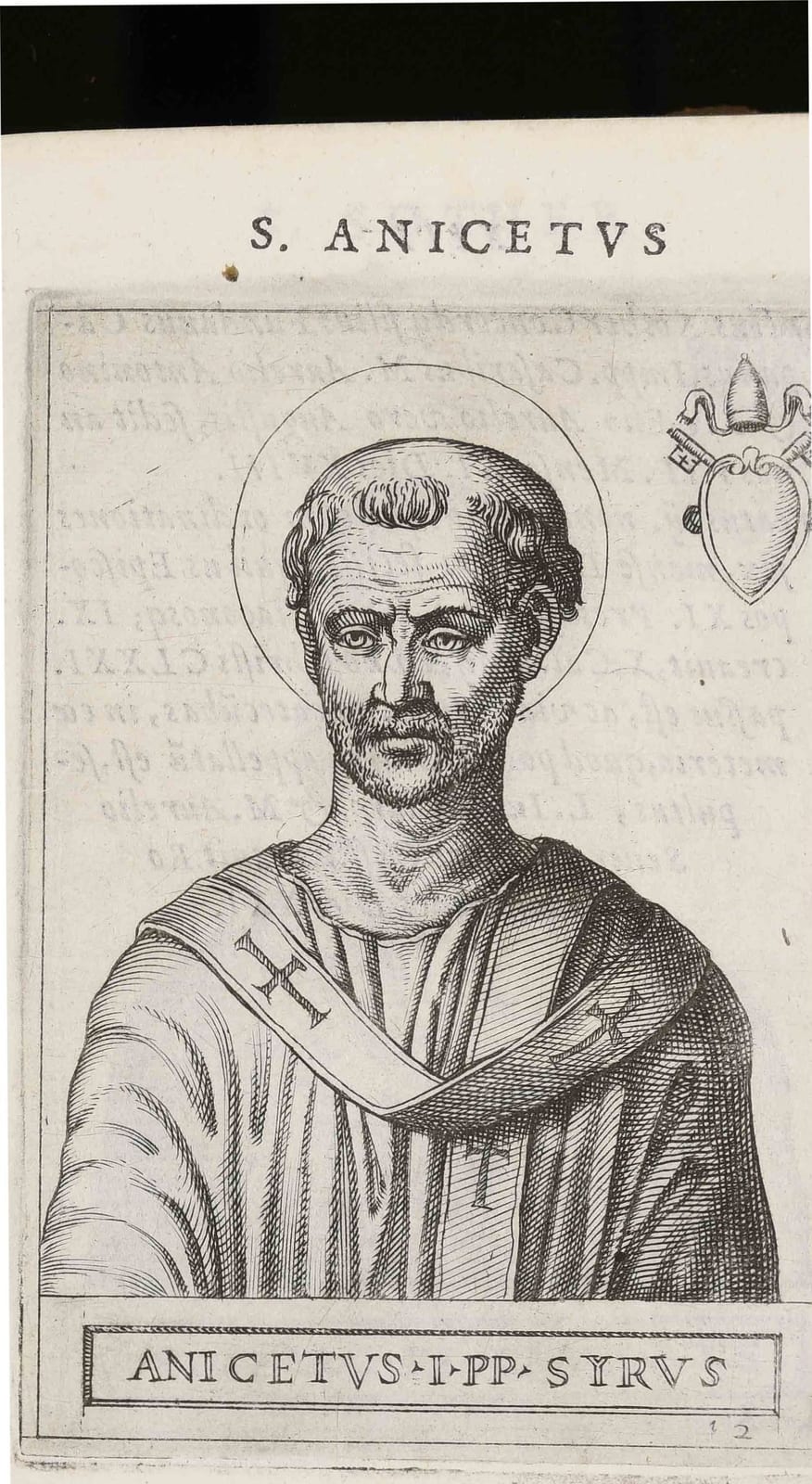
April 17: St. Anicetus, Pope

From Dom Guéranger’s The Liturgical Year.

A POPE and martyr of the second century appears in the Calendar today. The martyrs stand in clusters near our Risen Lord; they are the Eagles of which he speaks in his Gospel, as gathering together around their longed-for object. Anicetus is not the only Pope whose martyrdom has to be celebrated during Paschal Time; others will come, adding to our Easter joy. The Saint who claims our attention to-day is one of those whose holy actions are shrouded in the venerable gloom of the Church; and yet his memory will be held in veneration to the end of time, not only as being the eleventh successor of St Peter in the See of Rome, but as having imitated him also in holiness of life. St Poly carp, whose feast we kept on January 26, came from Smyrna to Rome, in order to visit him and receive his advice. There have also been transmitted to us one or two instances of the zeal wherewith he defended the Church against the heresiarchs, Valentine and Marcion. In a word, we know that he was a martyr; and that is enough to immortalize his name.

Tuesday of the Third Week after Easter

From Dom Guéranger’s The Liturgical Year.

℣. In thy resurrection, O Christ, alleluia.
℟. Let heaven and earth rejoice, alleluia.

THE Church, which our Risen Jesus is organizing during these days, and which is to be spread throughout the whole world, is a true and complete society. It must, consequently, have within it the power to govern, and be able, by the obedience of its subjects, to maintain order and peace. As we have already seen, our Saviour supplied this want by establishing a shepherd of both sheep and lambs, a Vicar of his own divine authority: yet Peter, after all, is but a man; and however sublime his authority, he cannot exercise it directly and personally over each member of the flock. The new society has need, therefore, of magistrates of a lower rank, who, as Bossuet so well expresses it, ‘are to be sheep with regard to Peter, and shepherds with regard to the people.’

Jesus has provided for everything; he has chosen twelve men, whom he calls his Apostles, and to them he is about to entrust the magistracy of his Church.

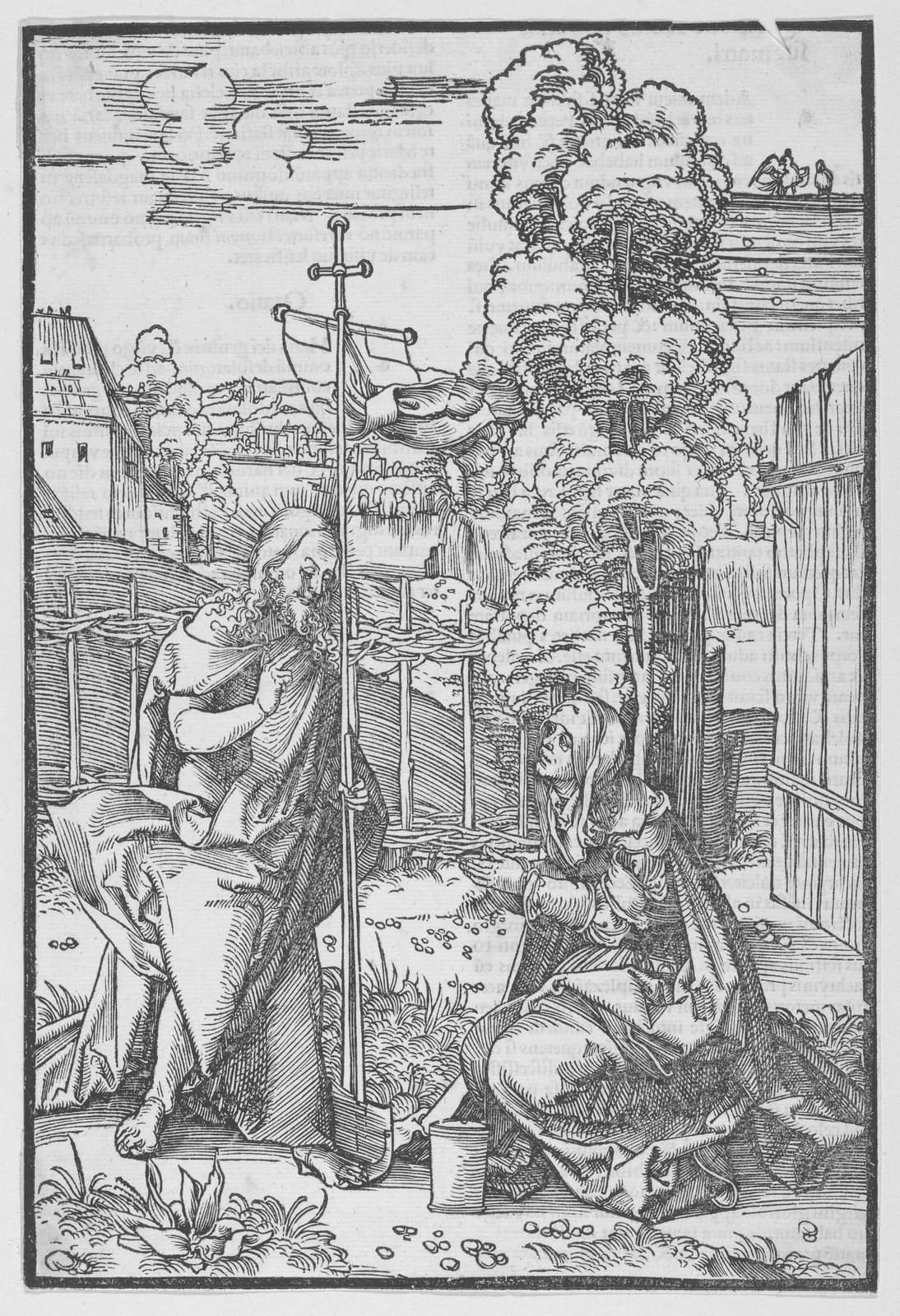
Noli me tangere: the risen Christ appears to Mary Magdalene in the garden
Hans Schäufelein (1480–1540), Christ Appearing to Mary Magdalen (Noli Me Tangere), from Speculum passionis domini nostri Ihesu Christi, 1507. Credits

Email view of this day